
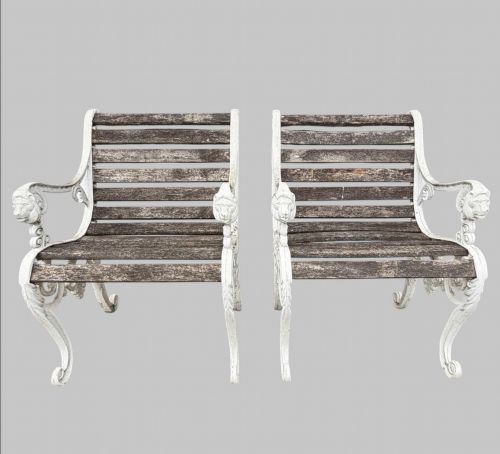


Cast Iron Outdoor Chairs
Cast iron outdoor chairs are enduring garden furnishings valued for their robust construction and decorative designs.
Cast Iron Outdoor Chairs
When you search for cast iron outdoor chairs, you encounter robust seating designed to withstand external elements while providing decorative garden ornamentation. These pieces appear frequently in nineteenth century styles, alongside interwar period and art deco interpretations.
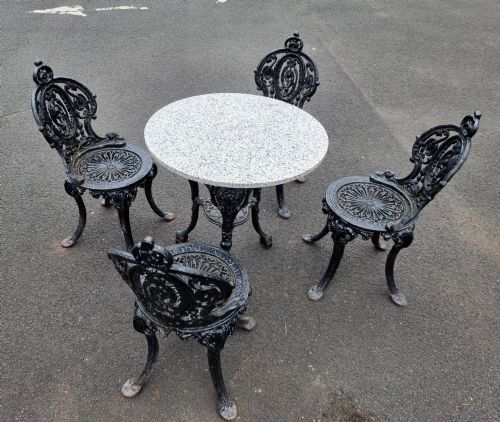
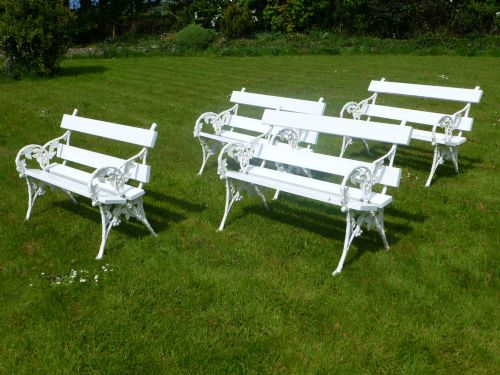
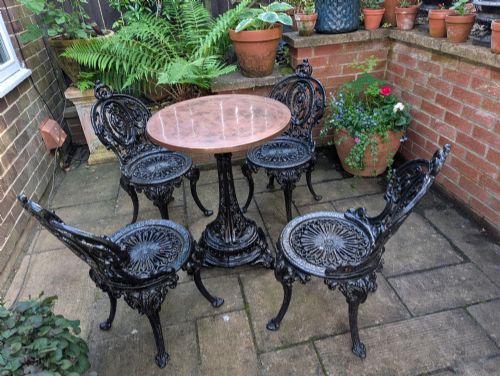
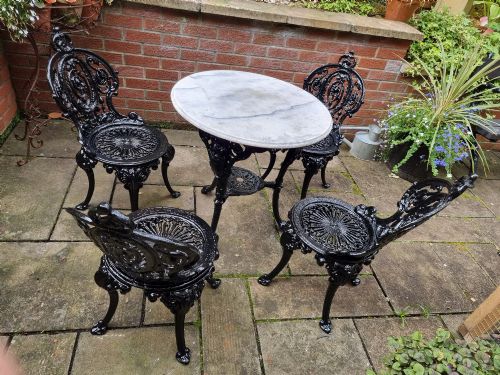
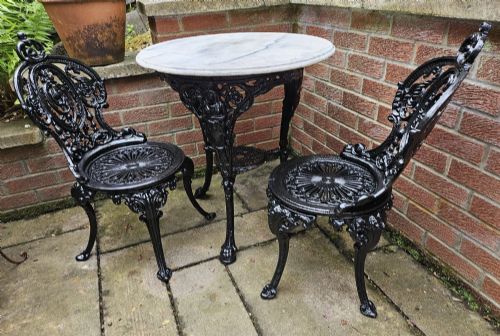
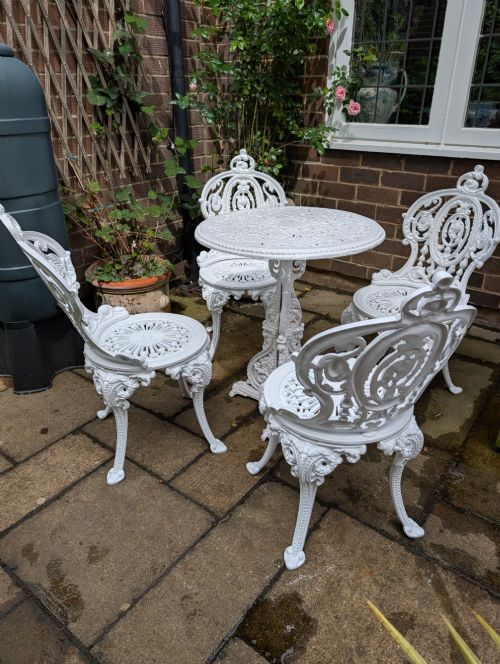
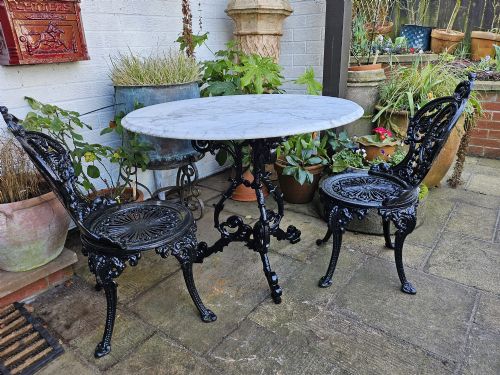
You meet various forms on this page, including individual garden armchairs, garden dining sets, and complete bistro sets. Some examples incorporate timber, marble, paint, granite, copper, or elm components alongside the metal framework.
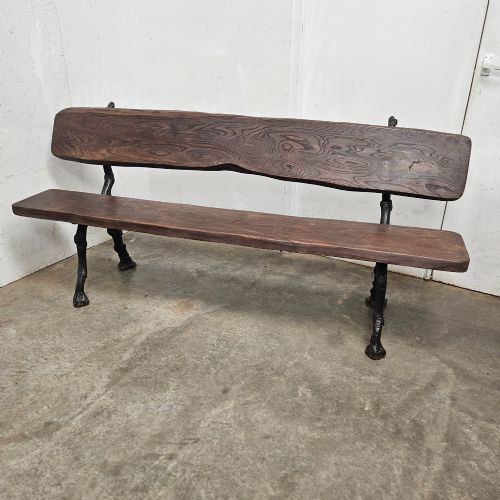
The aesthetic range spans from Victorian and gothic revival designs to French bistro and French country styles. Certain listings feature specific motifs such as blackberry and leaf patterns, lion masks, or faux bois finishes.
How they were made
Cast iron outdoor chairs are produced by pouring molten metal into moulds to create intricate patterns and solid structural frames. Foundry work allows for detailed ornamentation like plant motifs, animal masks, and architectural tracery.
Many examples incorporate complementary materials, pairing iron frames with timber, elm, or marble tops on associated tables. Paint finishes are frequently applied to protect the metal surfaces and define the decorative details.
Listings feature materials including cast iron, marble, paint, timber, granite, copper, elm, and wood across nineteenth-century and interwar periods.
What varies in quality
The definition and depth of the cast iron ornamentation distinguish standard production from exceptional foundry work. Crisp detailing in patterns such as foliage or mask reliefs indicates superior initial casting.
Proportion and structural integrity separate robust garden seating from lesser examples. The integration of matching tables, benches, or specific design attributions influences the standing of a set.
Falkirk Foundry·Christopher Dresser·Val D'osne
The Cast Iron Outdoor Chairs Glossary
- Cast Iron
- An iron-carbon alloy poured into moulds to create rigid, heavy components with detailed surface decoration. It provides the primary structural framework for these garden seats.
- Gothic Revival
- An architectural and decorative style drawing on medieval forms, featuring pointed arches and tracery. This aesthetic appears on nineteenth century garden furniture.
- Faux Bois
- A decorative technique mimicking the appearance of natural wood grain on other materials. It is seen on certain nineteenth century iron and elm garden benches.
- Bistro Set
- A small outdoor table accompanied by matching chairs, designed for compact spaces. These sets frequently combine cast iron bases with marble or timber tops.
Cast Iron Outdoor Chairs: Frequently Asked Questions
How do I care for cast iron outdoor chairs?
Cast iron outdoor chairs require minimal maintenance beyond regular cleaning and checking paint layers for protective integrity. Keeping the metal sealed prevents corrosion from weathering.
During harsh winter months, moving these heavy pieces into a sheltered area helps preserve the painted surfaces and any integrated timber or marble components.
Are these chairs suitable for year-round garden use?
The heavy metal construction allows these seats to remain outdoors throughout various weather conditions. Their substantial weight prevents them from being easily displaced by strong winds.
However, pairing iron with elm wood or marble tops requires consideration of how those specific secondary materials react to prolonged moisture and frost exposure.
How can I identify a nineteenth-century piece?
Nineteenth-century examples often display specific stylistic traits such as gothic revival tracery, heavy botanical motifs, or foundry attributions. The manufacturing techniques visible on the underside of the seat can also indicate earlier production methods.
Comparing the casting clarity and overall weight against known period forms helps establish the manufacturing timeframe.
What is the difference between a bistro set and a dining set?
Bistro sets typically consist of a smaller, lighter table paired with two or four chairs, originally intended for casual outdoor dining or tight spaces. They frequently incorporate decorative marble tops.
Garden dining sets provide larger proportions suited for extended outdoor seating arrangements, often featuring heavier tables and matching armchairs or benches.