

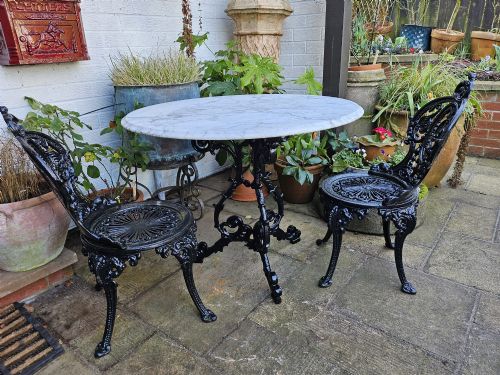


Cast Iron Patio Set
A cast iron patio set brings enduring strength and classic garden architecture to outdoor spaces, built to withstand the elements.
Cast Iron Patio Set
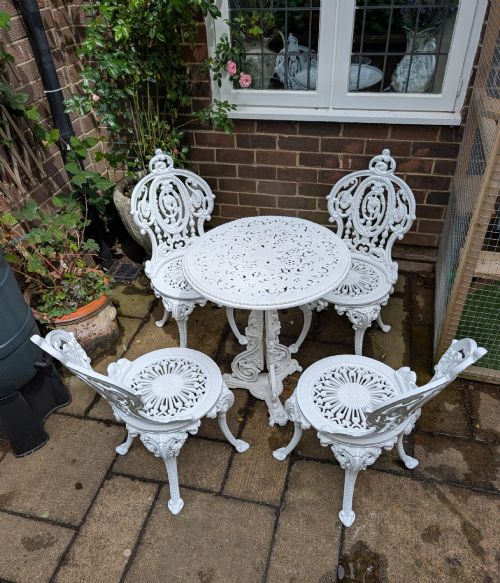
A cast iron patio set combines heavy metal tables with matching chairs, garden dining sets, and bistro sets designed for outdoor use. These assemblies appear across periods from the nineteenth century through the 1920s and 1930s, encompassing Victorian, French Bistro, Art Deco, and Gothic Revival styles.
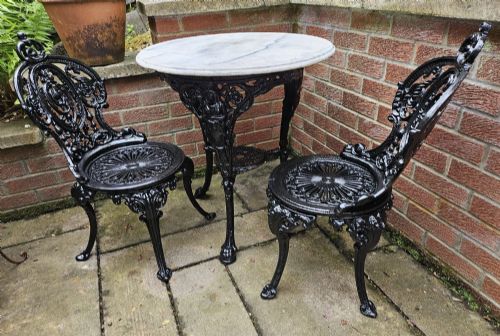
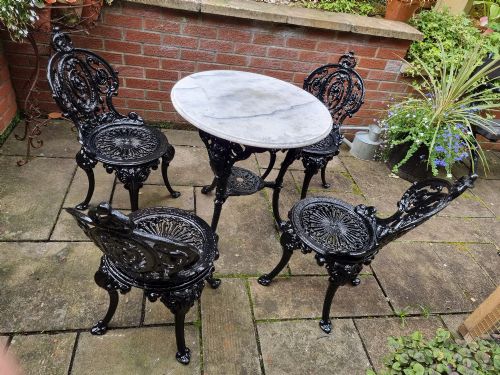
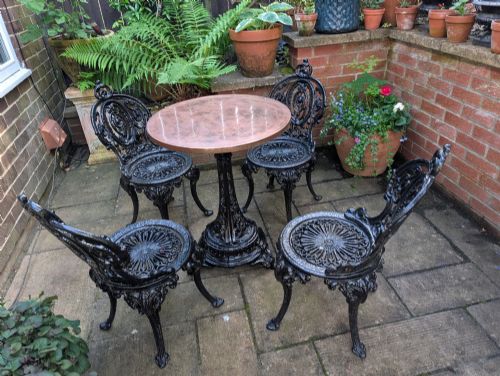
Buyers most frequently encounter complete four-chair garden dining sets alongside smaller bistro sets featuring circular tables. Individual garden chairs and benches also appear, sometimes paired with marble, granite, timber, or copper elements to create distinctive garden furniture sets.
How they were made
Pieces rely primarily on cast iron, poured into intricate sand moulds to achieve openwork patterns, scrolling foliage, and structural rigidity. Workshops frequently combined this core metal with marble or granite tops for tables, while incorporating wrought iron, timber, copper, and painted finishes for contrast and protection.
Designers utilised distinct regional and architectural aesthetics, from the ornate casting traditions of the Victorian era and Val D'osne gothic designs to clean Art Deco geometric lines and French Bistro forms.
Cast Iron Patio Set Retail Price Guide 2026
Typical asking prices for cast iron patio set among the pieces listed under this phrase on Sellingantiques today, from the lower quarter to the upper quarter. They describe what is for sale here now, not the wider market.
What varies in quality
Quality rests upon the crispness of the casting detail and the architectural ambition of the design, distinguishing standard utilitarian sets from designer works by makers such as Christopher Dresser or foundries like Val D'osne. Heavier metal gauge and intricate openwork fretwork elevate a set above simpler, plain-surfaced alternatives.
The integration of alternate materials, such as heavy marble or granite table tops rather than plain iron surfaces, shifts a piece from basic utility toward high-status garden ornamentation.
Christopher Dresser·Val D'osne
The Cast Iron Patio Set Glossary
- Cast iron
- A strong, heavy alloy poured into moulds to create rigid forms. It allows for deeply detailed decorative patterns that resist outdoor wear.
- Bistro set
- A small table accompanied by two matching chairs. These compact configurations suit smaller garden spaces and balconies.
- Gothic Revival
- An architectural style reviving medieval forms. Pieces feature pointed arches, trefoils, and heavy structural verticality.
- Art Deco
- A design movement from the early twentieth century. It relies on streamlined geometric shapes and stylised motifs rather than organic Victorian scrolling.
- Wrought iron
- Iron beaten into shape by hand rather than poured into a mould. It provides durable structural support alongside cast elements.
Cast Iron Patio Set: Frequently Asked Questions
How do I care for cast iron?
Keep the metal painted to prevent rust formation from weathering. Regular cleaning removes debris and protects the surface integrity.
Store pieces under cover during harsh winter months if possible. Inspect painted finishes periodically and touch up any exposed metal areas.
Are these sets heavy to move?
Cast iron is dense and substantial, making tables and chairs difficult to shift single-handedly. This weight provides stability against strong winds in exposed garden locations.
Plan the permanent placement of larger dining sets carefully to minimise frequent repositioning. Two people are usually required to move heavy tables safely.
Can marble tops stay outside?
Marble and granite table tops withstand outdoor conditions well but remain vulnerable to freezing moisture. Water entering microscopic fissures can expand and crack the stone during winter.
Cover stone tops or store them indoors when frost threatens. Seal the stone surface occasionally to prevent staining from garden debris.
How do I identify Victorian pieces?
Victorian examples display heavy ornamentation, botanical scrolling, and naturalistic motifs cast with high relief. These sets often reflect Gothic Revival influences or classical garden aesthetics.
Compare the casting depth and weight against later twentieth-century productions. Earlier pieces typically show greater complexity in the openwork fretwork.