



Cast Iron Garden Set
A cast iron garden set brings enduring weight and architectural form to lawn and terrace alike.
Cast Iron Garden Set
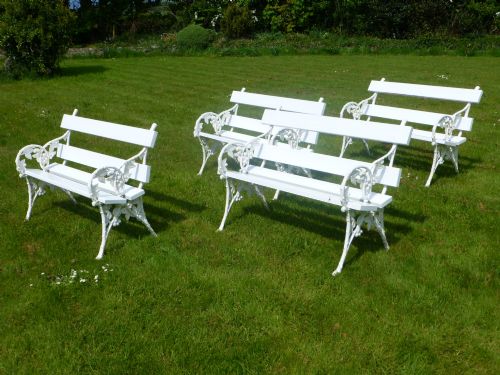
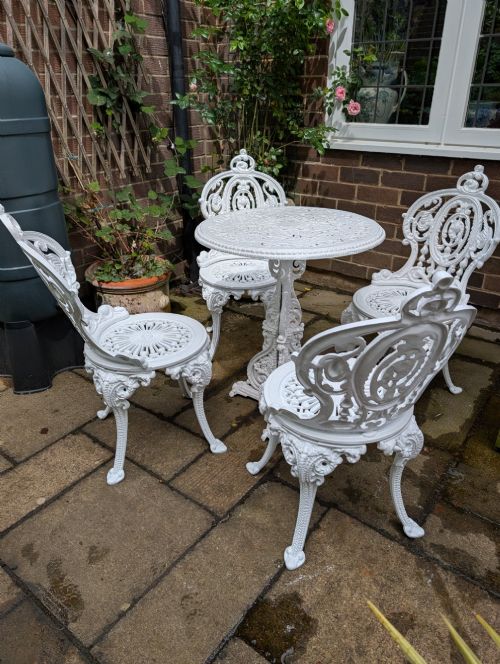
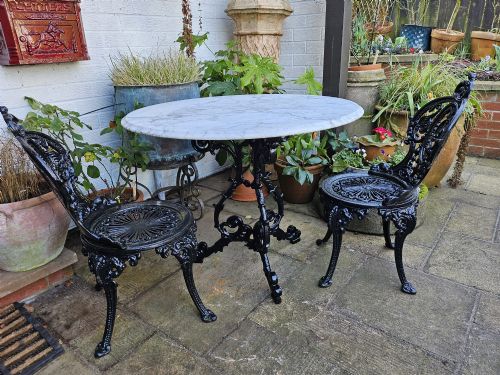
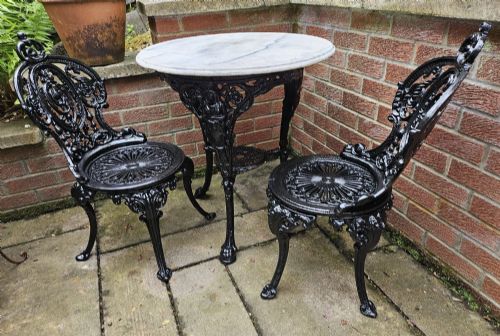
When you search for a cast iron garden set, you encounter robust groupings designed to withstand the elements while providing formal seating outdoors. These assemblies typically comprise a heavy table paired with matching chairs, benches, or occasionally urns intended for terrace decoration.
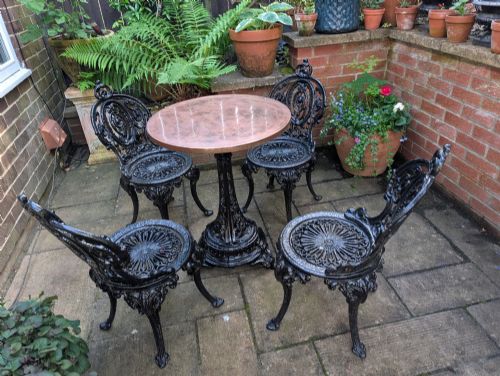
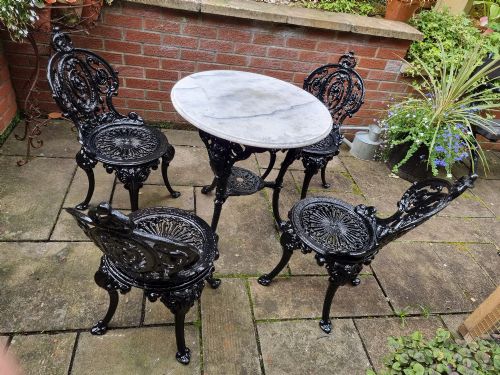
The pieces appearing on this page span the nineteenth century through the interwar years, encompassing Victorian, Gothic Revival, French bistro, and Art Deco styles. You will frequently find tables featuring marble tops alongside chairs cast with intricate botanical or geometric motifs.
How they were made
Foundries utilised molten metal poured into sand moulds to achieve the crisp botanical reliefs and structural rigidity characteristic of these groupings. Many tables incorporate contrasting inset marble tops, while supplementary materials such as timber, copper, and wrought iron appear across specific components.
Protective layers of paint historically served to guard the reactive metal against moisture, preserving the underlying casting work through decades of outdoor exposure.
Cast Iron Garden Set Retail Price Guide 2026
Typical asking prices for cast iron garden set among the pieces listed under this phrase on Sellingantiques today, from the lower quarter to the upper quarter. They describe what is for sale here now, not the wider market.
Listings feature periods spanning the nineteenth century, 1920, and 1930 alongside materials such as cast iron, marble, timber, and copper.
What varies in quality
The distinction between ordinary and exceptional sets lies primarily in the crispness of the casting and the ambition of the design. Foundries employing skilled modellers produced sharper leaf veins, deeper undercut foliage, and more harmonious proportions across table and chair legs.
Furthermore, the integration of supplementary elements, such as thick slab marble tops or documented foundry markings, elevates certain suites from standard utility garden furniture to notable examples of nineteenth-century metalwork.
Falkirk foundry·Christopher Dresser·Val D'osne·Coalbrookdale
The Cast Iron Garden Set Glossary
- Cast iron
- An iron-carbon alloy poured into moulds while molten. This material provides the heavy, rigid foundation necessary for durable outdoor furniture.
- Gothic Revival
- An architectural and decorative style drawing inspiration from medieval forms. Pieces in this idiom display pointed arches and ecclesiastical tracery.
- Bistro set
- A small table accompanied by two or four chairs intended for compact outdoor spaces. These groupings often feature round tops paired with openwork metal seats.
- Garden urn
- A decorative vessel cast in metal for planting or ornamental display. These objects frequently complement larger seating arrangements on terraces.
Cast Iron Garden Set: Frequently Asked Questions
How do I clean a cast iron garden set?
Remove loose debris with a soft brush and wash the surfaces using mild soapy water. Avoid harsh chemical agents that might strip protective coatings.
Dry the metal thoroughly after washing to prevent moisture accumulation in detailed crevices.
Can these sets stay outside all winter?
Cast iron withstands low temperatures well due to its substantial weight and structural density. However, repeated freezing moisture can compromise painted surfaces and stone elements.
Protecting marble tops and storing pieces under cover during harsh months preserves the material integrity.
How do I distinguish Victorian sets from later pieces?
Nineteenth-century examples typically display heavier casting, deeper botanical relief work, and specific foundry attributions. Victorian designs favour ornate Gothic or naturalistic blackberry motifs.
Twentieth-century iterations, including Art Deco variants, lean towards cleaner geometric lines and simpler bistro configurations.
Are marble table tops original to these sets?
Many nineteenth-century and 1930s garden tables were paired with heavy marble slabs to provide a stable, flat dining surface. These stone tops were often integrated specifically for terrace or conservatory use.
Inspect the seating arrangement to ensure the scale and period of the base align with the fitted top.