

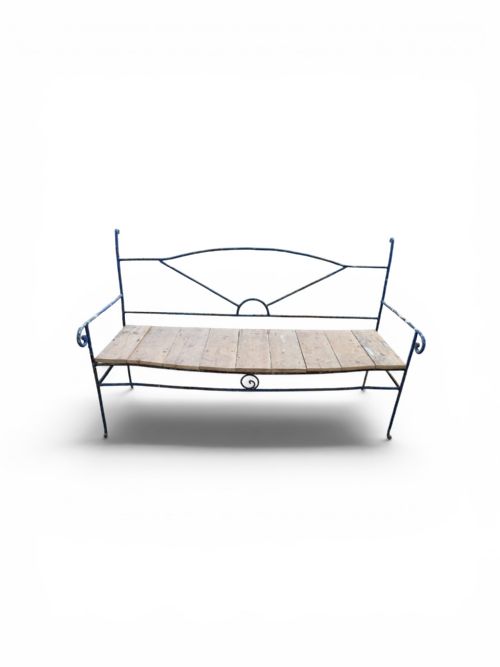
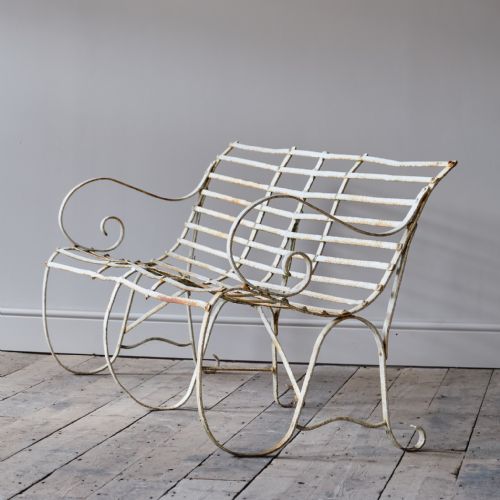
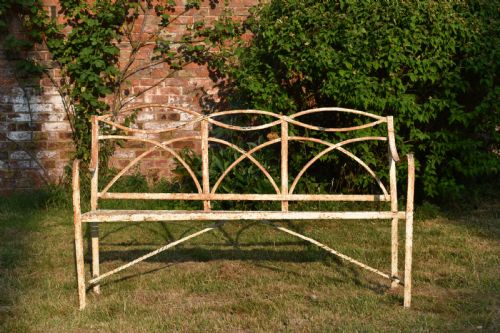
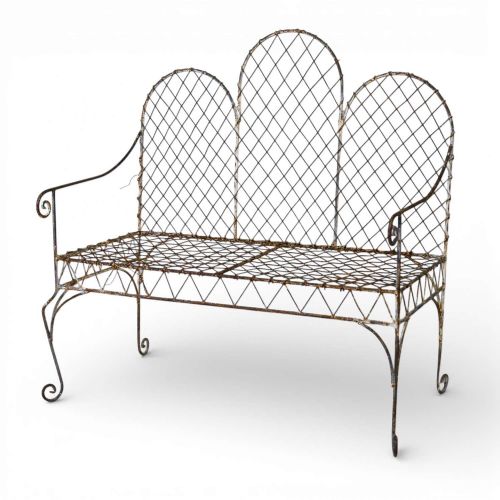
Vintage Metal Garden Seat
A vintage metal garden seat brings enduring character to a lawn or terrace, offering robust outdoor seating shaped by Victorian, Regency, and early twentieth-century design.
Vintage Metal Garden Seat
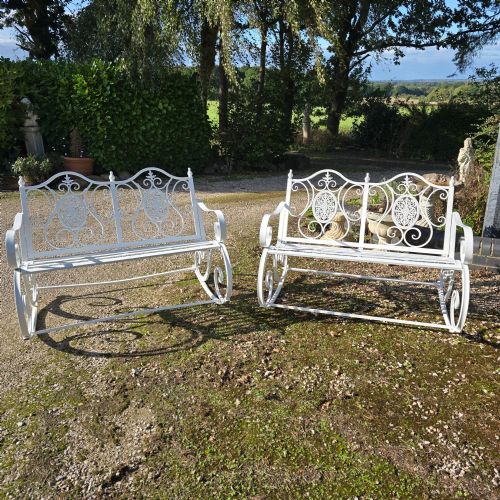
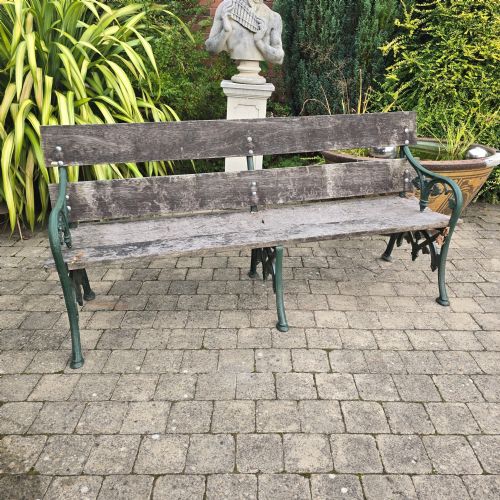
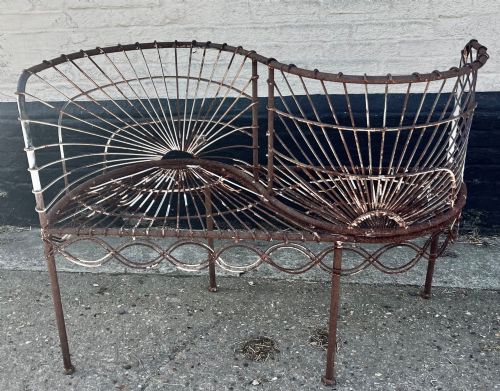
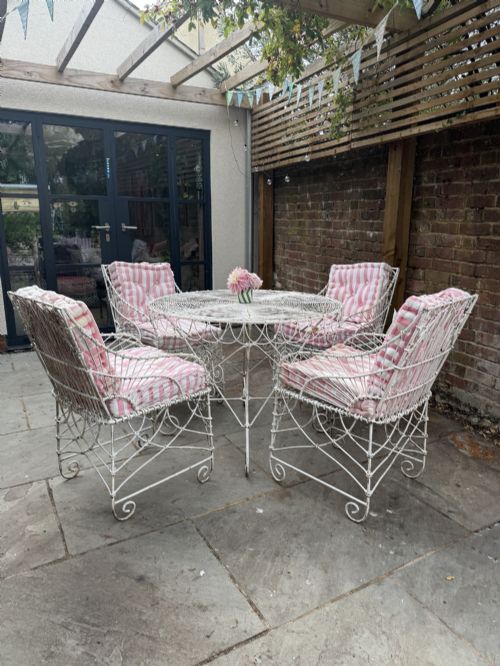
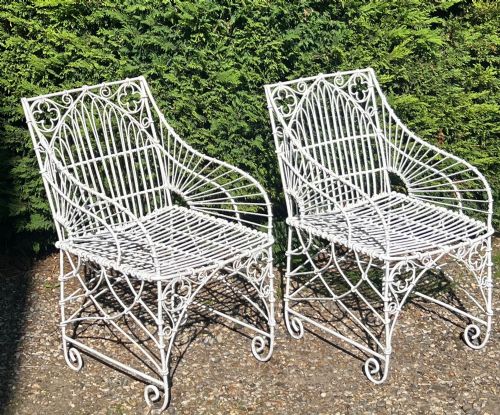
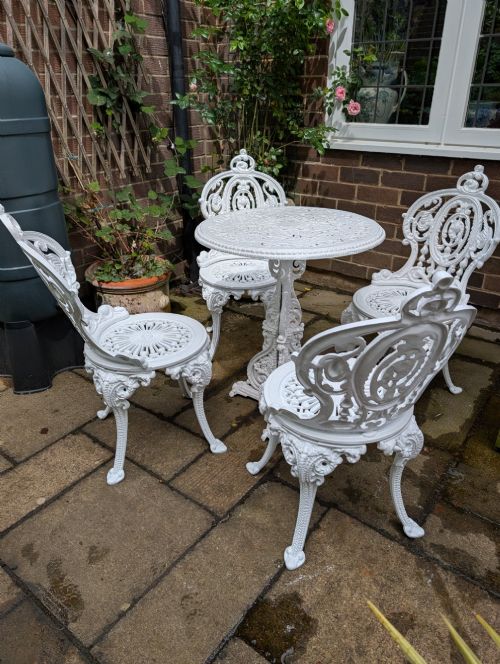
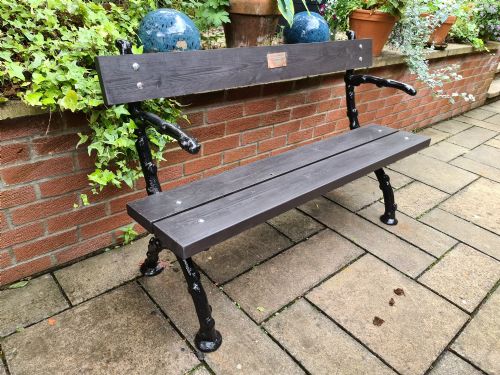
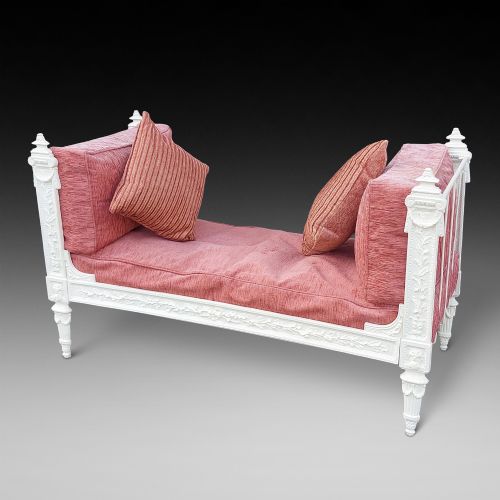
A vintage metal garden seat encompasses various outdoor forms, from single armchairs and daybeds to expansive benches and dining sets. Buyers searching for a vintage metal garden seat typically encounter pieces originating from the nineteenth century through the 1930s.
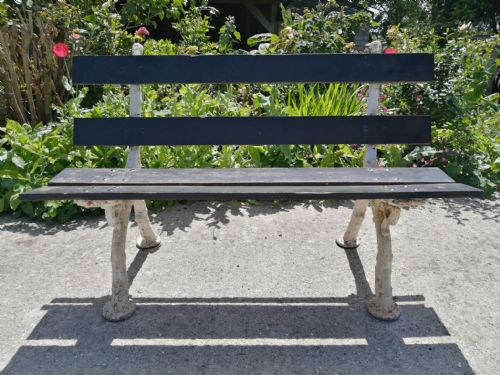
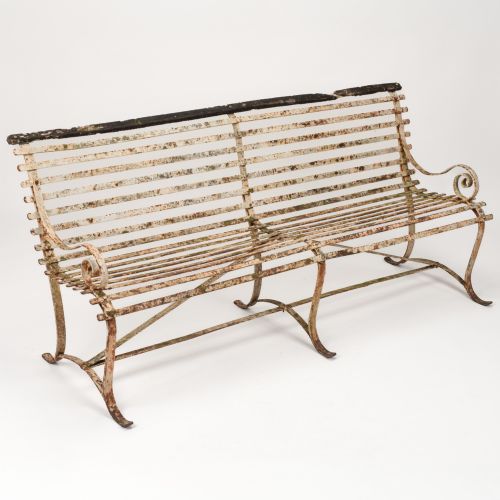
The selection ranges from Regency strapwork benches and Gothic Revival designs to French folding chairs and wirework arbours. Cast iron and wrought iron dominate the selection, frequently paired with timber slats or fabric elements.
Pieces span distinct periods including the Victorian era, Edwardian period, and the interwar years. Makers and designers such as Coalbrookdale and Christopher Dresser occasionally appear among the nineteenth-century examples.
Assessing quality and craftsmanship
The refinement of the casting or the precision of the hand-forged strapwork determines the visual merit of the piece. Crisp detailing in foliate scrolls, figural masks, and Gothic arches marks superior craftsmanship.
The integrity of the original metal frame and the survival of early or original paint surfaces distinguish exceptional examples from heavily altered ones. Heavier gauge iron and complete matching sets command particular attention from collectors.
Vintage Metal Garden Seat Retail Price Guide 2026
Typical asking prices for vintage metal garden seat among the pieces listed under this phrase on Sellingantiques today, from the lower quarter to the upper quarter. They describe what is for sale here now, not the wider market.
Listings feature items spanning the Victorian era, Regency period, Edwardian years, and the 1930s.
Coalbrookdale·Christopher Dresser
The Vintage Metal Garden Seat Glossary
- Cast iron
- A sturdy iron alloy poured into moulds to create decorative garden furniture. This technique allowed Victorian founders to produce elaborate relief patterns and sculptural bench ends.
- Wrought iron
- Iron heated and hammered into shape by hand to form structural elements and decorative scrolls. It yields resilient frames with characteristic linear grace.
- Strapwork
- Flat strips of metal interwoven or arranged in geometric patterns. This style defines many Regency and Victorian garden benches.
- Faux bois
- Imitation wood grain rendered in cast iron or other rigid materials. It was particularly favoured by nineteenth-century foundries seeking rustic charm.
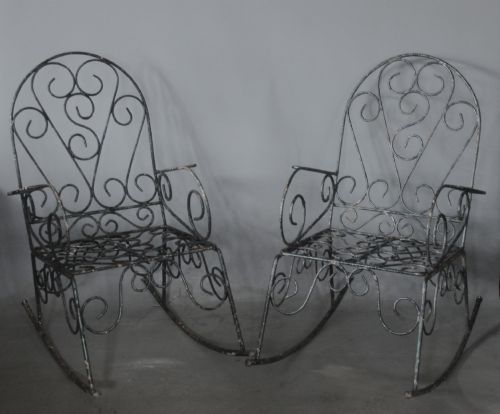
- Wirework
- Metal rods and wire bent into intricate mesh and scroll formations. It creates lighter garden arbours and seating structures.
Vintage Metal Garden Seat: Frequently Asked Questions
How do I care for a metal garden seat outdoors?
Protect the piece during harsh winter months by storing it under cover or using a breathable protective sheet. Maintain existing paint layers by addressing minor flaking promptly with appropriate metal primers.
Avoid placing iron legs directly on damp soil to prevent excessive moisture absorption and subsequent corrosion. Regular gentle cleaning removes debris that traps moisture against the metal surface.
Are these garden seats comfortable to sit on?
Many nineteenth-century and early twentieth-century metal seats feature contoured strapwork or supportive armrests designed for extended outdoor relaxation. Adding fitted cushions improves comfort on open iron slats.
Chairs with timber or fabric elements offer a slightly softer seating experience compared to solid cast iron surfaces. Generous proportions on two-seater and multi-seater benches provide ample room.
How can I tell a Victorian seat from a later reproduction?
Examine the construction joints, fastener types, and the weight of the metal components. Nineteenth-century pieces frequently employ hand-forged rivets, threaded bolts with hand-cut threads, and heavier cast iron sections.
Surface patination and layers of weathered paint also offer clues to genuine age. Crisp, uniform casting without pitting often points to twentieth-century or contemporary manufacturing.
Can I leave my iron garden bench outside all year?
Cast and wrought iron withstand outdoor conditions well, provided the protective paint barrier remains intact. Garden seats have stood in courtyards and parks for generations through changing seasons.
However, extreme frost can occasionally affect seats incorporating wooden elements or damaged joints. Checking the stability of bolts annually ensures the bench remains safe for use.