
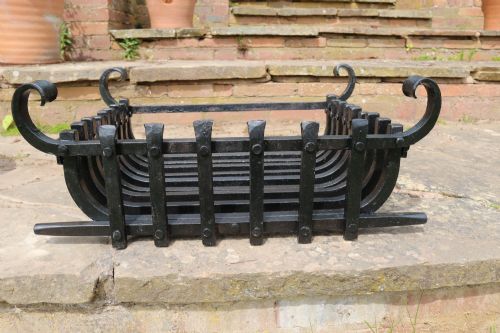
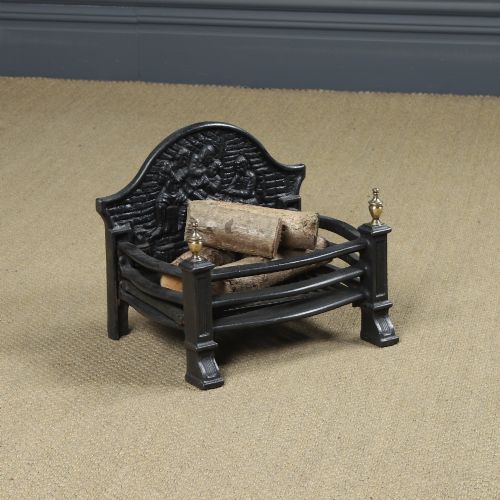
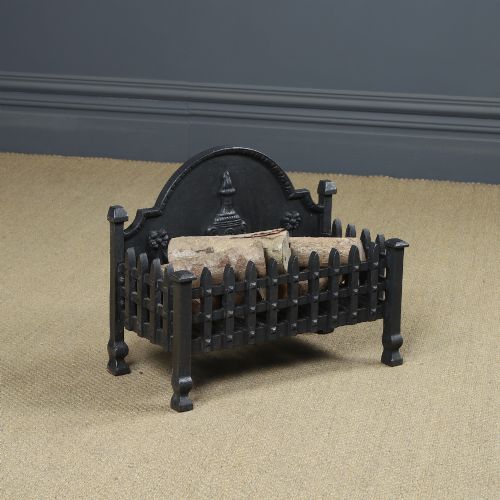
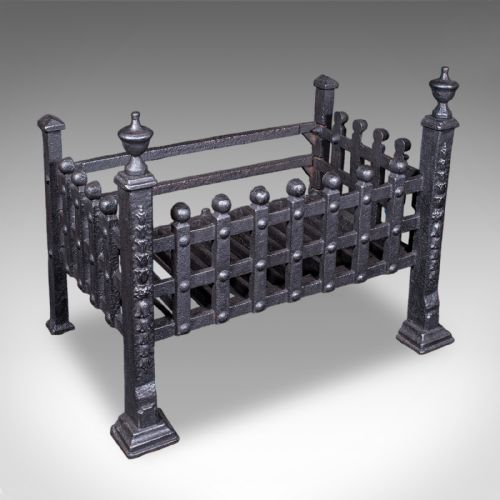


Cast Iron Log Basket
A cast iron log basket grounds a hearth with weight and structure, built to hold wood fuel safely through winter fires.
Cast Iron Log Basket
When you search for a cast iron log basket, you encounter robust open fire grates, hearth baskets, and fire baskets paired with andirons or fire backs. These pieces originate across the Victorian, Georgian, and Regency periods, alongside later twentieth-century iterations from the 1920s and 1930s.
The versions most common on this page combine sturdy cast iron construction with wrought iron frameworks, frequently appearing as freestanding units intended for large inglenook hearths or standard open fireplaces. Certain examples integrate auxiliary pieces such as brass elements, fenders, or heavy fire backs.
Stylistic variations draw heavily on historical revivals, spanning Gothic Revival, Neoclassical, Adams, and Arts and Crafts designs. These decorative vocabularies dictate the casting patterns on the basket fronts and the shaping of the supporting andirons.
Materials and construction methods
Makers utilised cast iron for its ability to retain heat and withstand high temperatures, pouring molten metal into sand moulds to create thick firebacks, grates, and decorative panels. Wrought iron provided structural strength for supporting frames and handles, shaped through blacksmithing techniques like forging and riveting.
Secondary metals such as brass appeared in decorative trim or fittings, while copper and firebrick supplemented specific components in related hearth sets. Paint finishes were occasionally applied to protect the ironwork from corrosion when unlit.
Some heavy iron dog grates weigh more than a generous Saint Bernard.
Assessing quality in hearth furniture
Quality rests primarily in the thickness and weight of the metal casting, where heavier grates and deeper fire backs indicate superior durability under intense heat. The crispness of the decorative relief work - whether Gothic tracery or Neoclassical swags - separates standard production from finer foundry output.
The integrity of the assembly matters greatly, distinguishing pieces joined by solid forge-welded or riveted wrought iron from those with compromised structural joints. Completeness also influences the piece, as surviving matched sets featuring original andirons or fire backs hold greater architectural coherence.
The Cast Iron Log Basket Glossary
- Fire basket
- A metal container designed to hold burning wood logs or coal within an open fireplace. It stands on legs or andirons to allow air circulation underneath.
- Andiron
- One of a pair of horizontal metal supports placed in a fireplace to hold burning logs. They often feature decorative vertical pillars at the front.
- Fire back
- A heavy cast iron plate placed at the back of an open fireplace. It protects the masonry wall and reflects heat forward into the room.
- Inglenook
- A large recessed space around a fireplace, historically large enough to sit within. Baskets designed for these spaces tend to be of substantial proportions.
- Gothic Revival
- An architectural and decorative style popular during the nineteenth century. It revives medieval forms, pointed arches, and heavy structural detailing.
Cast Iron Log Basket: Frequently Asked Questions
How do I choose the right size fire basket?
Measure the width, depth, and height of your fireplace opening carefully before selecting a basket. Leave adequate clearance around the sides and back for proper airflow and safety.
Larger inglenook grates require substantial hearth space and heavy-duty floor support due to their immense weight. Smaller hearths suit compact cast iron grates designed for standard chimney dimensions.
Can these baskets burn real wood?
Most of these pieces functioned historically as open fire grates designed for burning solid fuel. Cast iron and wrought iron handle high heat effectively during active fires.
Check the internal condition for structural integrity before lighting a fire. Some decorative examples serve primarily as hearth furnishings or log storage.
How do I clean and maintain cast iron?
Remove ash and debris regularly to prevent moisture retention and subsequent rusting. Wipe surfaces with a dry cloth and apply specialist grate polish or oil periodically.
Avoid using water directly on unpainted iron surfaces. Proper ventilation in the room keeps condensation away from the metal.
How do I identify the period of a basket?
Examine the decorative style and casting techniques for clues about the era. Victorian and Gothic Revival pieces display heavy ornamentation, whereas Arts and Crafts designs favour simpler forged ironwork.
Georgian and Regency items often showcase restrained Neoclassical or Adams detailing. Undated twentieth-century reproductions frequently mimic these earlier eighteenth-century aesthetics.