


Open Fire Grate Basket
An open fire grate basket sits at the heart of the hearth, holding fuel securely while directing heat into the room.
Open Fire Grate Basket
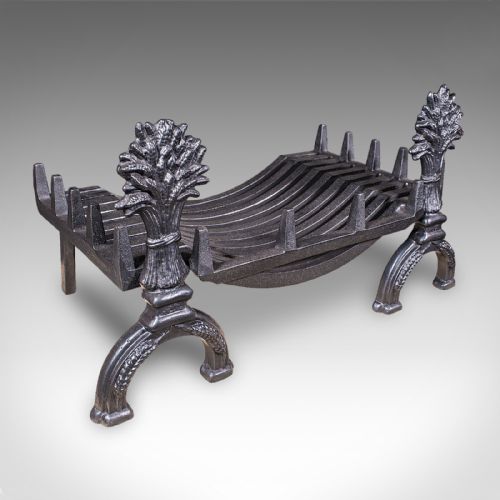
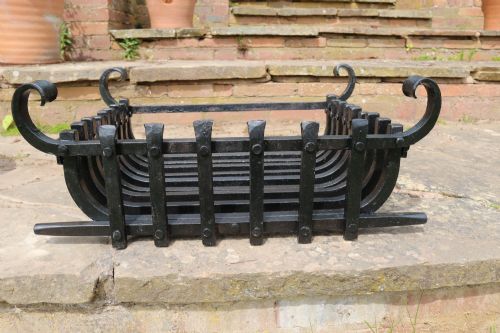
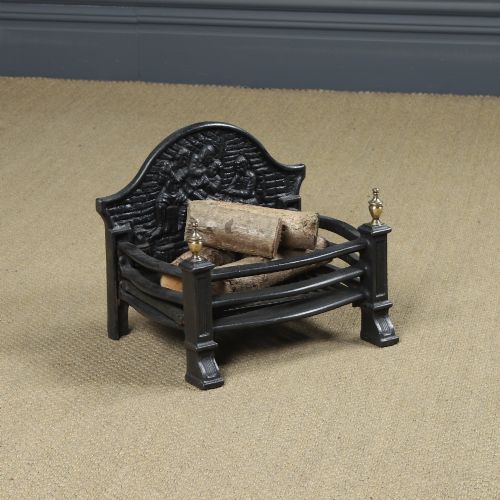
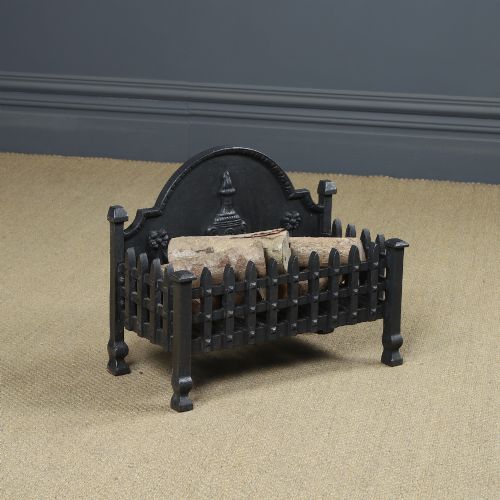
An open fire grate basket forms the central containment for solid fuel within an open hearth, designed to hold logs or coal safely above the hearth floor. When searching for an open fire grate basket, collectors encounter sturdy cast iron and wrought iron forms set within English country house fireplaces. These utilitarian hearth furnishings range from compact grates to substantial inglenook fire baskets accompanied by matching andirons.
The pieces available span the Victorian and Edwardian eras, alongside later interpretations styled in the 17th-century, Gothic Revival, and Neoclassical traditions. Many examples incorporate integrated firebacks, fenders, or fire dogs to complete the hearth assembly. Each version reflects the domestic heating requirements of its period, balancing functional fuel retention with decorative metalwork.
How they were made
Cast iron provides the structural foundation for the majority of these grates, shaped through traditional foundry techniques to withstand intense heat. Wrought iron elements offer added strength and flexibility in forged decorative sections, particularly in Arts and Crafts examples. Brass details occasionally appear as contrasting accents on fire baskets and associated andirons.
Firebrick linings are utilised within specific grate assemblies to insulate the surrounding metal and improve heat reflection into the room. The combination of heavy cast elements and forged iron components results in durable hearth furniture built for continuous daily use.
Materials recorded across the inventory include cast iron, wrought iron, brass, and firebrick.
What varies in quality
The standard of an open fire grate basket depends largely on the weight of the metal and the precision of the foundry work. Heavier cast iron bodies and substantial wrought iron bars indicate superior durability and a more substantial presence within a large hearth. Finer examples display crisper detailing in revival styles such as Gothic Revival and Neoclassical patterns.
Completeness also influences the overall character of a piece, as integrated sets including andirons, fenders, and firebacks present a more cohesive hearth arrangement. The integration of structural firebrick and the balance of decorative elements demonstrate the maker's attention to both function and aesthetic design.
The Open Fire Grate Basket Glossary
- Fire basket
- A metal container designed to hold coal or wood off the floor of a fireplace. It allows air to circulate underneath the fuel for better combustion.
- Andirons
- Supporting metal pillars placed on either side of a hearth to hold logs. They often accompany open fire grates in larger fireplaces.
- Fireback
- A heavy iron plate placed at the back of a fireplace. It protects the wall and reflects heat forward into the room.
- Gothic Revival
- An architectural and decorative style drawing on medieval forms. This style appears frequently in Victorian and later cast ironwork.
- Neoclassical
- A design movement inspired by classical antiquity featuring symmetrical motifs and restrained ornamentation. It influences several of the revival grates found in this category.
Open Fire Grate Basket: Frequently Asked Questions
How do I choose the right size grate?
Measure the width, depth, and height of your fireplace opening carefully before selecting a basket. Ensure there is adequate clearance around the sides and back for proper airflow.
Consider whether your setup includes andirons or a fireback, as these additions require extra depth within the hearth space.
Can these baskets burn real wood and coal?
Most of these iron and steel baskets are constructed for burning solid fuels like wood logs or coal. The heavy metal thickness handles high temperatures effectively.
Check for internal firebricks or solid base grates that protect the outer structure from direct, prolonged flame exposure.
How do I clean cast iron fire grates?
Remove ash and debris regularly using a stiff brush and a small shovel once the metal cools completely. Avoid using water, which can cause the iron to rust quickly.
Apply a traditional grate polish or black lead periodically with a soft cloth to maintain the dark finish and protect the surface.