


Cast Iron Campana Urns
Cast iron campana urns are classical garden vessels shaped like bells that anchor a terrace or pathway with formal weight.
Cast Iron Campana Urns
Cast iron campana urns are traditional garden vessels designed in a bell-like profile with flared rims, deep bowls, and pedestal feet. When you search for cast iron campana urns, you encounter substantial outdoor ornaments built to hold seasonal planting or stand alone as architectural focal points.
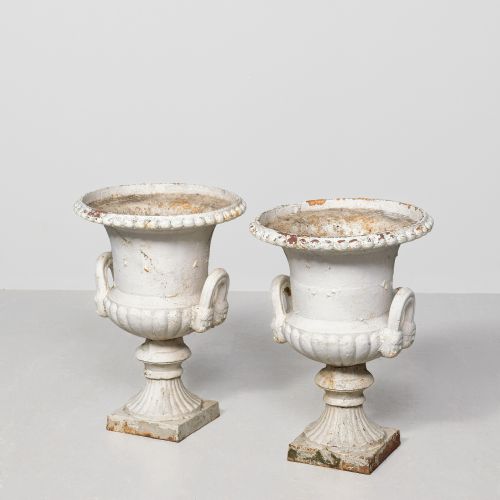
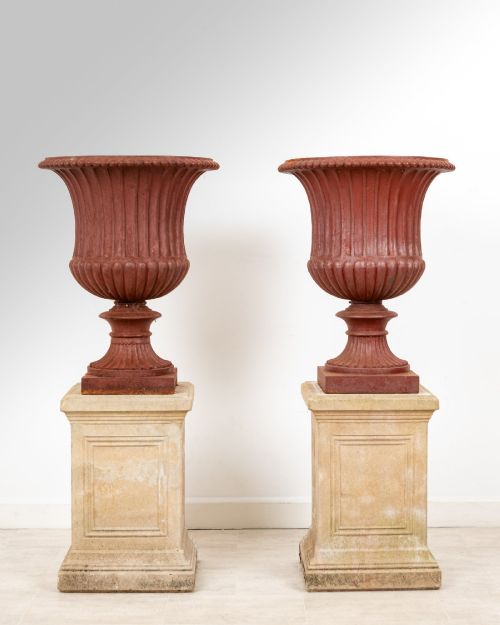
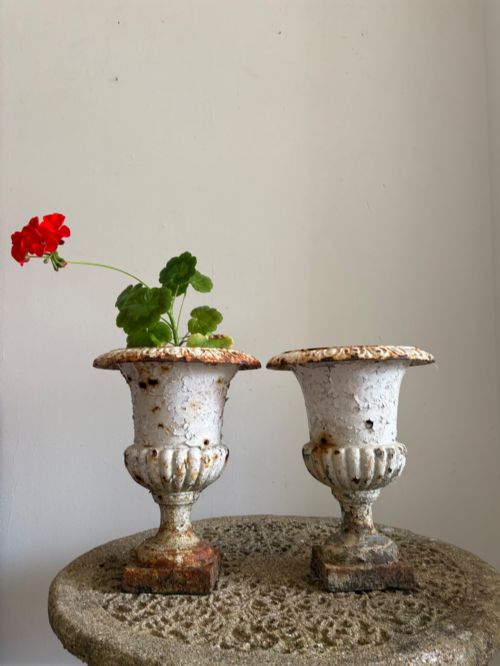
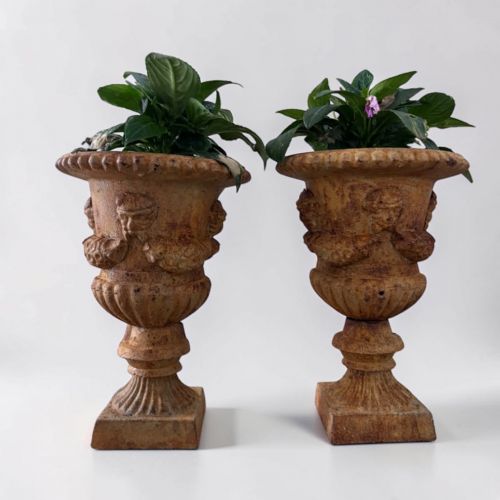
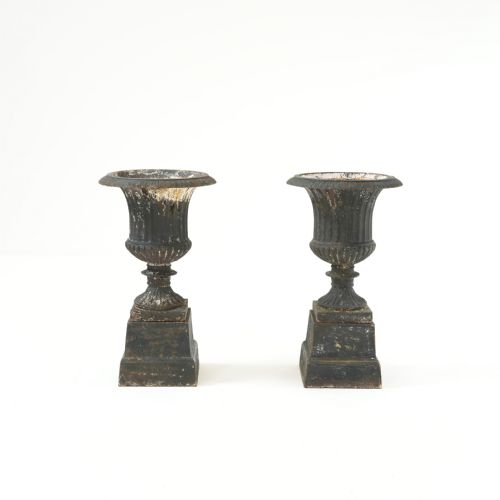
Most examples found here date from the nineteenth century, including Victorian periods, with distinct French and English regional influences. They frequently appear as matched pairs, standing either directly on the ground or elevated upon stone pedestals and plinth bases.
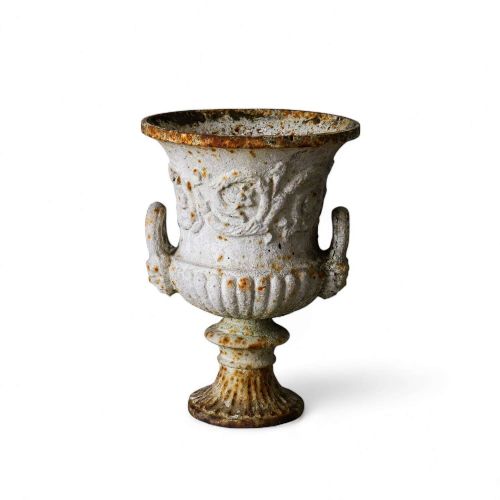
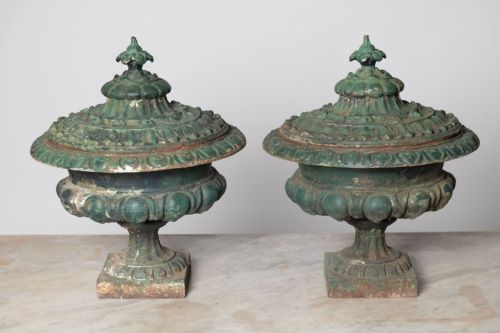
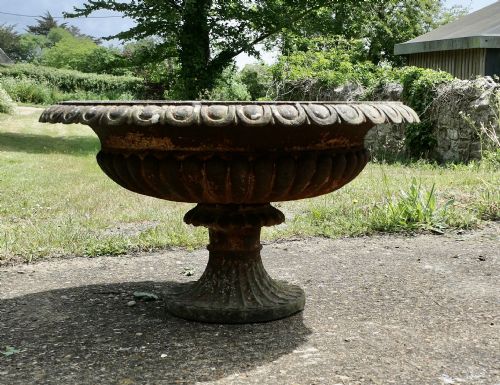
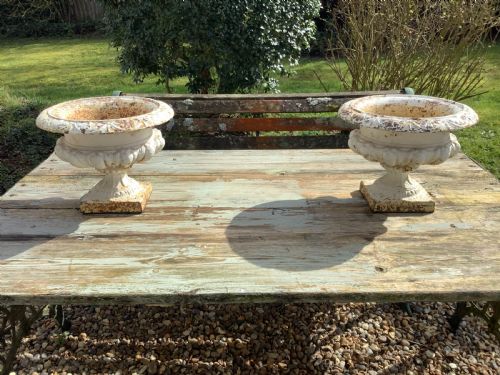
The scale ranges from modest table urns to large terrace pieces designed for grand lawns. Forms include shallow campana variations, gadrooned bodies, and designs retaining original lids or weathered painted surfaces.
How they were made
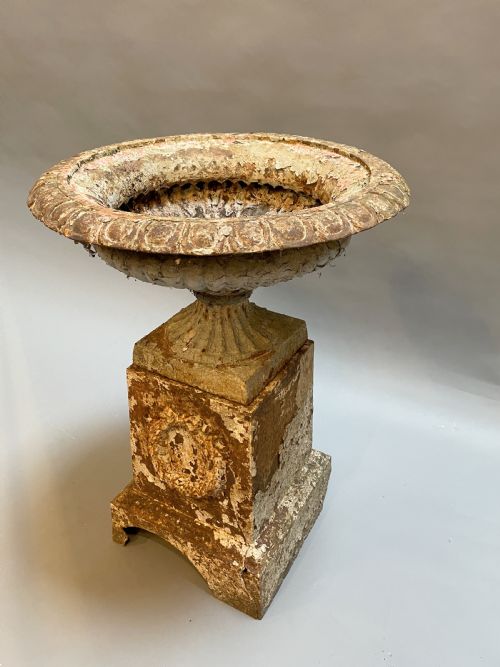
These pieces are produced by pouring molten metal into sand moulds to create robust cast iron structures capable of withstanding outdoor elements. Many examples incorporate supporting stone pedestals or plinth bases to lift the iron bowl off damp ground.
Surface treatments vary from burnished finishes to original distressed paint that reveals decades of weathering. Detail work often includes cast gadroon moulding around the lower bowl, giving texture and classical relief to the heavy metal.
The inventory includes matched pairs in forms ranging from shallow garden planters to tall terrace vessels.
What varies in quality
Quality in these vessels lies in the crispness of the casting detail and the proportion of the classical campana silhouette. Superior pieces retain sharp relief along the rim and body without the smoothing away of ornament that happens in worn-out production moulds.
The presence of matching original components, such as pedestals, stands, or lids, elevates a pair. Surviving early paint layers and stable weathered surfaces also distinguish exceptional examples from later replacements.
Andrew Handyside
The Cast Iron Campana Urns Glossary
- Campana
- A bell-shaped garden vessel with a flared rim and a tapering body. This classical form originates from antiquity and defines the traditional garden urn.
- Plinth base
- A solid block or pedestal that supports the urn. It raises the vessel to improve visibility and protect the metal from ground moisture.
- Gadrooned
- Ornamented with a series of convex curves or flutes moulded into the body of the urn. This decorative banding typically appears around the lower bowl.
- Terrace urn
- A large garden vessel designed for placement on patios or stone terraces rather than directly in soil beds. These pieces provide formal structure to outdoor spaces.
Cast Iron Campana Urns: Frequently Asked Questions
Where should I place cast iron campana urns?
These vessels suit formal terraces, garden entrances, and pathway junctions where their classical silhouette provides structure. They work particularly well when positioned symmetrically as pairs on either side of a set of steps or a doorway.
Ensure the ground beneath them is level and stable, such as stone paving or a reinforced plinth. Because iron is heavy, choose a permanent spot where the urn can remain through changing seasons.
How do I plant up a heavy iron urn?
Fill the lower portion of the bowl with lightweight material like broken pottery or plastic bottles to improve drainage and reduce total weight. Top this with a rich potting compost suitable for your chosen seasonal plants.
Select trailing plants that soften the hard metal rim, paired with upright varieties that complement the vertical line of the campana shape. Check that the drainage hole remains clear so water does not pool inside the iron.
Can these urns stay outside all winter?
Cast iron is durable and withstands cold weather, but trapped freezing water can crack the metal over time. Ensure your urn has an open drainage hole so rain and melting snow escape freely.
Elevating the base slightly off the ground on feet or a stone plinth prevents moisture from drawing up into the iron during prolonged wet spells.
How do I distinguish nineteenth-century examples?
Nineteenth-century pieces often display heavier casting, distinct parting lines from sand moulds, and deep layers of historical paint or natural oxidation. The metal tends to have a denser texture compared to later reproductions.
Look for classical revival styling, such as pronounced gadrooning and deep bell profiles typical of the Victorian era. Matched pairs from this period frequently show slight hand-finished variations between the two pieces.