
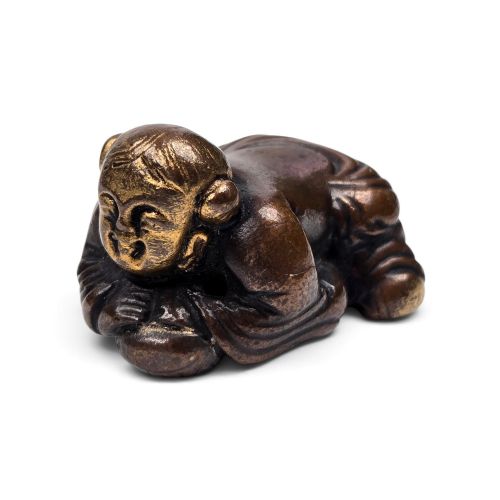
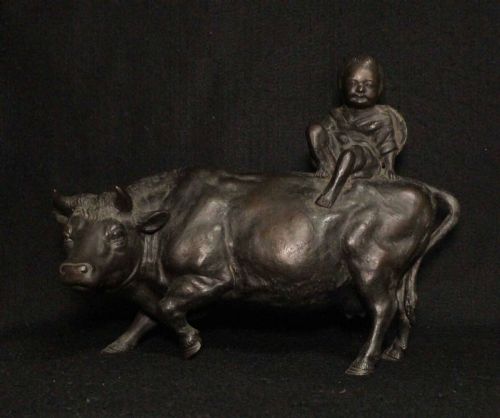
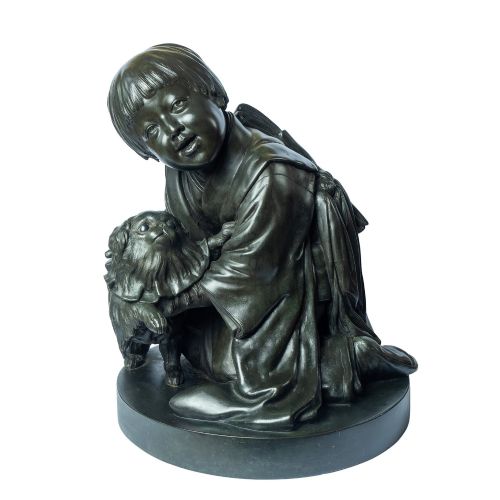


Cast Bronze Boy Figure
A cast bronze boy figure is a small sculptural work capturing youth, most commonly found here as nineteenth-century European desk pieces and Asian okimono.
Cast Bronze Boy Figure
A cast bronze boy figure represents young subjects ranging from European realists to traditional Asian scholars and riders. These works appear as desk paperweights, cabinet sculptures, and garden statues across various historical periods.
The selections on this page span the sixteenth century through the early twentieth century, taking stylistic cues from French realism, Art Nouveau, Meiji Japan, and the Ming Dynasty.
How They Were Made
These figures rely on metal casting techniques, often utilising solid-cast bronze shaped into detailed forms. Artisans sometimes applied gold leaf or developed dark and patinated surfaces to finish the metal.
Certain pieces incorporate additional media such as marble bases or mounts to support the primary bronze sculpture.
Materials extend beyond basic bronze to include selective fire-gilding, marble supports, and applied gold leaf.
What Varies in Quality
Quality depends upon the crispness of the cast and the nuance of the chasing work applied after the metal cools. Finer examples retain sharp facial expressions, clothing folds, and hair texture.
The depth and consistency of the patina or the application of selective fire-gilding further distinguish superior workshop production from standard output.
Masaaki·Giuseppe Renda·Joaquim Angles·Antoine Bofill·Auguste Moreau·Charles Anfrie·Emile Victor Blavier·Lavergne·Eugene Laurent
The Cast Bronze Boy Figure Glossary
- Patina
- A surface sheen or colouration developed on bronze over time or through chemical treatment. This finish protects the metal and defines sculptural details.
- Okimono
- A Japanese decorative object designed for display on a shelf or in a tokonoma alcove. These sculptures often depict figures, animals, or daily scenes.
- Fire-gilding
- A process where an amalgam of gold and mercury is applied to bronze and heated until the mercury vapourises, leaving a permanent gold layer. It creates a rich, durable surface.
- Realism
- An artistic movement focusing on everyday subjects rendered without idealisation. In sculpture, this translates to lifelike postures and authentic character studies.
Cast Bronze Boy Figure: Frequently Asked Questions
How are these figures displayed?
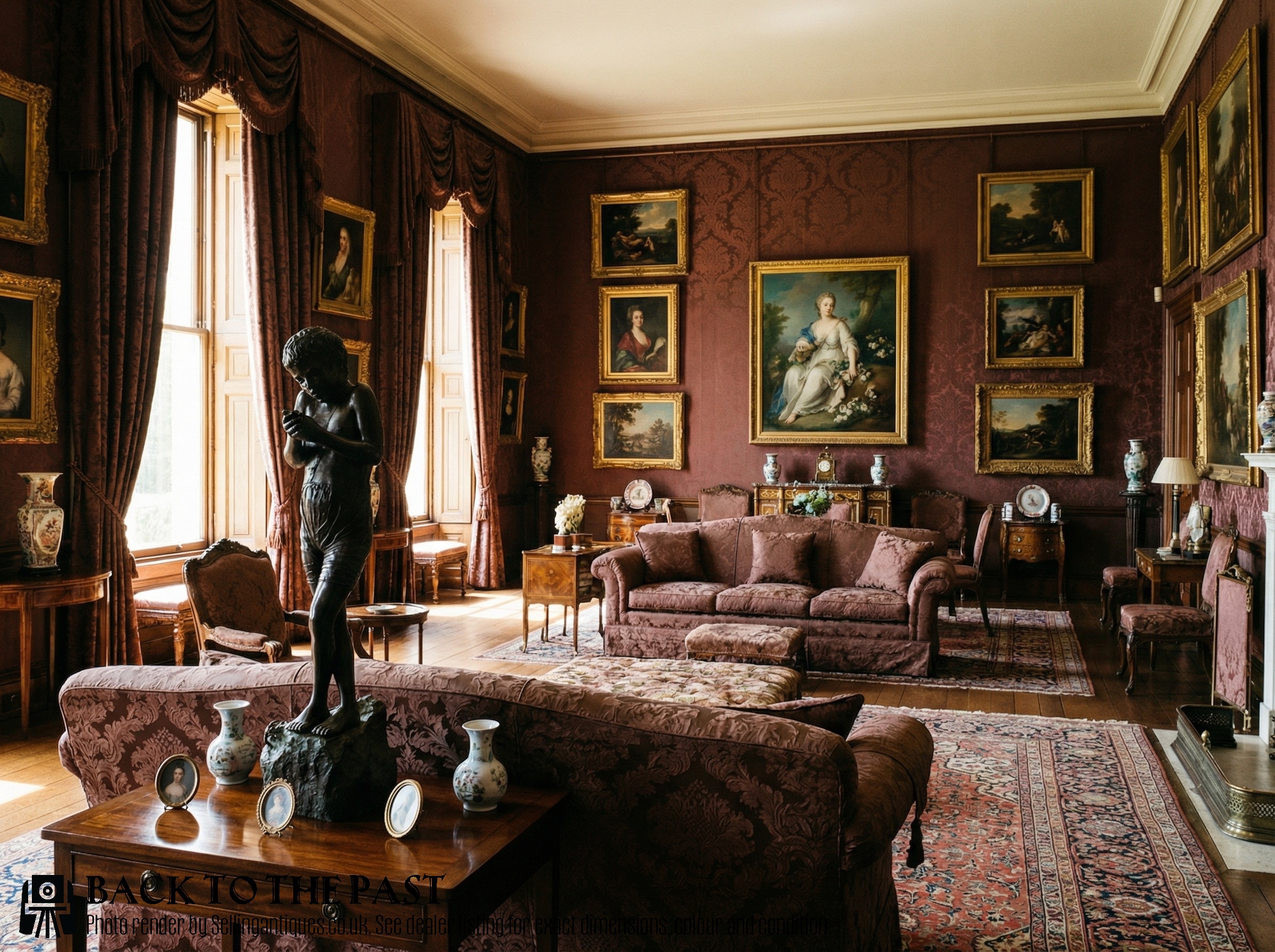
Smaller works function well on desks and side tables as paperweights or decorative objects. Larger pieces suit pedestals or garden settings depending on their scale.
Position them away from direct moisture to protect the patinated surface over time.
What periods do these bronzes cover?
The selection includes items spanning from the sixteenth century Ming Dynasty up through nineteenth-century European and Japanese Meiji period works.
Each era brings distinct regional casting traditions and stylistic preferences to the subject.
How do I care for bronze?
Dust the surface gently with a soft dry cloth to prevent grime accumulation. Avoid harsh chemical cleaners that might strip the original patina.
Occasional light waxing can help preserve exposed metal surfaces in stable indoor environments.
What is an okimono?
An okimono is a traditional Japanese freestanding sculpture meant for interior display. These pieces showcase skilled metalwork and naturalistic subjects.
They sit comfortably among other cabinet bronzes and desk ornaments.