
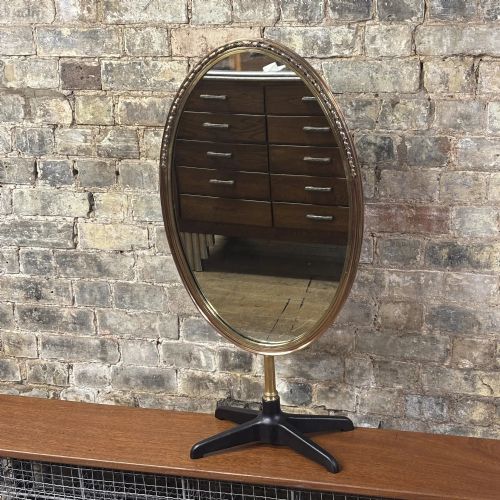


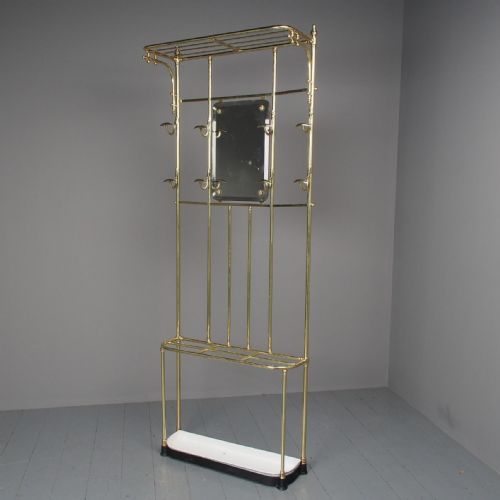
Cast Brass Mirror
These cast brass mirror examples deliver solid period weight and decorative detail to any room.
Cast Brass Mirror
A cast brass mirror brings together heavy metalwork and reflective glass, appearing across wall hanging, dressing, and table formats. The selection here leans heavily towards Victorian and early 20th century pieces, capturing styles from plain oval frames to elaborate revival designs.
Makers utilised durable metal casting to produce sturdy surrounds that held up well in hallways, dressing rooms, and parlours. You will frequently encounter wall mirrors featuring decorative crests alongside smaller table and dressing variants designed for practical daily use.
How they were made
Foundries shaped these heavy frames through metal casting, pouring molten alloy into moulds to achieve raised ornamentation, masks, and scrollwork. Many examples incorporated brass or bronze alongside wood backing structures to support the weight of the plate.
The glass plates themselves were often bevelled at the edges to catch the light, seated securely within the metal rebates. Original mirror plates frequently show subtle ageing, distinguishing genuine period items from later replacements.
What varies in quality
Depth and crispness of the casting set the better examples apart, as finer pieces display sharp relief work on crests, masks, and cherubs rather than soft, blurred outlines. The weight of the metal and the presence of original bevelling on the glass indicate higher standards of manufacture.
A matched pair or pieces retaining their original backing and mirror plate command stronger interest among collectors than single, altered items. Construction integrity in the joints and mounts determines how well a heavy frame endures over the decades.
The Cast Brass Mirror Glossary
- Cast brass
- An alloy of copper and zinc poured into a mould to form solid decorative objects and frames. This technique allowed makers to achieve intricate relief decoration that stamped sheet metal could not match.
- Bevelled glass
- A mirror plate with edges cut and polished at an angled slope to create a decorative framing effect. This traditional detail adds depth and catches the light differently than flat plate glass.
- Girandole
- A decorative wall mirror fitted with attached candle sconces or branch holders. The reflective brass and glass served to amplify candlelight in dark Victorian rooms.
- Neoclassical revival
- A design movement drawing inspiration from classical Greek and Roman architecture and ornament. Pieces in this style display symmetrical balance, urns, and restrained classical motifs.
Cast Brass Mirror: Frequently Asked Questions
Are original mirror plates common?
Many surviving examples retain their original glass, which often exhibits characteristic foxing, light oxidation, or minor speckling. These subtle signs of age confirm the authenticity of the piece.
Replacement glass tends to look overly clear and lacks the depth found in nineteenth century plates.
How do I clean cast brass frames?
Dust the frame gently with a soft, dry cloth to remove surface particles without disturbing the metal finish or the glass edges. Avoid harsh commercial dips or abrasive polishes that strip away the aged patina collected over decades.
Preserving the darker recessed areas highlights the crisp details of the original casting.
What rooms suit a table mirror best?
Dressing and table mirrors work effectively on top of chest of drawers, sideboards, or dedicated dressing tables. Their smaller scale allows them to sit comfortably on furniture surfaces while offering adjustable angles for daily use.
They also add reflective light to darker corners of a bedroom or hallway.