



Cast Brass Fireplace Accessories
Cast brass fireplace accessories bring warmth and heavy metal detail to the hearth, spanning Victorian, Edwardian and Georgian periods.
Cast Brass Fireplace Accessories
When you search for cast brass fireplace accessories, you encounter heavy functional metalwork designed to manage coal and wood fires. These pieces originate predominantly from the nineteenth century and the early twentieth century, carrying the stylistic weight of Victorian, Edwardian and Georgian eras.
Many items display defined aesthetic movements, including Gothic Revival, Aesthetic Movement, Neoclassical and Baroque styles. English and French workshops produced these items to serve both a practical utility and a decorative role in the principal rooms of the house.
Method and material
The primary material is cast brass, poured into moulds to create heavy, rigid forms with ornate surface relief. Manufacturers combined this brass with cast iron, steel and gun metal where structural strength was required to withstand intense hearth heat.
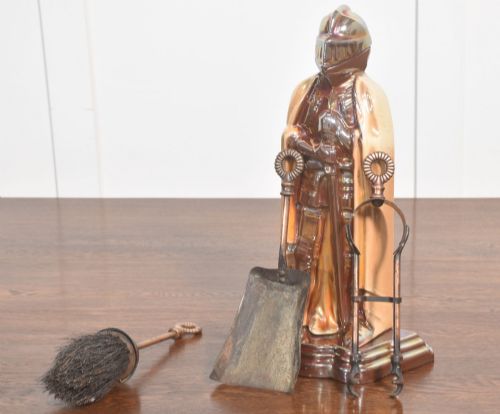
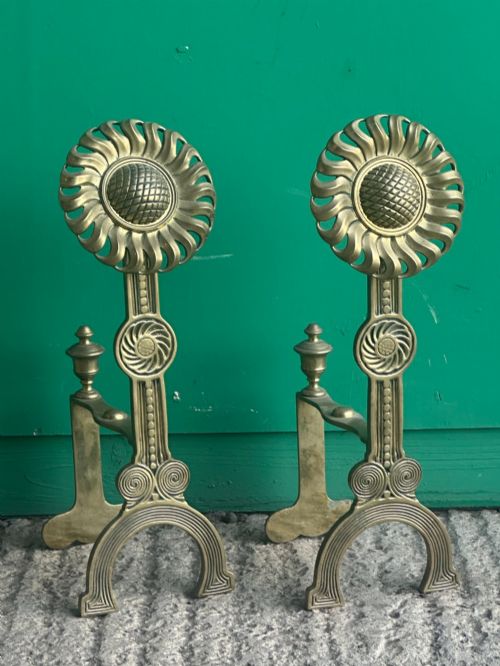
Details on these accessories were often hand-finished after casting, sharpening the lines of sunflowers, floral motifs or heraldic shields. Certain companion sets and fire tools incorporate iron shafts with brass handles, or bristles set into iron bases for sweeping hearth ash.
A cast iron crinoline lady stands ready to sweep the hearth, holding her heavy metal skirts before the fire.
Distinctions in standard
Quality rests in the crispness of the cast detail and the thickness of the metal used. Superior items display deep, clean relief work without the softening that happens when moulds are worn or poorly cleaned after pouring.
Substantial weight and balanced proportion separate standard utilitarian tools from finer decorative companion pieces. Maker attribution, such as work attributed to Thomas Jeckyll or William Tonks, elevates the design standard of individual pairs.
Thomas Jeckyll·William Tonks·John Linwood of Birmingham
The Cast Brass Fireplace Accessories Glossary
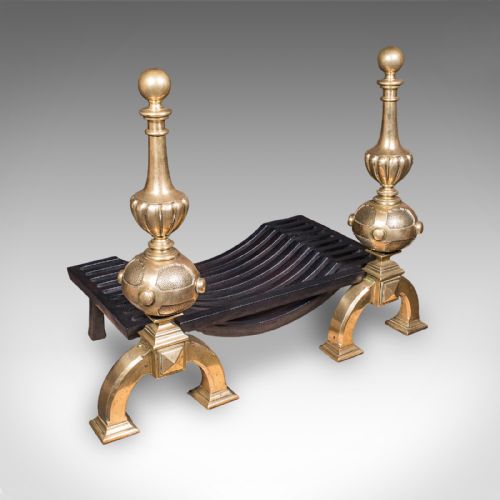
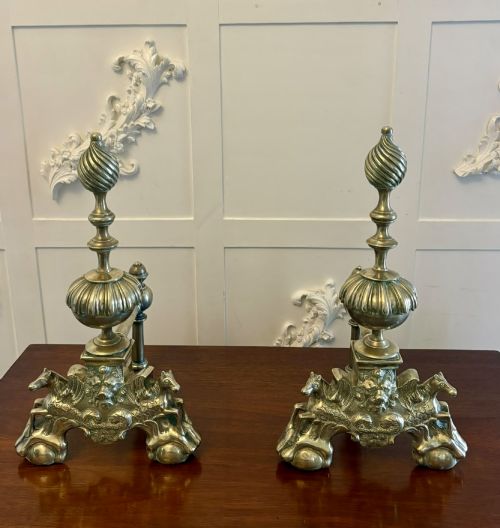
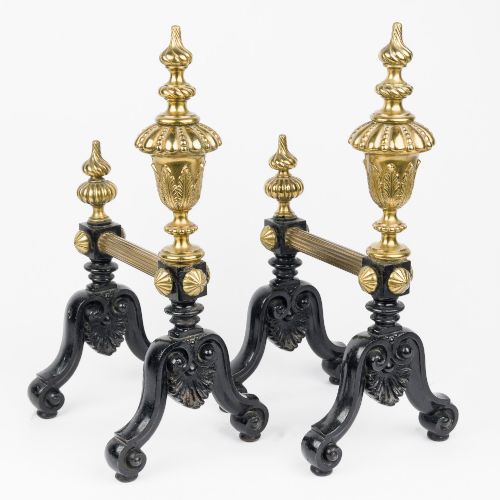
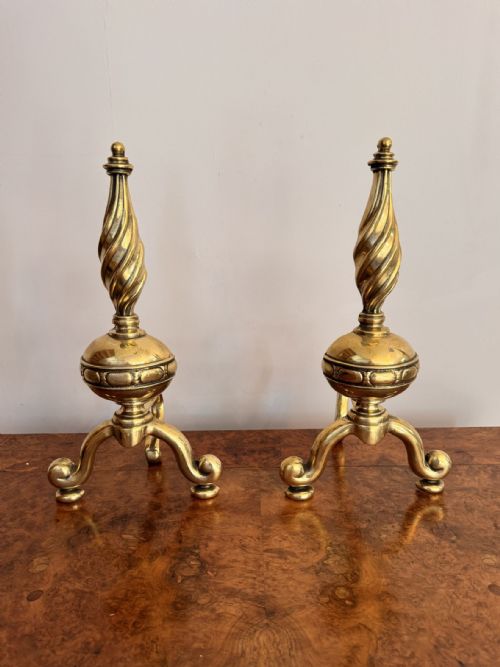
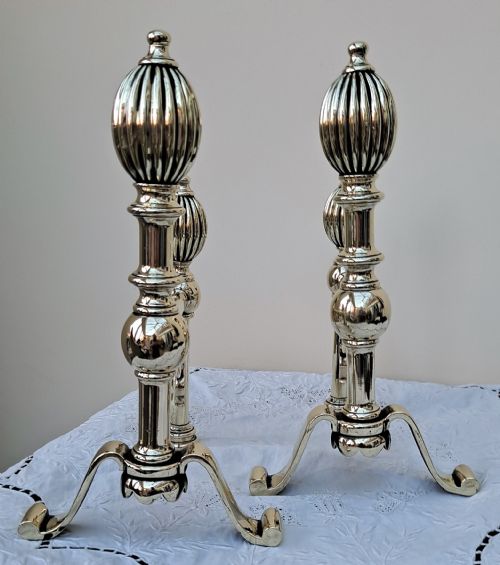
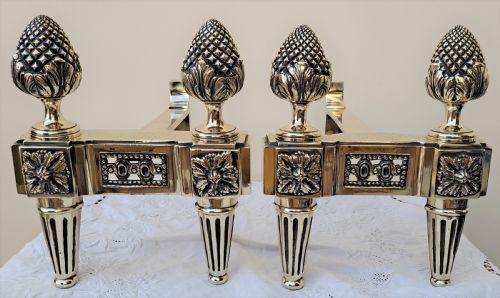
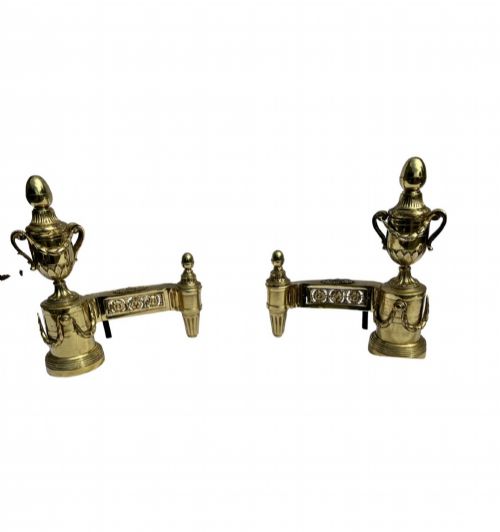
- Andirons
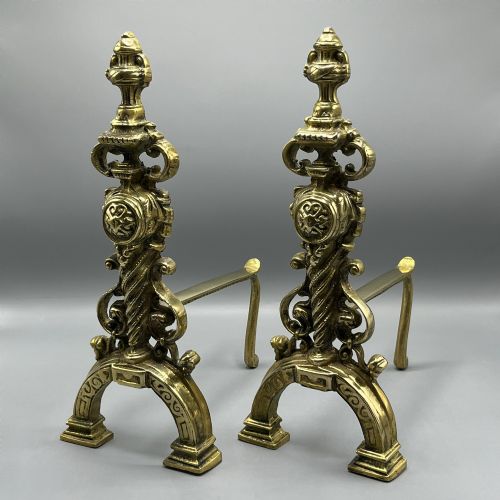
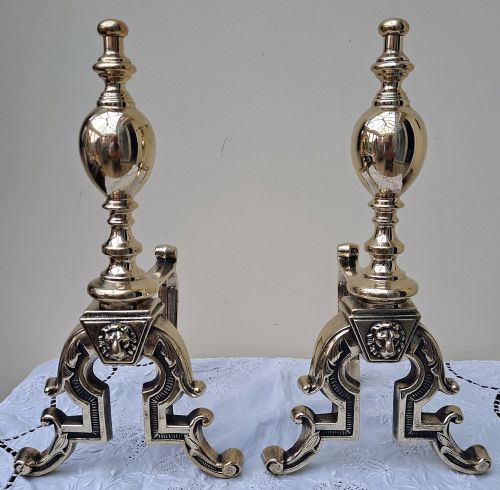
- Supports used to hold logs in an open fireplace, keeping wood elevated to allow air to circulate beneath. These often match companion pieces on the hearth.
- Companion set
- A collection of fireside tools, usually including a shovel, poker and tongs, mounted on a shared stand or resting on dedicated dogs.
- Trivet
- A small metal stand with three or four feet, placed near the hearth to keep kettles or cooking vessels warm.
- Spit jack
- A mechanical device used to turn meat over an open fire, often powered by clockwork or a smoke-jack mechanism in the chimney.
- Fender
- A low metal guard placed around the hearth to contain stray embers and protect the room's flooring.
Cast Brass Fireplace Accessories: Frequently Asked Questions
What are fire dogs used for?
Fire dogs support heavy logs inside an open fireplace, elevating the wood so that air circulates freely beneath the flames for a better burn.
They also serve as decorative terminals at the front of the hearth, frequently matching the metalwork of the companion sets and fenders nearby.
How do I identify a companion set?
A companion set gathers the essential tools needed to tend a coal or wood fire, including a poker, shovel and tongs, kept together on a stand or rest.
Victorian and Edwardian sets often integrate these tools with ornate brass or cast iron frames designed to sit visibly beside the chimney breast.
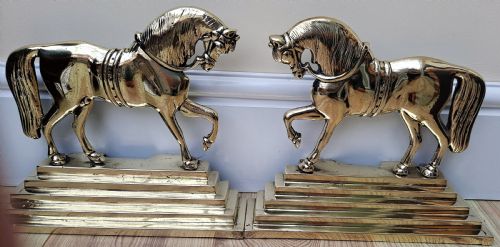
What is a chimney horse?
A chimney horse, also known as a door porter or doorstop, is a heavy weighted object placed against interior doors to prevent them from slamming shut.
Georgian and Victorian versions were cast in solid brass, often taking figural or utilitarian forms that matched the heavy metal accessories used around the fireplace.
Where were these accessories made?
The majority of these fireplace furnishings originated in English and French foundries during the nineteenth and early twentieth centuries.
Birmingham and regional workshops produced substantial quantities of cast brass and iron hardware, supplying domestic households with durable hearth equipment.