

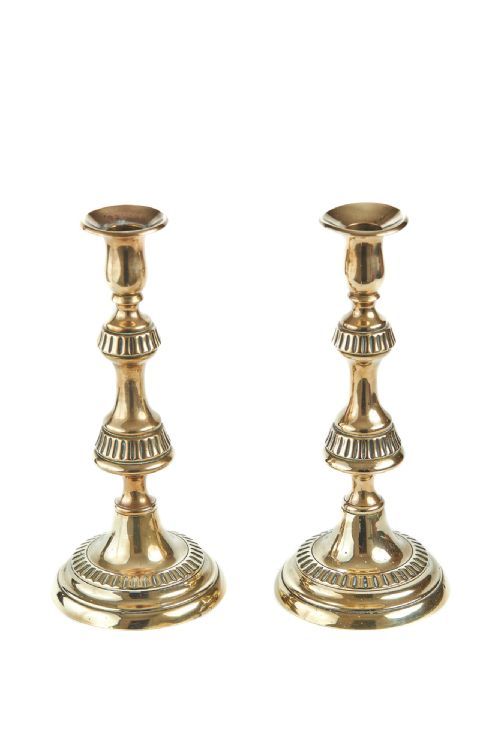
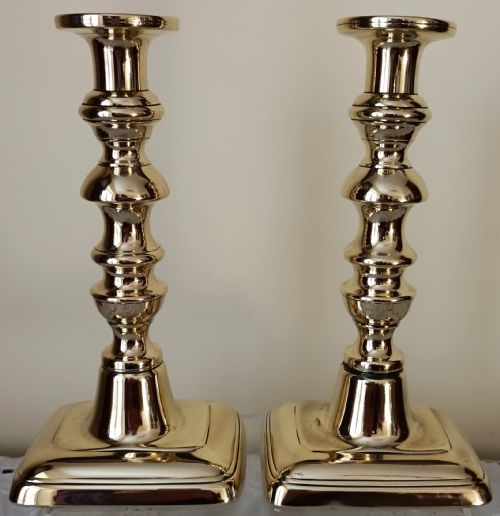
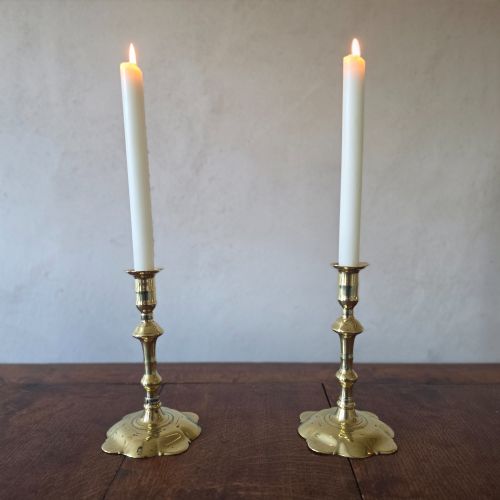
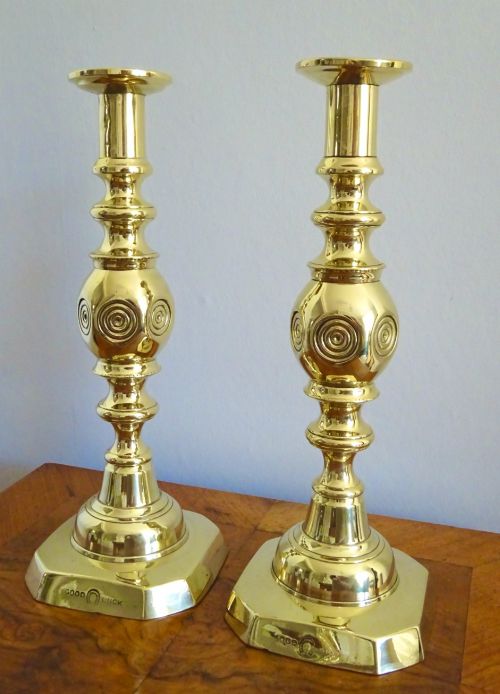


Cast Brass Candlestick Pair
A cast brass candlestick pair brings enduring metalwork into a room, offering weight and proportion forged across centuries of domestic and formal lighting.
Cast Brass Candlestick Pair
A cast brass candlestick pair represents dual lighting implements produced predominantly in the eighteenth and nineteenth centuries, though earlier Flemish examples and later Victorian revivals also appear. These objects range from heavy, multi-knopped Georgian stems to ornate Victorian, Regency, and Gothic Revival designs.
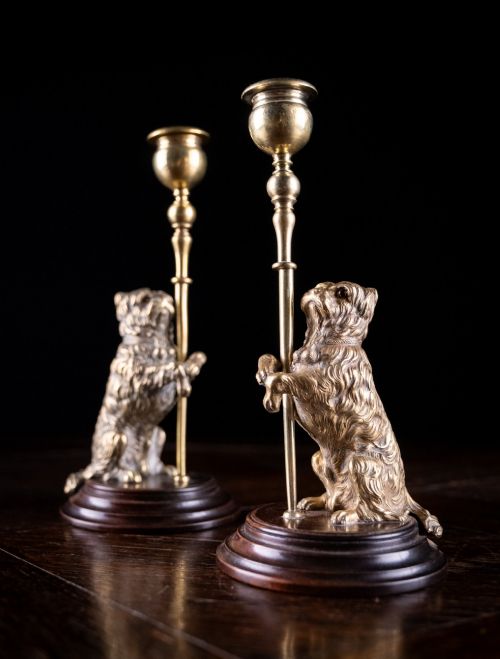
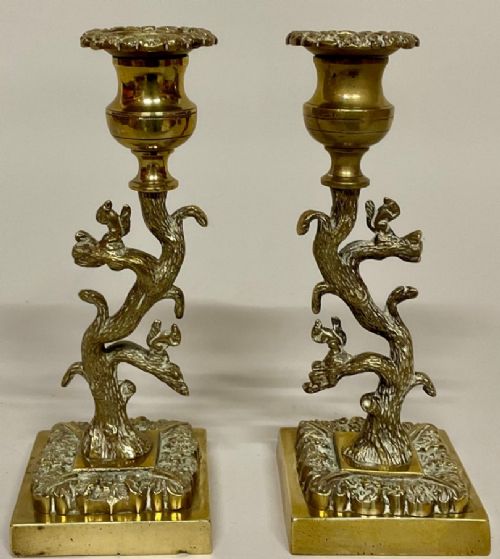
Buyers seeking a cast brass candlestick pair will encounter various forms, including column candlesticks, ejector models, chambersticks, and sculptural pieces featuring animals, figures, or botanical motifs. Materials extend beyond standard brass to include gilt bronze, ormolu, bronze, and occasionally combinations with wood or porcelain.
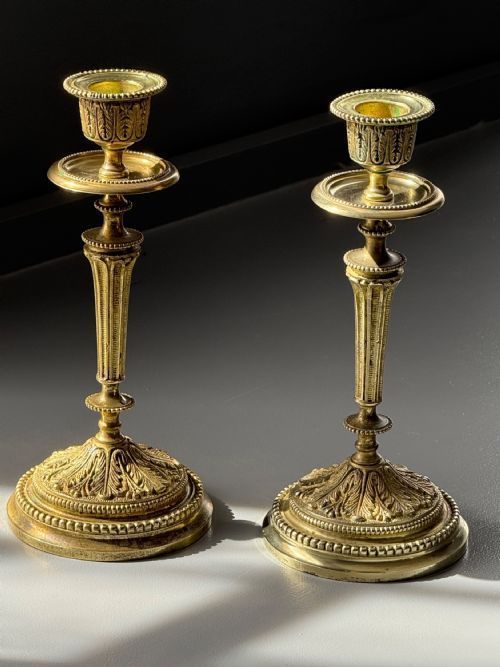
Originating from English, French, and Flemish workshops, these pairs demonstrate the shifting decorative tastes from plain seventeenth-century prickets to elaborate Louis XVI style fittings and Art Nouveau curves.
Materials and construction methods
Foundries manufactured a cast brass candlestick pair by pouring molten copper and zinc alloys into sand or loam moulds, then finishing the components on a lathe for smooth surfaces and precise joints. Seamed variations utilised rolled sheet brass joined along a vertical seam, while heavier early examples relied entirely on solid casting.
Makers enhanced certain pieces through gilding, producing gilt bronze or ormolu finishes that imparted a bright golden sheen to the metal substrate. Secondary materials like oak, porcelain, and glass occasionally integrated into bases or stems, particularly during the Victorian period.
Listings feature cast brass candlestick pair examples spanning the 17th century through the Victorian era, utilising brass, gilt bronze, and bronze.
Factors of design and execution
Quality in a cast brass candlestick pair rests upon the crispness of the casting detail and the weight of the metal utilised in the stem and base. Sharply defined moulding on petal bases, knops, and sconces separates superior foundry work from softer, worn productions.
Proportion and original matching condition dictate the standing of a pair within the broader market. Examples retaining their original ejector mechanisms, matching patination, and uncompromised structural integrity command greater appreciation among collectors.
J.T. & Co·Wm. Tonks & Sons·William Tonks
The Cast Brass Candlestick Pair Glossary
- Cast brass
- Metal objects formed by pouring molten copper and zinc alloy into moulds rather than beating sheet metal. This technique allows for high-relief decoration and substantial weight.
- Sconce
- The upper cup or nozzle of a candlestick designed to catch dripping wax and hold the candle firmly in place. It sits atop the stem.
- Ejector
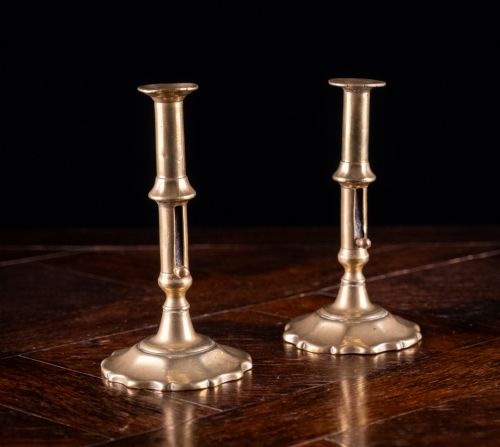
- A concealed internal mechanism featuring a small sliding button that pushes the spent candle stump up and out of the socket. This innovation became common in mid-eighteenth-century English designs.
- Knop
- A decorative swelling or rounded protuberance on the stem of a candlestick. Early Georgian examples often feature multi-knopped profiles.
- Pricket
- A sharp metal spike set in the centre of a drip pan to secure an inverted candle. This form is common in ecclesiastical or early Flemish lighting.
- Chamberstick
- A low, portable candlestick fitted with a wide drip pan and a loop handle for carrying about a house. They frequently include a small snuffer resting in the tray.
Cast Brass Candlestick Pair: Frequently Asked Questions
How do I date an old brass candlestick?
Dating relies on examining the construction seams, base shapes, and stem profiles relative to known stylistic periods. Early eighteenth-century examples often display petal bases and multi-knopped stems, while nineteenth-century pieces frequently introduce cast Victorian ornamentation or Gothic Revival motifs.
Material composition and manufacturing marks also help narrow the timeline. Heavy solid casting points towards earlier production, whereas stamped components or specific maker stamps indicate nineteenth-century factory output.
What is an ejector candlestick?
An ejector candlestick incorporates an internal rod and sliding thumbpiece that pushes the candle stub upward for easy removal. This practical feature was widely utilised during the mid-eighteenth century.
Collectors value working ejector mechanisms for their clever engineering and original functionality. The sliding button typically moves within a vertical slot cut into the stem.
Can I polish antique brass safely?
Polishing antique brass requires caution to preserve the dark, natural patination accumulated over centuries of age. Harsh modern abrasives can strip away surface character and diminish collector interest.
Many collectors prefer leaving the aged surface untouched or applying a gentle microcrystalline wax for protection. Light cleaning with a soft cloth removes surface dust without harming the underlying metal.
What distinguishes gilt bronze from brass?
Gilt bronze, or ormolu, consists of a bronze or brass base coated with a fine layer of gold amalgamation. This treatment produces a rich, luminous golden finish distinct from standard yellow brass.
French makers frequently utilised gilt bronze during the Louis XVI and Regency periods for decorative lighting. The underlying metal in these pieces is typically heavier and finer in sculptural detail.