
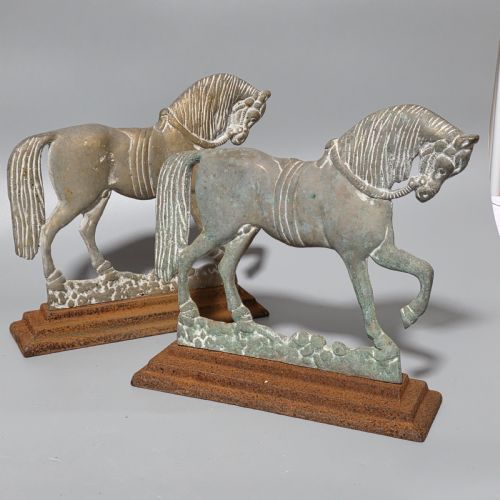


Cast Brass Bookends
Cast brass bookends hold books upright with weight and presence, turning everyday shelves into small displays of period metalwork.
Cast Brass Bookends
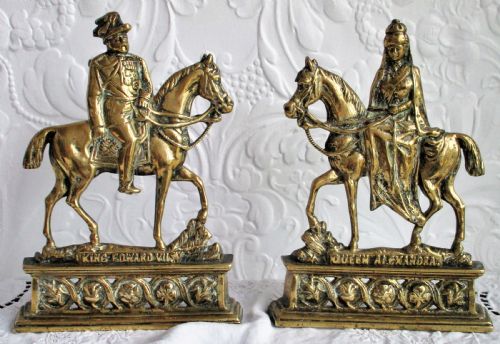
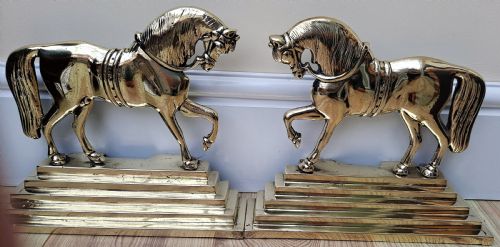
When you search for cast brass bookends, you encounter heavy metal supports designed to steady rows of volumes on open shelves and desks. The examples appearing on this page span several eras, drawing on Victorian, Edwardian, and Art Deco aesthetics to shape utilitarian objects into ornamental figures.
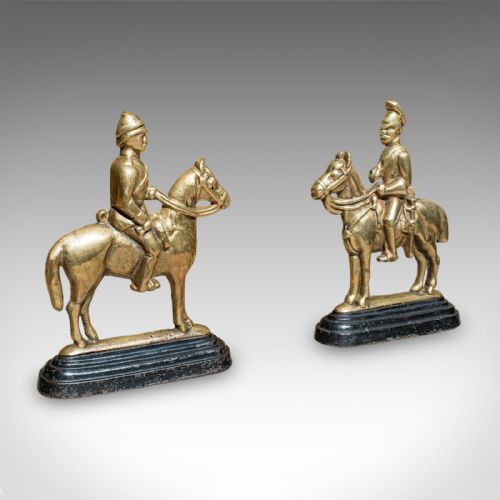
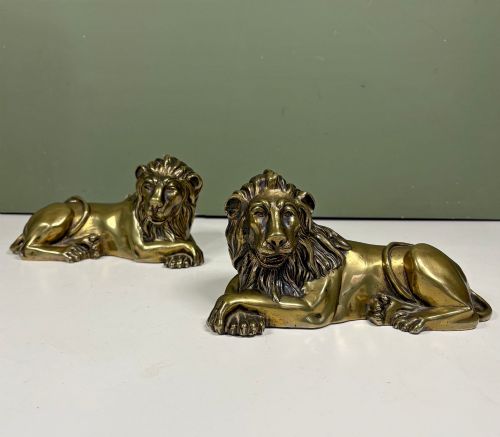
The versions you are most likely to meet combine solid cast metal with animal forms, maritime subjects, or architectural themes. Lions, Scottish terriers, sea lions, galleons, and historical figures recur across the nineteenth and twentieth centuries, functioning equally as book rests and desktop ornaments.
How they were made
Foundries produced these objects by pouring molten metal into sand or investment moulds, capturing intricate details in the solid brass. Artisans then hand-finished the surfaces through filing, polishing, and occasionally applying patination to accentuate the relief.
Many heavy forms combine cast brass with other materials, mounting metal figures onto wooden bases or pairing them with cast iron to achieve the necessary counterweight. This mixed construction provides the stability required to support heavy volumes without tipping.
Listings for cast brass bookends frequently incorporate maritime subjects, including tall ships and Elizabethan galleons alongside domestic animals.
What varies in quality
Substantial weight and thoughtful proportion separate fine specimens from ordinary production. Better pairs balance heavy metal figures securely upon their bases, ensuring both decorative merit and functional endurance on the shelf.
C Omin
The Cast Brass Bookends Glossary
- Cast brass
- Molten alloy poured into a mould to set into a permanent, rigid shape. This technique allows for complex sculptural forms and durable everyday objects.
- Chasing
- The manual tooling of metal surfaces with punches and hammers after casting. This process sharpens details and refines the texture of the finished piece.
- Patina
- The surface sheen and coloration developed through age, handling, and oxidation. A natural patina highlights the history of the metal.
- Doorstop
- A heavy utilitarian object designed to hold doors open against drafts. Many forms overlap directly with heavy book supports.
- Regency
- A style period spanning the early nineteenth century defined by classical restraint and animal motifs. Pieces from this era often employ monumental lions and classical symmetry.
Cast Brass Bookends: Frequently Asked Questions
Are cast brass bookends heavy enough for large books?
Most pairs possess considerable mass derived from solid metal casting or weighted iron bases, making them suitable for standard library volumes.
Larger architectural or animal figures provide additional leverage to keep heavy rows of books secure on open shelving.
How do I care for antique brass?
Dust the surfaces gently with a soft cloth to prevent grime accumulation without disturbing the historic surface.
Avoid abrasive polishes that strip away the aged patina accumulated over decades of use.
Were these always intended as bookends?
Many heavy brass figures originated as chimney ornaments, doorstops, or door porters before finding a second life holding books.
Foundries often adapted successful sculptural models across multiple domestic functions to meet changing household demands.
How can I tell a Victorian pair from a 1930s pair?
Victorian examples lean towards classical motifs, heraldic lions, and ornate domestic ornamentation reflecting nineteenth-century tastes.
Later pieces from the interwar period often adopt streamlined nautical themes, simplified animal studies, or Art Deco styling.