

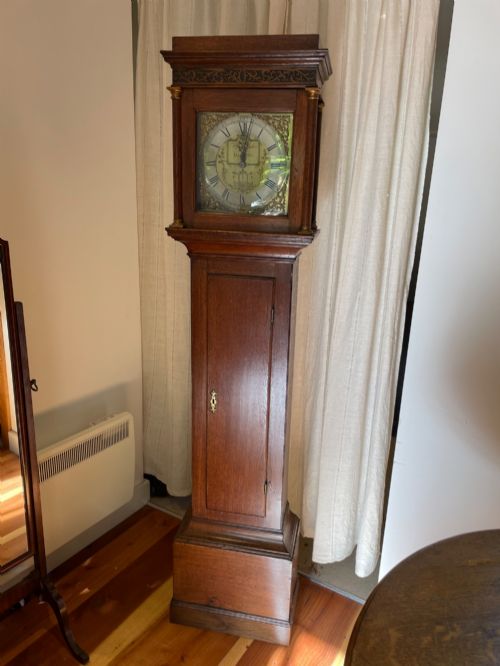
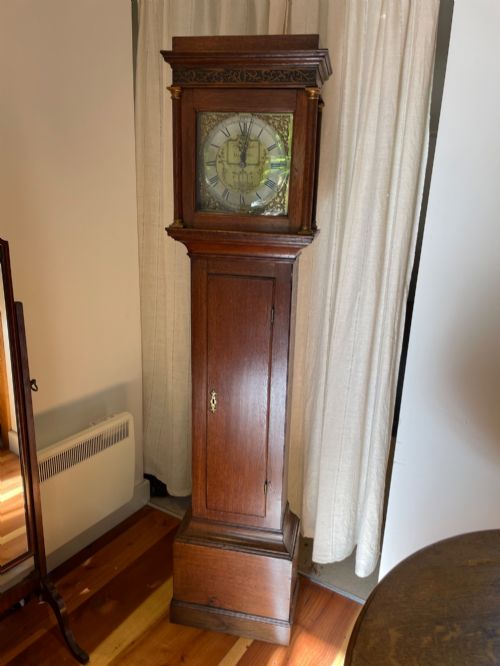
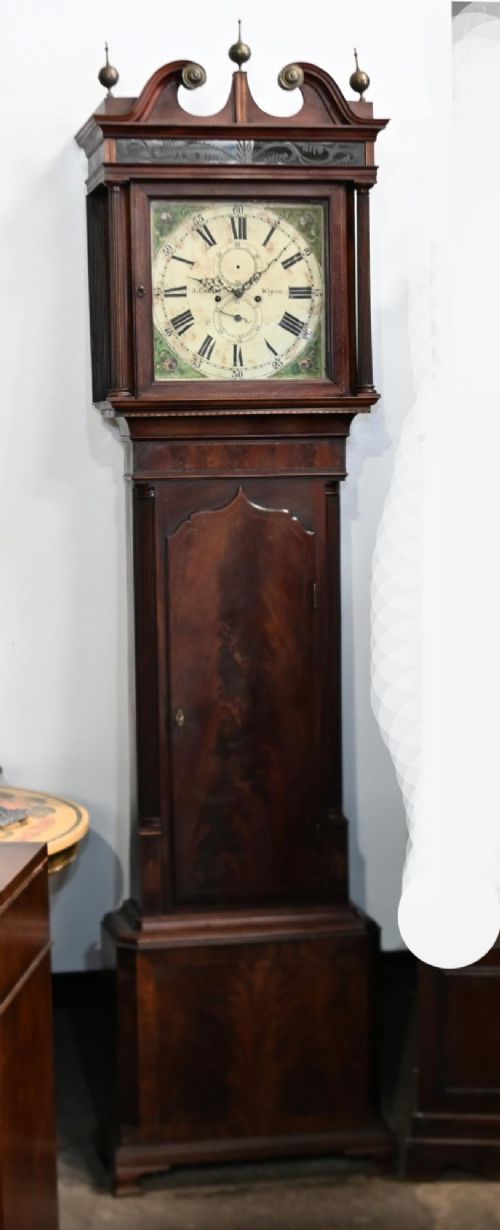
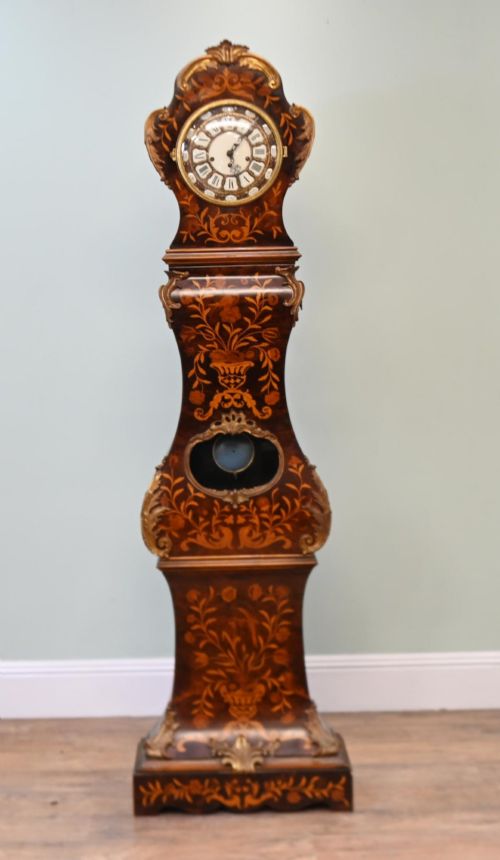
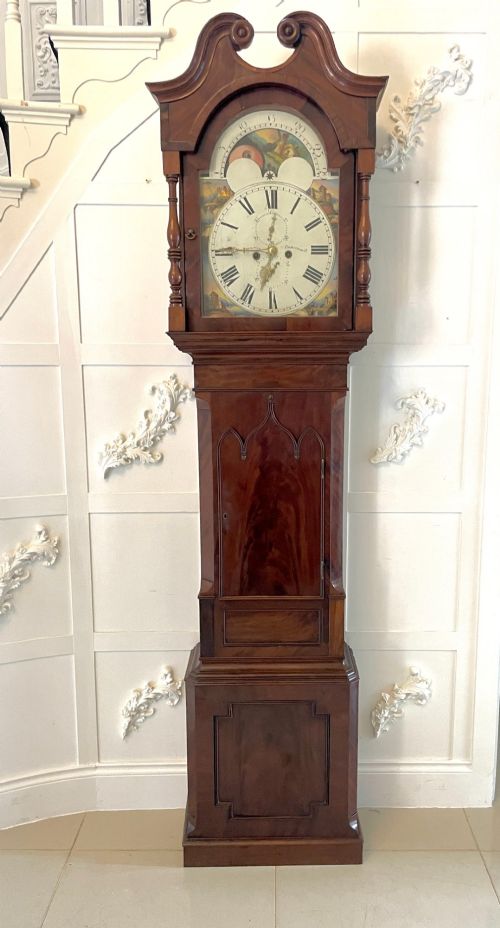
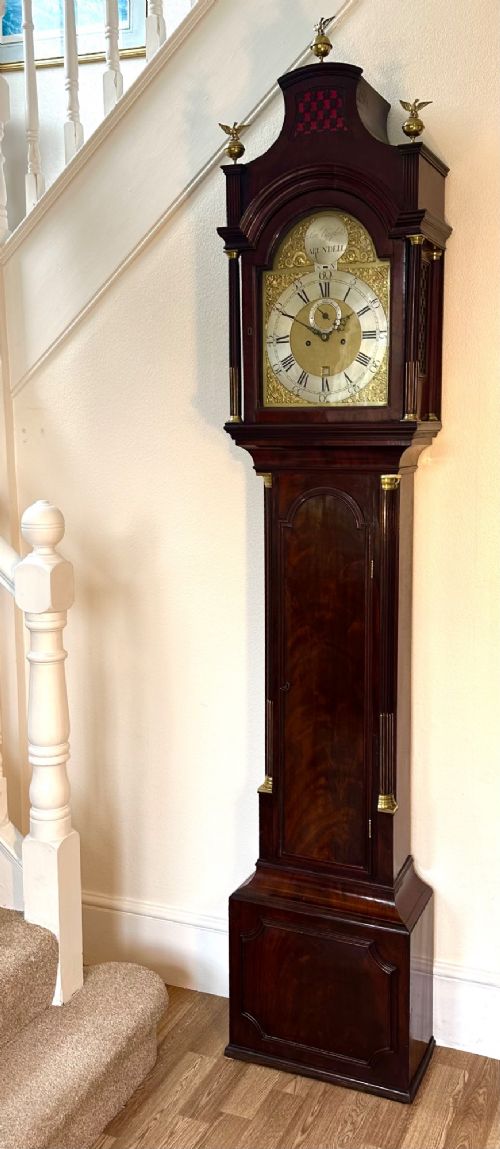
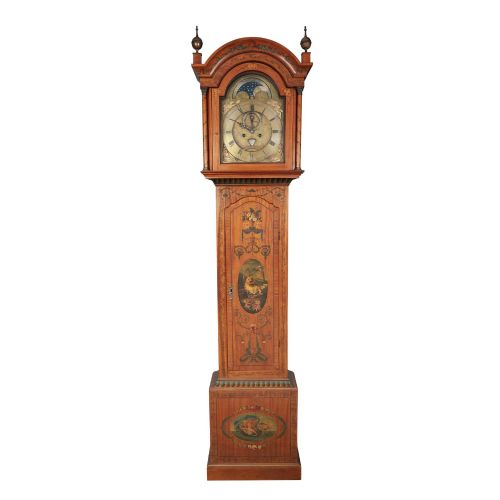
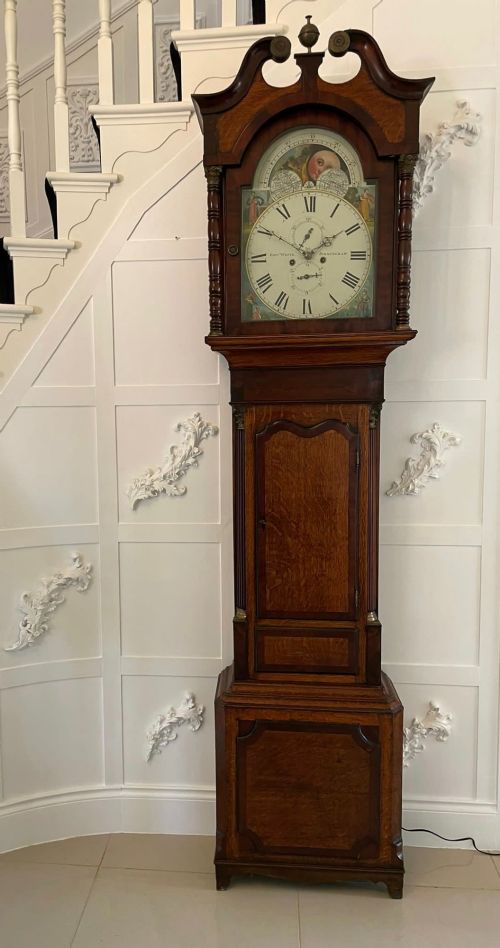
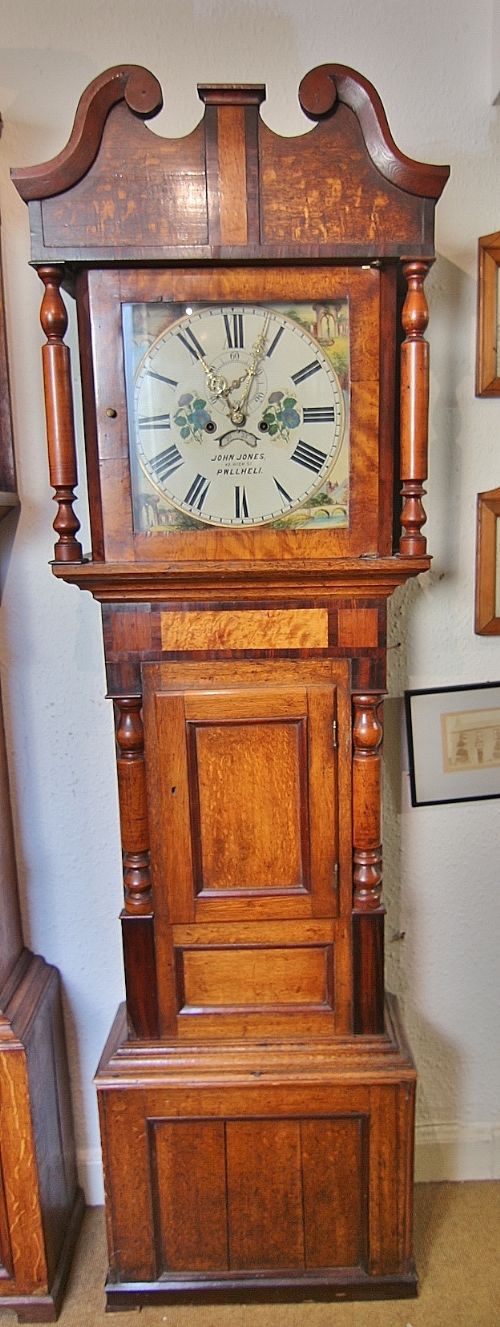
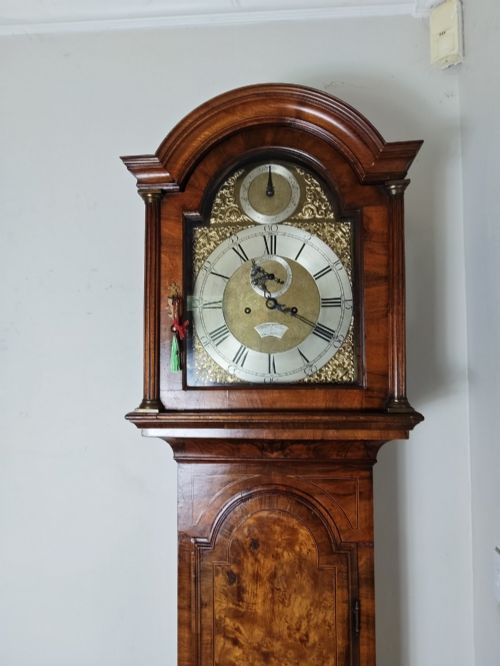
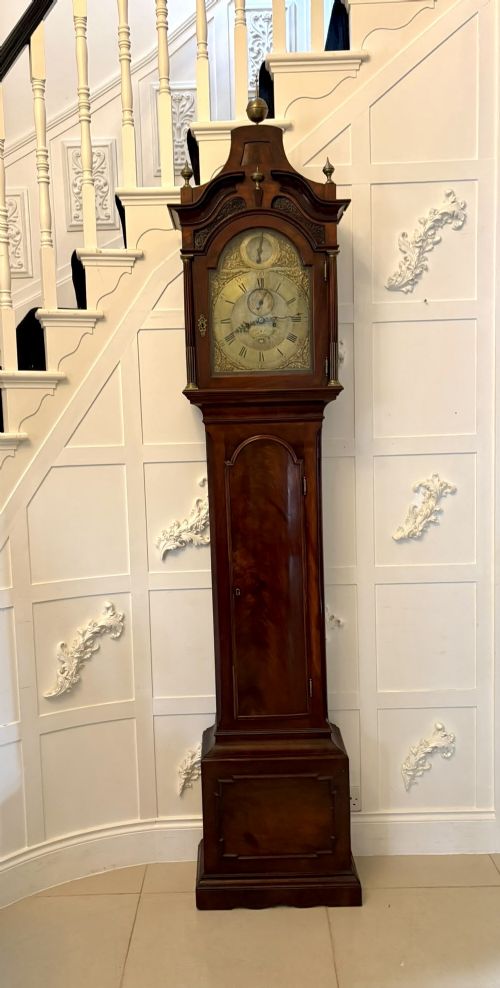
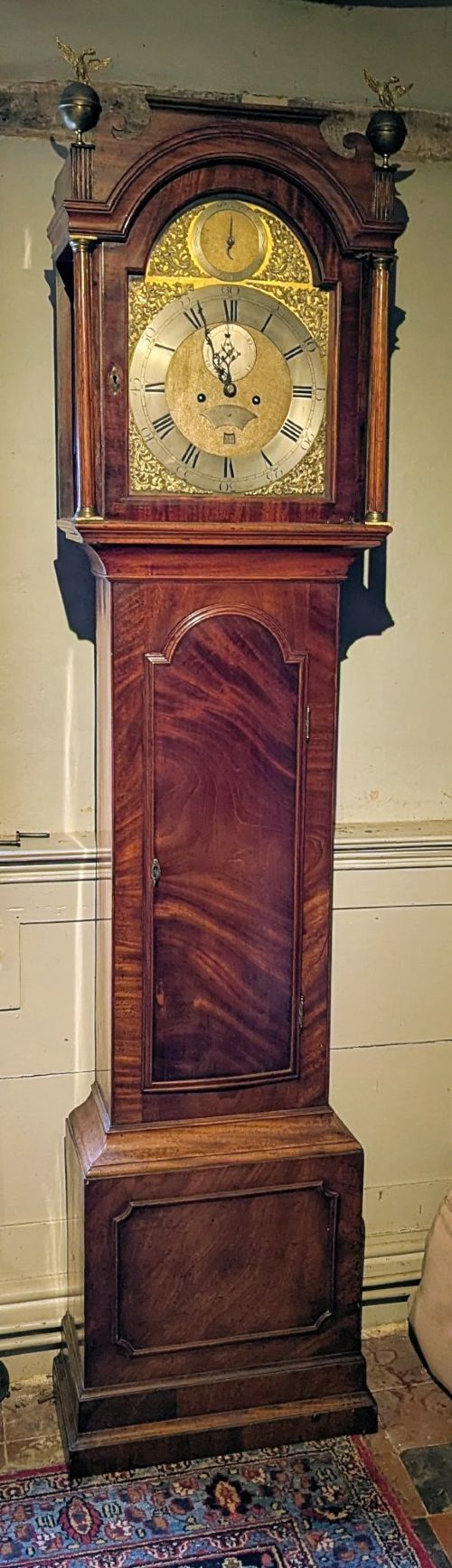
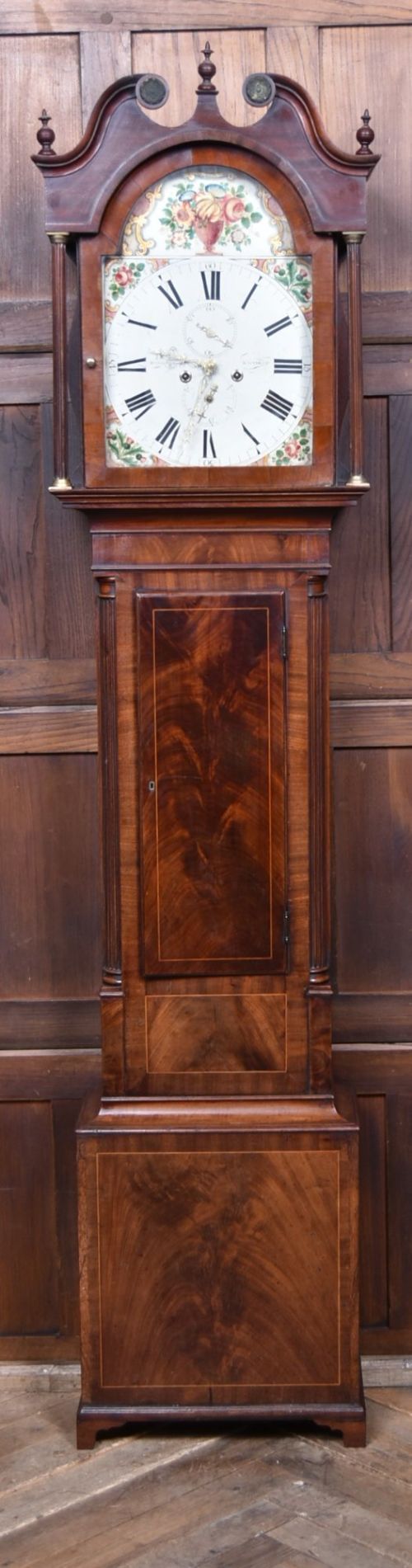
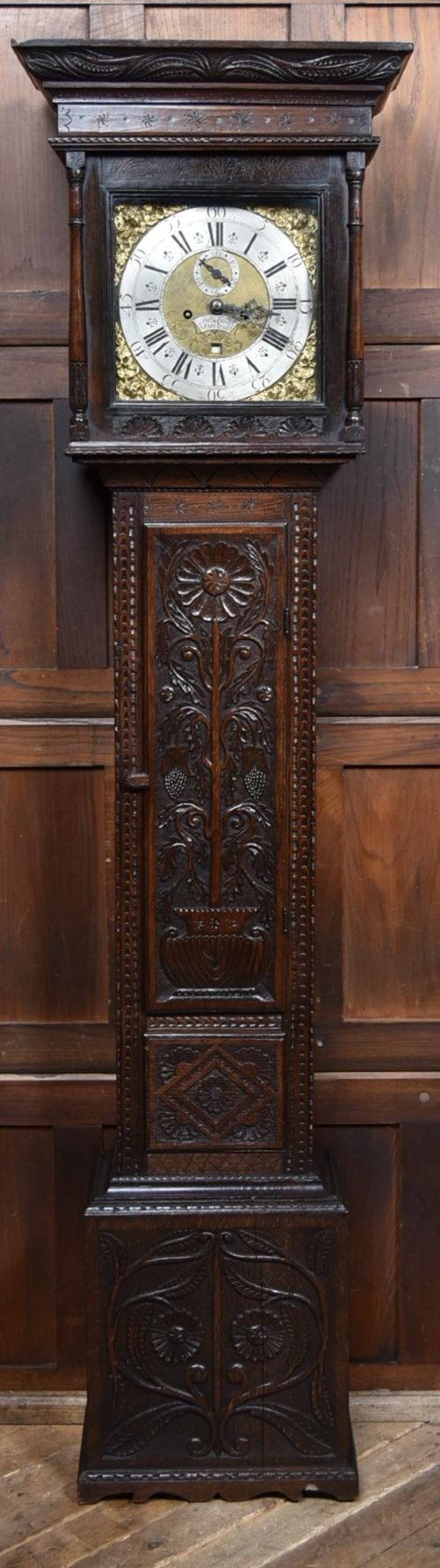
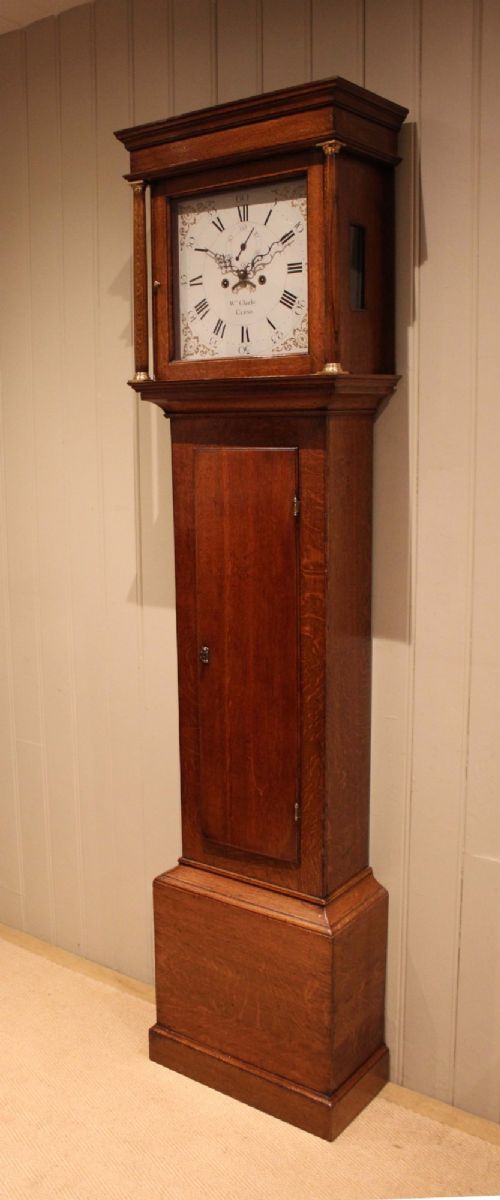
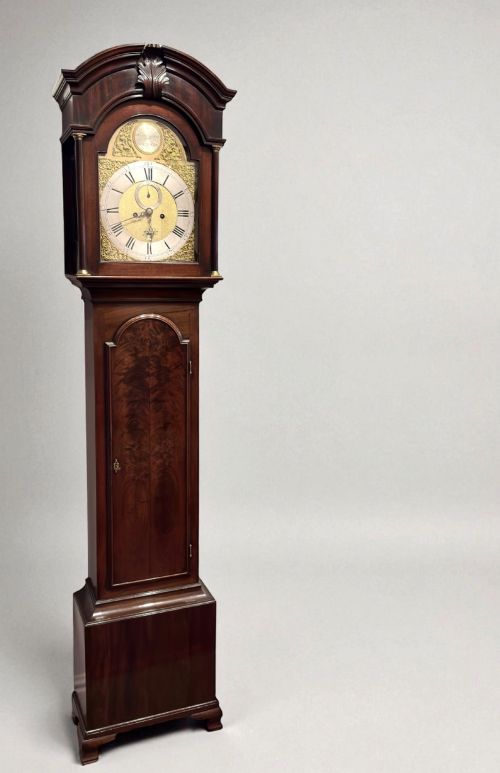
Cased Floor Clock
A cased floor clock stands as a towering piece of functional joinery, housing intricate mechanics within substantial timber housing.
Cased Floor Clock
A cased floor clock combines tall protective wooden cabinetry with weight-driven timekeeping mechanics, forming a commanding architectural presence in a room. These vertical timepieces appear across multiple centuries, serving as both utilitarian instruments and high status domestic furnishings.
The selections span from early Georgian forms through to Edwardian interpretations, with 18th century and 19th century examples representing the core of the group. Mahogany and oak dominate the timber framework, often accompanied by walnut, burr walnut, and painted satinwood finishes.
Makers recorded on these pieces range from provincial watchmakers to prominent London firms, with regional Scottish and English variations altering the case proportions and dial layouts. Forms include standard longcase clocks, smaller grandmother clocks, and domestic regulators.
How They Were Made
Cabinetmakers constructed the tall wooden cases primarily from solid mahogany, oak, and walnut, often applying veneers and fine inlay work to the exterior surfaces. These timbers were joined using traditional framing techniques to support the heavy internal trunk and the glazed door protecting the dial.
Cased Floor Clock Retail Price Guide 2026
Typical asking prices for cased floor clock among the pieces listed under this phrase on Sellingantiques today, from the lower quarter to the upper quarter. They describe what is for sale here now, not the wider market.
Materials utilised across the inventory include oak, mahogany, walnut, burr walnut, brass, glass, steel, and enamel.
What Varies In Quality
The refinement of the cabinet joinery and the choice of timber figure heavily in the overall standing of a piece, distinguishing standard utility pieces from high status commissions. Richly grained mahogany, burr walnut, and intricate satinwood stringing elevate the visual impact of the housing.
Movement complexity separates the ordinary from the exceptional, particularly when incorporating eight-day durations, strike and silent functions, or musical tubular bell movements. Signed dials by recognised makers and sophisticated moon phase rollers further elevate the standard of the mechanism.
John Taylor London·Edward White Birmingham·Charles Shuckburgh London·Hendrie Ogg Dunfermline·Gordon of Aberdeen·Gillett and Johnston of Croydon·Lee of Great Marlow·Jn Smith Macclesfield·Tait Peebles·James Field of Hempstead·Richard Corless of Stockport·James McCabe·Handley and Moore London·Samuel Kellett of Bredbury·Fisher Of Preston
The Cased Floor Clock Glossary
- Longcase clock
- A tall, weight-driven timekeeper housed in a vertical wooden case, commonly called a grandfather clock. These instruments stand directly on the floor and utilise long pendulums for accuracy.
- Grandmother clock
- A scaled-down version of the traditional longcase clock, typically produced in the 20th century or late Victorian era. They offer the same vertical mechanics in a reduced footprint.
- Moon phase
- A dial mechanism tracking the lunar cycle through a rotating painted disc visible through an aperture on the clock face. This feature required careful gearing to mirror the phases of the moon accurately.
- Regulator
- A precision timekeeper designed for high accuracy, often featuring a simplified dial layout with separated minute and hour displays. Domestic examples prioritize exact timekeeping over decorative display.
- Paterae
- Small, circular decorative reliefs carved or inlaid into furniture surfaces, frequently seen on late 18th century and Regency case furniture. They add subtle geometric detail to the pediment or trunk door.
Cased Floor Clock: Frequently Asked Questions
How do I wind a cased floor clock?
Winding requires raising the internal weights using a specialised crank key inserted into the winding holes on the dial face. Care must be taken not to overwind the mechanism.
Most eight-day movements require weekly attention, while thirty-hour variants need daily or more frequent winding depending on the specific train configuration.
Where should I place a longcase clock?
Select an interior wall away from direct sunlight, heating vents, and damp exterior surfaces to protect the timber case and delicate wooden veneers. A stable floor prevents vibrations from disrupting the pendulum swing.
Ensure there is adequate vertical clearance for the specific height of the case, as these clocks extend significantly upward.
How do I tell an 18th-century clock from a 19th-century one?
Examine the proportions of the case, the style of the dial ornamentation, and the construction methods used within the timber framing. Eighteenth-century pieces often feature square brass dials and solid oak or walnut carcasses.
Nineteenth-century examples frequently display arched painted dials, mahogany veneers, and more ornate inlay work such as paterae or stringing.
What is the difference between a longcase and a grandmother clock?
Grandmother clocks are significantly shorter and narrower than traditional longcase clocks, designed to fit modern domestic spaces with lower ceilings. They emerged predominantly during the Edwardian period and later.
Despite the smaller scale, they house fully functioning mechanical movements, though usually scaled down to match the reduced case size.