


Cased Coffee Set
A cased coffee set brings together fitted presentation and matched silver or porcelain for the table.
Cased Coffee Set
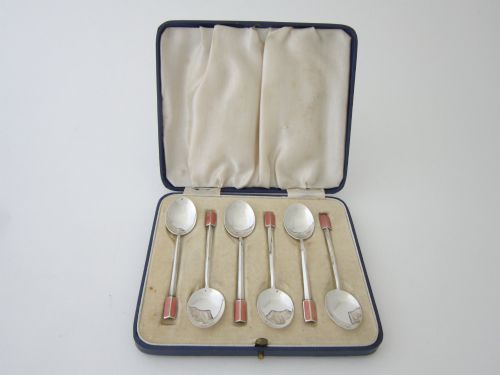
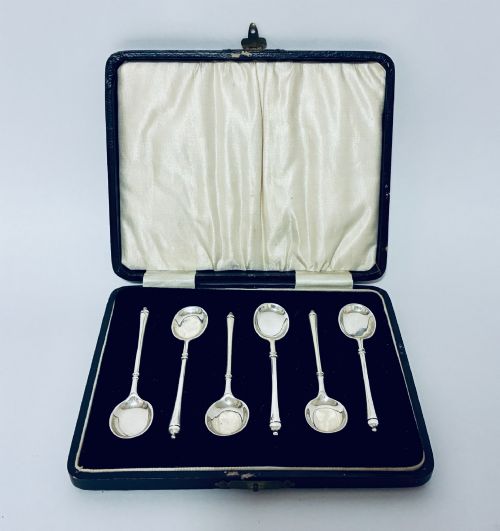
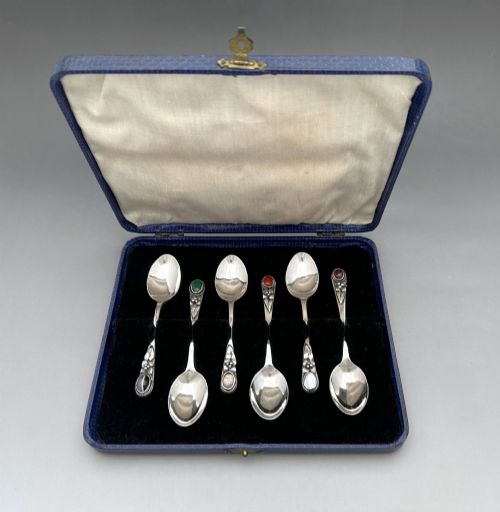
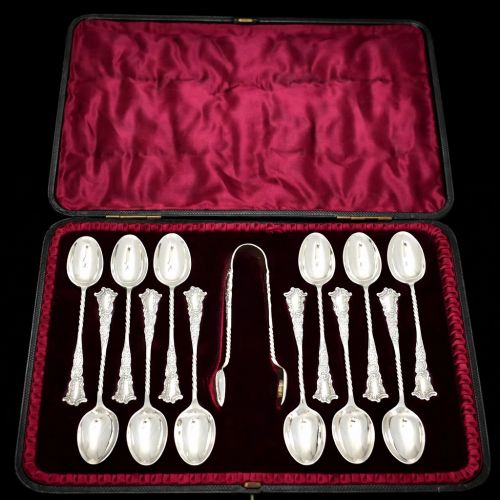
A cased coffee set comprises a matching group of small spoons or porcelain cups and saucers nestled inside a tailored box lined with fabric. The most common examples seen here are sets of silver coffee spoons dating from the early to mid-twentieth century, often featuring decorative enamel work.
Beyond flatware, ceramic sets from potteries like Royal Worcester and Royal Crown Derby appear with hand-painted motifs secured in fitted compartments. These groupings reflect the formal hospitality customs of the Victorian, Edwardian, and Art Deco periods.
The receptacles themselves range from simple velvet-lined leatherette outer shells to fitted wooden presentation boxes designed to protect fragile porcelain or polished metal during storage and transport.
Materials and construction methods
Sterling silver forms the structural basis for most flatware components, frequently enhanced through silver-gilt plating or colourful enamel techniques such as guilloché and cloisonné. Silversmiths utilised stamping and casting methods to shape handles into bean knops, seal tops, or botanical motifs.
Ceramic components rely on porcelain bodies painted by hand with subjects including fruit, landscapes, and game birds, before receiving a protective glaze. Interior case linings use soft textiles like silk, satin, and velvet to cushion each item within its specific recess.
Listings feature silver, enamel, velvet, and porcelain across Victorian, Edwardian, Art Nouveau, and Art Deco periods.
Factors determining quality
The standard of a cased coffee set rests upon the crispness of the hallmarking, the complexity of the silversmithing or ceramic painting, and the integrity of the fitted box. Sets retaining their original hinges, clasps, and undamaged interior silk linings demonstrate superior preservation.
Artistic execution dictates distinction, particularly in enamelled pieces where smooth, even application without chipping separates standard production from finer workshop output. Hand-painted porcelain bearing artist signatures or detailed pictorial scenes commands greater attention than plain glazed wares.
Walker and Hall·Turner and Simpson·Henry Clifford Davis·Royal Worcester·Royal Crown Derby·David Andersen·Charles Horner·James Dixon and Sons
The Cased Coffee Set Glossary
- Demitasse
- A small cup used for serving strong black coffee or espresso, typically paired with specialised miniature spoons.
- Guilloché
- A decorative engine-turning technique that etches precise geometric patterns into metal before a translucent enamel coating is applied.
- Silver-gilt
- Sterling silver that has been coated with a thin layer of gold, also known as vermeil.
- Bean knop
- A spoon handle terminal shaped to resemble a coffee bean, popular on early twentieth-century flatware.
- Hallmark
- An official stamp applied by an assay office to indicate metal purity, origin city, and year of manufacture.
Cased Coffee Set: Frequently Asked Questions
How do I clean tarnished silver spoons?
Silver flatware benefits from gentle washing in warm soapy water using a soft cloth to remove everyday residues. Avoid harsh abrasive dips that strip away original patination or damage delicate enamel sections.
Dry each spoon thoroughly with a lint-free towel before returning it to the fitted case slots. Proper storage away from damp environments prevents rapid retarnishing.
Can I use these cups for daily dining?
Porcelain cups from the early twentieth century feature hand-painted glazes that degrade when subjected to modern dishwashing machines. Hand washing preserves the integrity of the painted decoration and the underlying ceramic body.
Using them occasionally for hot beverages remains entirely feasible provided thermal shock is avoided. Extreme temperature shifts can cause historic glaze to craze.
What does silver-gilt mean?
Silver-gilt refers to solid sterling silver that has undergone a process of gold plating on its surface. This treatment provided the rich visual warmth of solid gold while maintaining structural strength.
Many demitasse spoons feature this finish to contrast against colourful enamel bowls. The gold layer requires careful maintenance to prevent wear over time.
How do I identify the date of a set?
British silver items carry assay office hallmarks that include a specific letter code denoting the year of testing. Consulting established assay office date charts decodes these stamped letters.
Ceramic sets often rely on printed factory backstamps and colour codes specific to decades of production. Combining box style with hallmark data establishes the manufacturing timeline.