



Gilded English Coffee Cups
These gilded english coffee cups bring Regency and Georgian elegance to the table, offering a refined way to serve after-dinner coffee.
Gilded English Coffee Cups
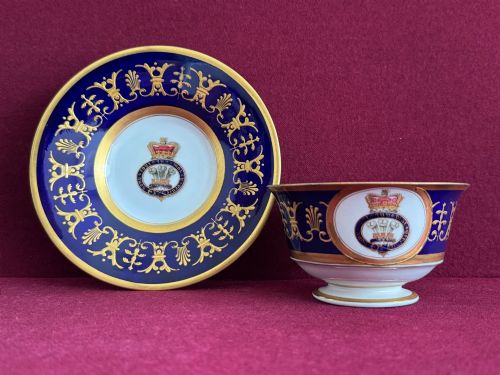
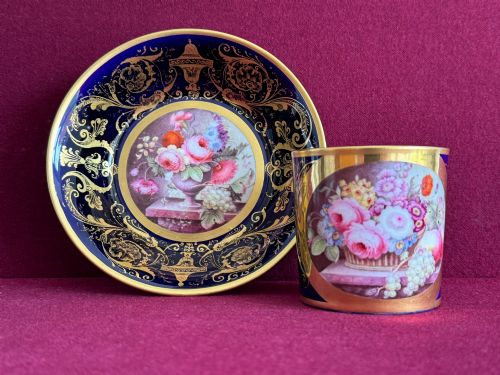
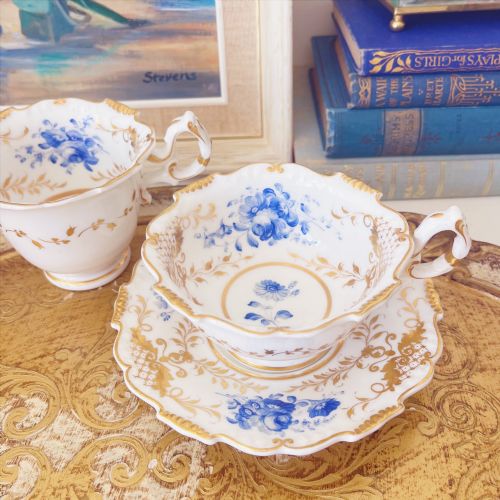
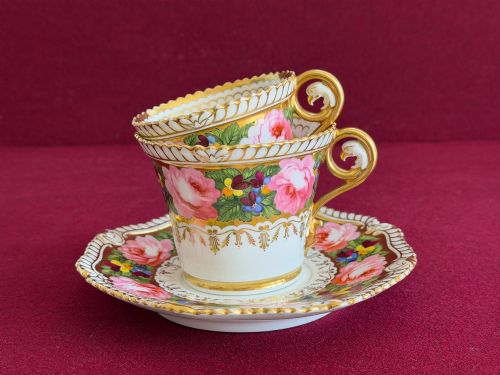
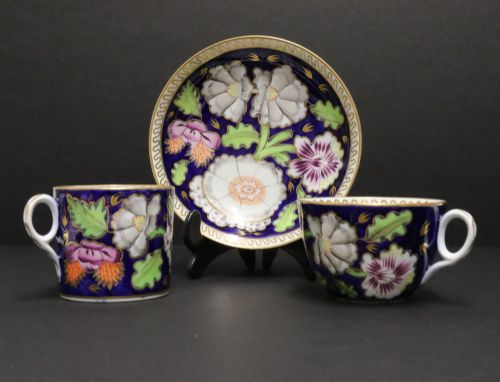
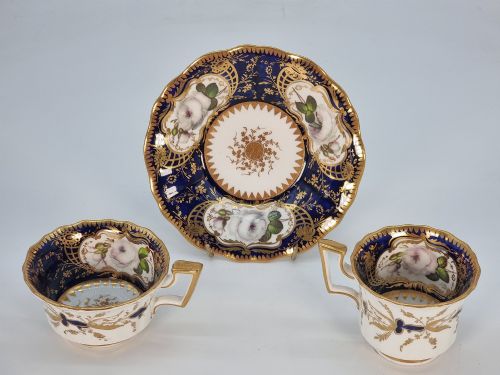
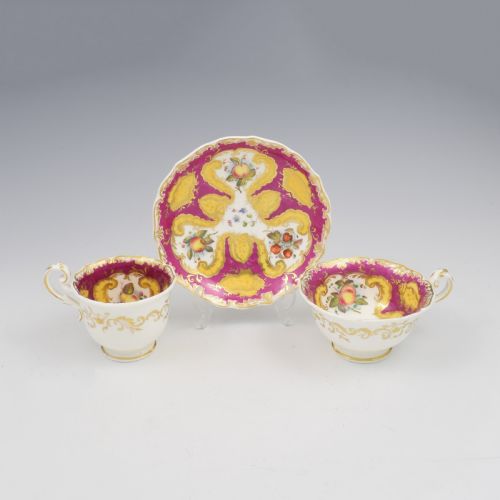
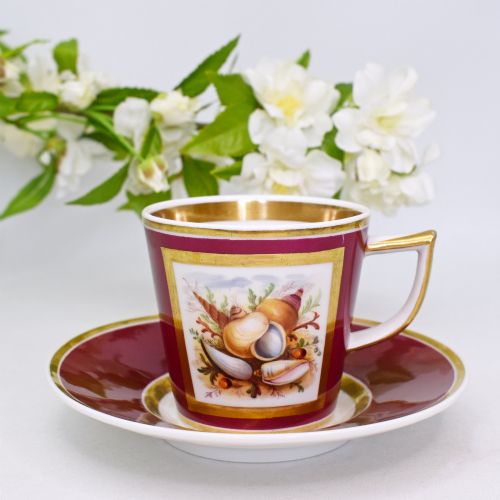
When you search for gilded english coffee cups, you encounter elegant porcelain wares designed for the formal consumption of coffee during the Georgian and Regency periods. The forms include cylindrical coffee cans, deep cups, saucers, and complete trios paired with matching tea vessels.
The selection on this page centres primarily on early nineteenth-century porcelain, featuring works from prominent factories active between eighteen hundred and eighteen thirty. Later examples from the twentieth century also appear, representing subsequent revivals of traditional ceramic artistry in England.
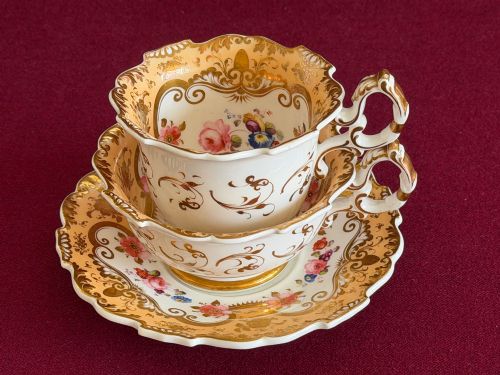
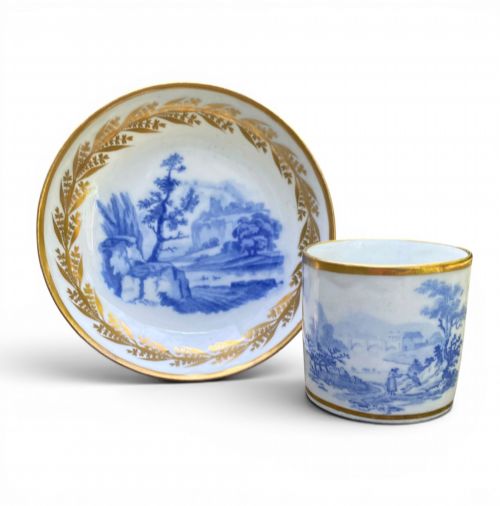
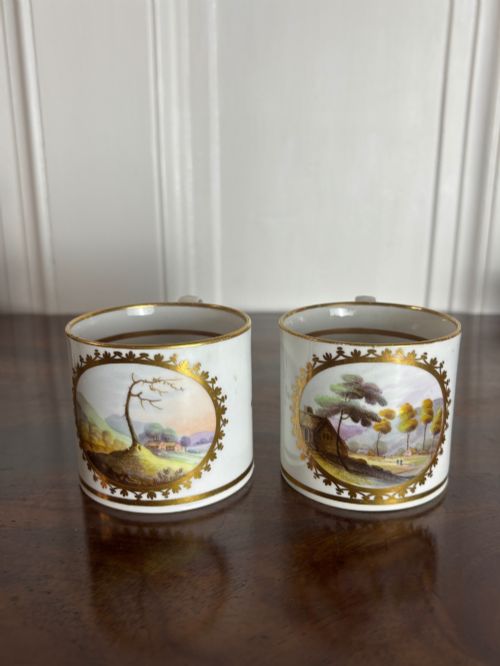
Most pieces date from the Regency and Georgian eras, spanning factories such as Worcester, Coalport, Spode, and Minton. These items frequently take the form of cabinet trios or paired coffee cans and saucers decorated with hand-painted scenes and rich metallic accents.
Materials and production
The manufacturers utilised fine porcelain and bone china as the primary base materials, shaping them into delicate coffee cans, cups, and saucers. These ceramic bodies provided a smooth white surface ideal for detailed enamel painting and metallic decoration.
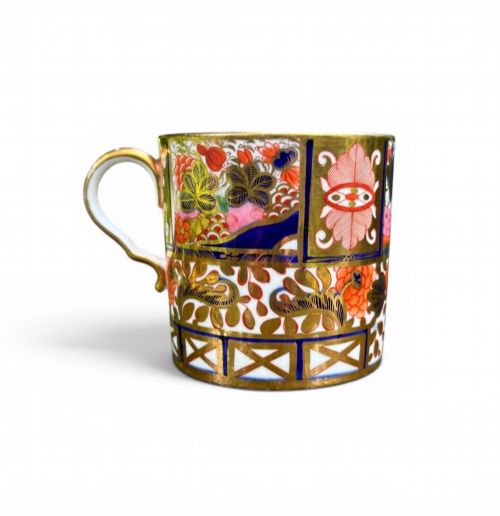
Craftsmen applied gold leaf and gilding by hand to accentuate rims, handles, and intricate patterns across the porcelain body. Hand-painted enamel designs, including landscape paintings and fruit motifs, were combined with the gold detailing to complete each piece.
Listings include porcelain and bone china decorated with gold leaf, enamel, and hand-painted motifs across Regency, Georgian, and twentieth-century periods.
Assessing quality and craftsmanship
The standard of execution in hand-painted enamel work separates basic factory output from superior cabinet pieces. Finer items exhibit precise brushwork in landscape scenes and fruit patterns, while simpler wares rely on standard transfer-printed outlines.
The application and preservation of the gold leaf significantly influence the character of each piece. Heavy, burnished gilding applied by skilled hands retains a deeper lustre than thinner applications that have worn away through use.
H and R Daniel·Chamberlain Worcester·Coalport John Rose·Flight and Barr Worcester·Rockingham·New Hall·Minton·Spode·Royal Worcester·Hadley Worcester·Davenport
The Gilded English Coffee Cups Glossary
- Coffee Can
- A straight-sided cylindrical cup designed specifically for drinking coffee in the eighteenth and nineteenth centuries. These vessels often lack the curved handle found on standard teacups.
- Trio
- A matched set comprising a teacup, a coffee cup, and a saucer. Collectors prize complete trios that preserve the original factory pairing.
- Cabinet Trio
- A decorative set intended primarily for display in a porcelain cabinet rather than for daily dining use. These pieces often feature higher-quality hand-painted artwork and extensive gilding.
- Gilding
- The application of gold leaf or gold paint to ceramic surfaces for ornamentation. Skilled artisans burnished the fired gold to create a bright metallic finish.
- Demitasse
- A small cup used to serve Turkish coffee or espresso. These diminutive vessels appear frequently in twentieth-century porcelain production.
Gilded English Coffee Cups: Frequently Asked Questions
What is a coffee can?
A coffee can is a cylindrical cup without a flared rim, designed during the Georgian and Regency periods to hold strong coffee.
Unlike traditional teacups, these vessels maintain straight vertical sides and a looped handle, reflecting neoclassical design influences.
How do I use antique cups?
These delicate porcelain vessels are generally reserved for display or careful occasional use rather than daily dining.
Hand washing in warm water without abrasive detergents helps preserve the delicate enamel colours and fragile gold leaf.
What is a porcelain trio?
A porcelain trio consists of a matching teacup, coffee cup, and saucer sold together as a unified set.
This configuration allowed households to serve different hot beverages using coordinated tableware during formal morning or afternoon gatherings.