
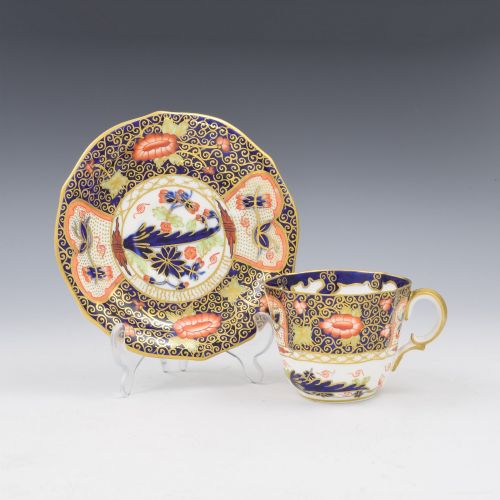
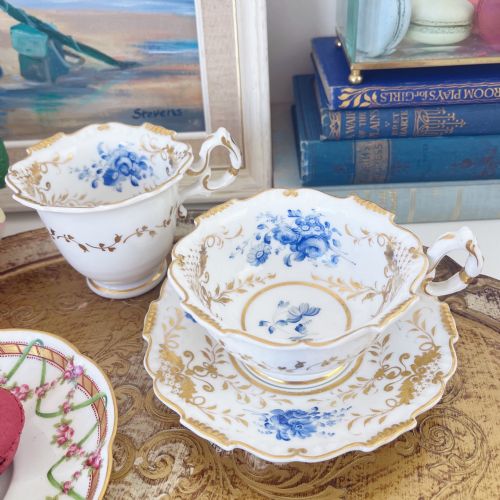
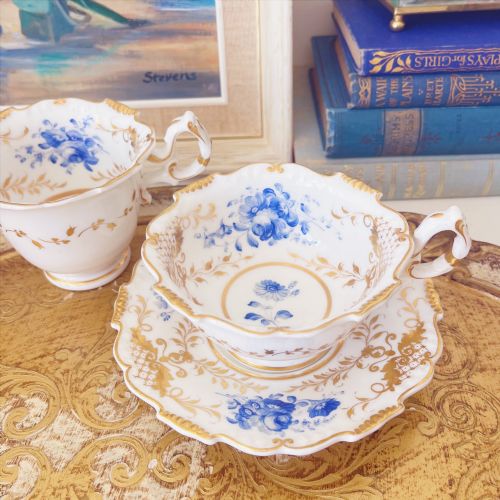
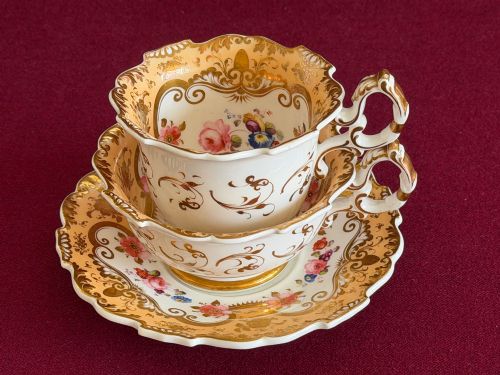
Porcelain Teacup and Saucer
A porcelain teacup and saucer brings delicate form and handpainted colour to the table, inviting careful handling.
Porcelain Teacup and Saucer
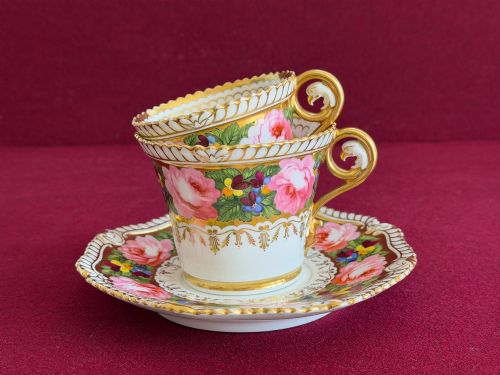
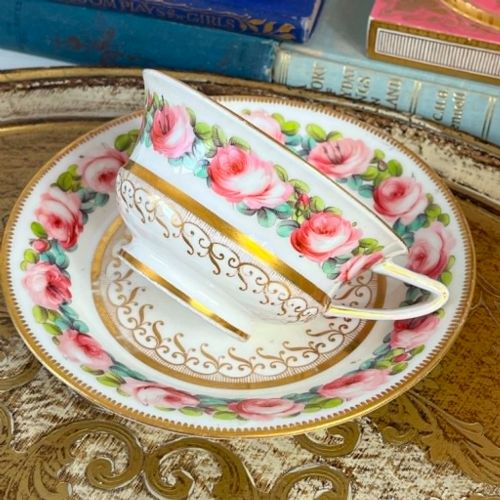
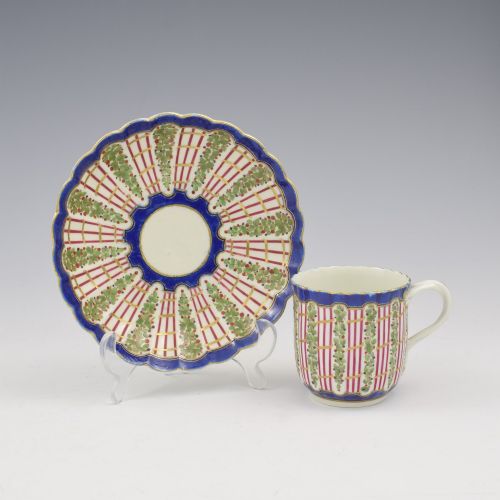
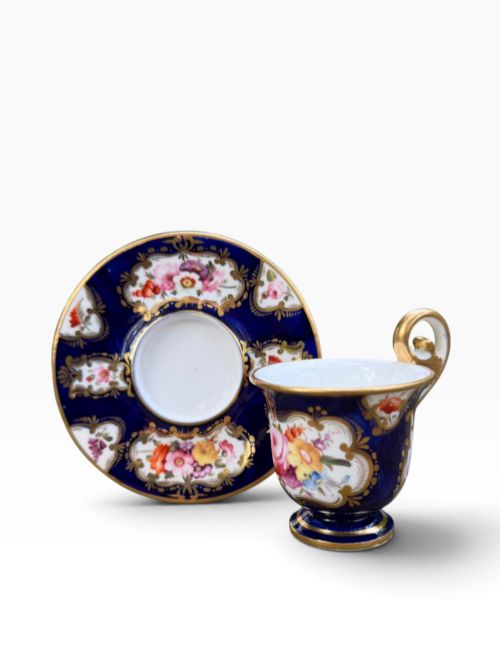
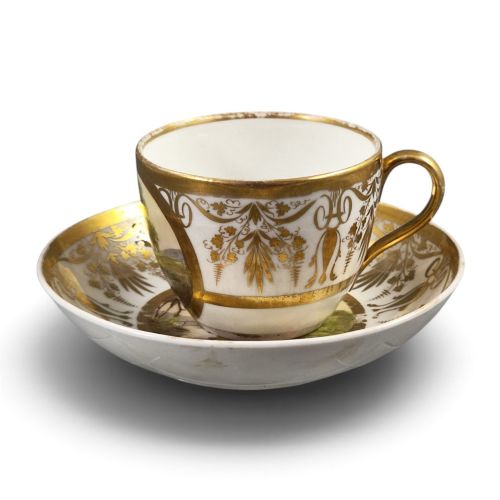
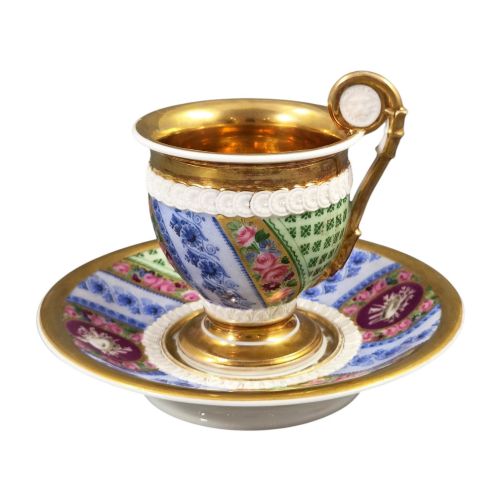
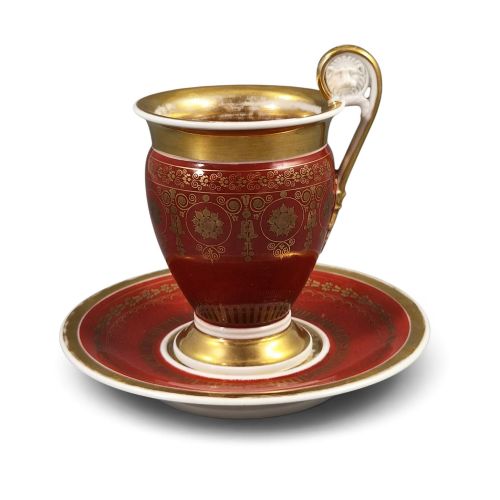
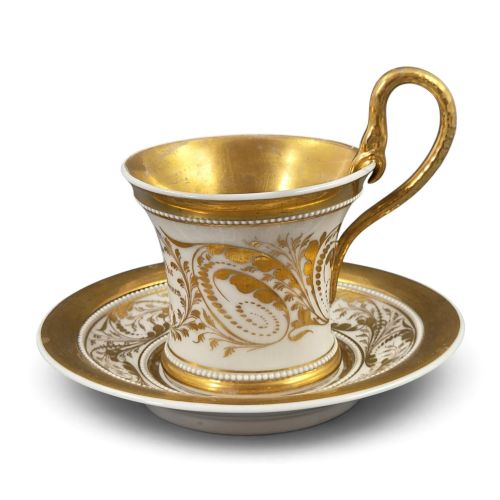
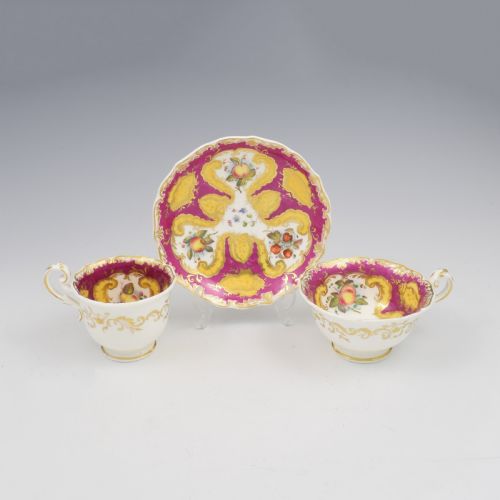
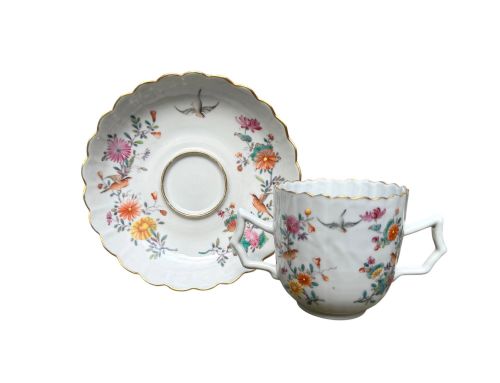
A porcelain teacup and saucer represents the drinking vessels collected from the eighteenth century through to the Edwardian era. These items encompass individual duos, trios with matching coffee cups, and larger service components.
The versions most frequently met here span the Georgian and Regency periods, alongside Victorian and Edwardian examples. They take the form of teacups, coffee cans, tea bowls, and matching saucers shaped in European and Chinese export traditions.
Teacups and saucers from this selection often display cabinet quality, shaped for display rather than robust daily use. They emerge from English factories such as Worcester, Derby, Coalport, and New Hall, alongside continental and Chinese kilns.
How they were made
Makers utilised soft-paste porcelain and bone china, shaping bodies by hand or mould before applying high-temperature glazes. Soft-paste pieces from the eighteenth century require careful firing, while nineteenth-century bone china offers a harder body.
Decoration relies on handpainted enamel pigments, gold leaf, and rich gilding applied over or under the glaze. Artisans painted botanical subjects, landscapes, and intricate patterns by hand, sometimes incorporating transfer printing for outlines before colouring.
Materials recorded across these items include soft-paste porcelain, bone china, gold leaf, and enamel.
What varies in quality
The standard of painting determines the upper tier of these vessels, distinguishing spirited brushwork from mechanical repetition. Handpainted details featuring specific botanical studies or complex gilt borders elevate individual pieces.
The crispness of the porcelain body and the preservation of the gold leaf dictate value. Pieces retaining unrubbed gilding and unblemished enamel surfaces demonstrate superior preservation from their respective periods.
Royal Crown Derby·H and R Daniel·Chamberlain Worcester·New Hall·Coalport·KPM Berlin·Rockingham·Sevres·Flight Barr and Barr·Hicks Meigh and Johnson
The Porcelain Teacup and Saucer Glossary
- Soft-Paste Porcelain
- An artificial porcelain composition fired at lower temperatures than hard paste, common in eighteenth-century English works. It yields a warm translucent body.
- Bone China
- A porcelain variant incorporating animal bone ash, developed to provide increased strength and a bright white surface. It dominates nineteenth-century English production.
- Coffee Can
- A straight-sided cylindrical cup designed for drinking strong coffee, frequently paired with a matching saucer in tea duos and trios. They often lack the curved handle found on standard teacups.
- Tea Bowl
- A handleless cup used for drinking tea during the eighteenth century, following Chinese ceramic traditions. They require careful holding as the hot liquid warms the porcelain directly.
- Gilding
- The application of gold leaf or powdered gold to ceramic surfaces, used for rims, handles, and intricate motifs. It is often burnished to create a bright metallic finish.
- Trio
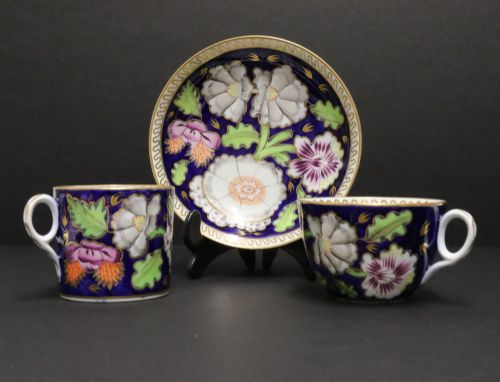
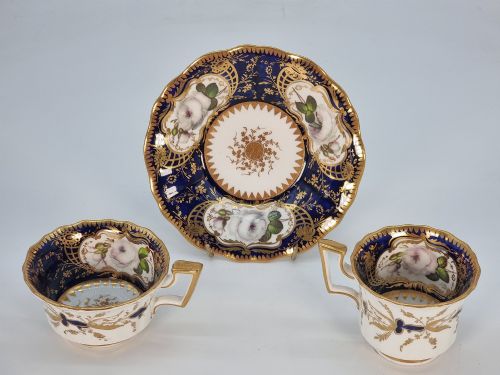
- A matched set consisting of a teacup, a coffee cup or tea bowl, and a saucer. They were produced in quantity by factories such as Coalport and New Hall.
Porcelain Teacup and Saucer: Frequently Asked Questions
What is the difference between a tea bowl and a teacup?
A tea bowl lacks a handle and follows early Chinese export forms imported during the eighteenth century. They require the drinker to cradle the ceramic directly.
Teacups incorporate handles and developed later as European dining habits shifted towards seated gatherings. Both forms share matching saucers within surviving sets.
How do I identify an eighteenth-century piece?
Eighteenth-century examples typically utilise soft-paste porcelain bodies that show a warm, slightly creamy translucency when held to the light. They often feature handpainted underglaze blue or enamel decoration characteristic of early factories.
Base marks, where present, point to specific periods like the crescent mark associated with early Worcester. The absence of handles on tea bowls also indicates an earlier date of manufacture.
Can I use these cups for daily tea drinking?
Most pieces listed here are cabinet porcelain intended for display and gentle collection rather than robust modern use. The fragile nature of soft-paste bodies and delicate handpainted gilding requires careful preservation.
Handwashing in lukewarm water without harsh detergents protects the enamel pigments and gold leaf from fading. Sudden temperature changes can crack the historic ceramic material.
What does a trio include?
A trio consists of a teacup, a matching coffee cup or tea bowl, and a saucer designed as a single suite. These sets allowed households to serve different hot beverages in coordinated styles.
Factories such as Coalport and New Hall produced them extensively during the Regency and Georgian periods. Surviving trios retain their original matching decoration across all three components.