




Cased Wall Clock
A cased antique wall clock brings mechanical precision and period timber to a room, offering both reliable timekeeping and historic character.
Cased Wall Clock
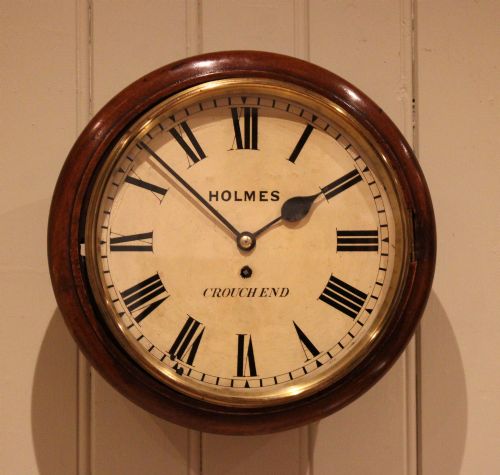
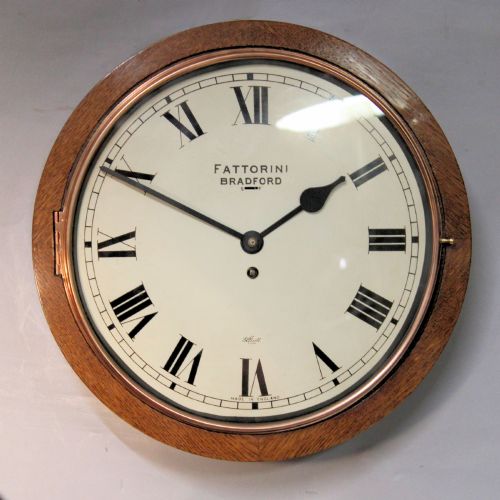
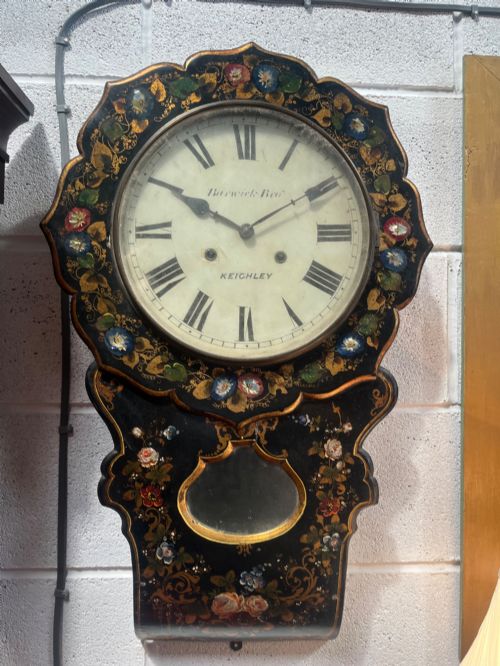
A cased antique wall clock encompasses diverse forms ranging from drop-dial railway timepieces to elaborate Vienna regulators. Buyers searching for a cased antique wall clock frequently encounter Victorian specimens alongside Edwardian, Art Deco, and mid-twentieth-century examples.
The material evidence spans nineteenth-century walnut and mahogany drop-dial formats, alongside specialised bulkhead and electric master clocks. Pieces originate from English, Austrian, and German workshops, reflecting distinct regional clockmaking traditions across the eighteenth, nineteenth, and twentieth centuries.
Materials and construction methods
Cases are constructed from hardwoods such as mahogany, walnut, oak, and rosewood, sometimes accented with ebonised wood or painted decoration. Glazed doors protect the dial, while brass and steel components form the intricate gear trains and escapement mechanisms.
Movements utilise fusee mechanisms, spring-driven setups, or double and triple weight systems to maintain consistent tension. Enamel or convex metal dials display the numerals behind heavy bevelled or flat glass panes fitted within the wooden housing.
Cased Wall Clock Retail Price Guide 2026
Typical asking prices for cased wall clock among the pieces listed under this phrase on Sellingantiques today, from the lower quarter to the upper quarter. They describe what is for sale here now, not the wider market.
Markers of distinction and build standard
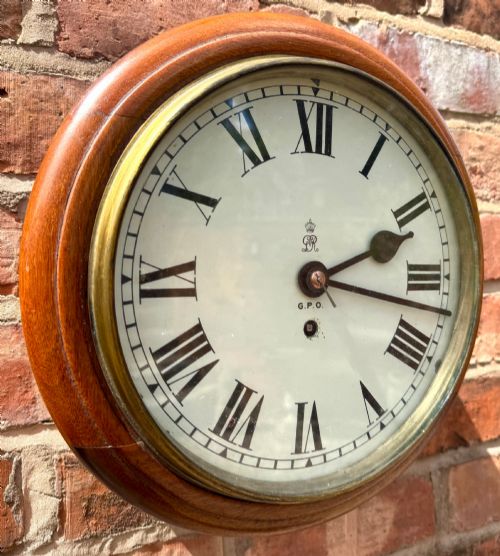
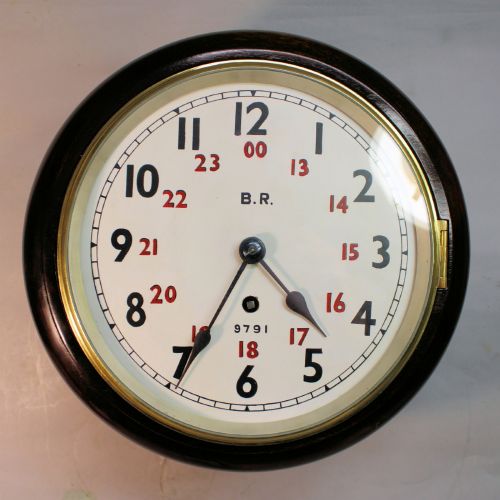
Distinction in a cased antique wall clock lies in the crispness of timber carving, the choice of burr or straight-grained veneers, and the execution of brass movement parts. Superior examples display signed dials, numbered cases matching specific railway or governmental departments, and complex striking trains like grande sonnerie.
The standard of internal mechanical finishing and the preservation of original case elements differentiate finer specimens from standard utility timepieces. Intricate dial painting and well-proportioned architectural cases indicate higher craftsmanship during production.
Elliott·AG Lenzkirch·L Morris·Gustav Becker·Peter Debaufre
The Cased Wall Clock Glossary
- Fusee
- A conical pulley used in spring-driven clocks to equalise the torque of the mainspring as it unwinds. This mechanism helps maintain steady force on the gear train for accurate timekeeping.
- Drop-dial
- A wall clock design featuring a circular dial housing positioned above an extended wooden box that encloses the pendulum. This format was widely utilised by English railway companies and public offices.
- Vienna Regulator
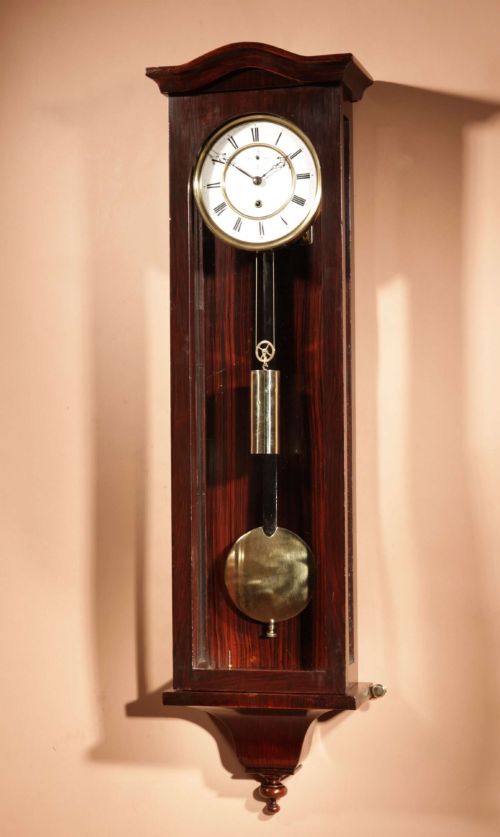
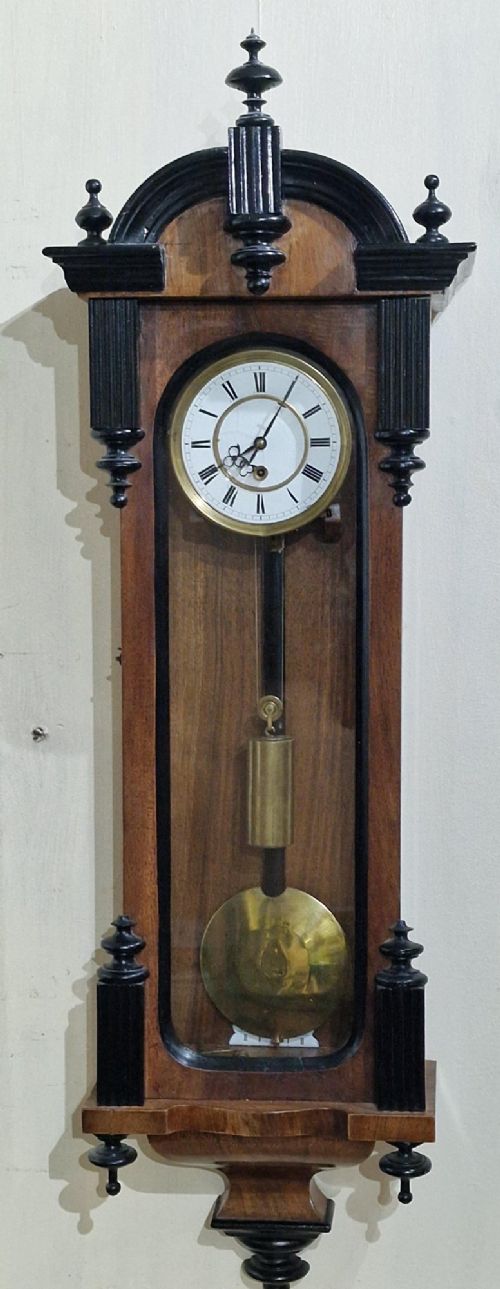
- A precise pendulum clock developed in Austria, typically housed in a tall walnut or mahogany glazed case. These pieces frequently incorporate weights and visible compensation pendulums.
- Grande Sonnerie
- A complex striking mechanism that chimes both the hours and the quarters on every quarter-hour. It represents an advanced level of horological complication.
- Lever escapement
- A mechanism that controls the release of power from the gear train to the pendulum or balance wheel. It provides reliable timekeeping in various hanging positions.
Cased Wall Clock: Frequently Asked Questions
How do I wind a fusee wall clock?
Winding requires inserting the key into the dial aperture and turning it gently until the resistance increases, indicating the spring is fully wound. Care must be taken not to overwind the mechanism.
Most fusee movements require attention once every eight days. Keeping a consistent schedule helps maintain the health of the brass gear trains.
Where should I hang a heavy wall clock?
These timepieces require direct mounting into solid masonry or substantial wooden wall studs using appropriate fixings. Supporting the full weight securely prevents structural strain on the case.
Placement should avoid areas subject to dampness, excessive temperature fluctuations, or heavy vibrations from closing doors. A stable wall ensures the pendulum swings evenly.
What is the difference between a timepiece and a clock?
In horological terms, a timepiece indicates the hours and minutes without incorporating any striking or chiming mechanism. It focuses solely on measuring the passage of time.
A clock includes additional trains of gears designed to sound hours, halves, or quarters audibly. Many railway and office variants operate purely as timepieces for straightforward legibility.
How do I identify a Vienna regulator?
A Vienna regulator is characterised by a long glazed wooden case, a precision deadbeat escapement, and a gridiron or rod pendulum designed to compensate for temperature changes. They typically feature heavy brass weights.
These pieces were produced in Austria and Germany during the nineteenth century. Their architectural cases often showcase turned wooden finials and substantial glass viewing panels.