
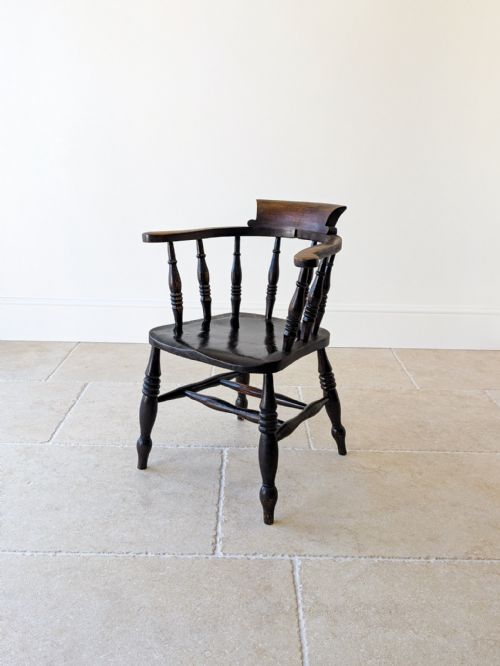
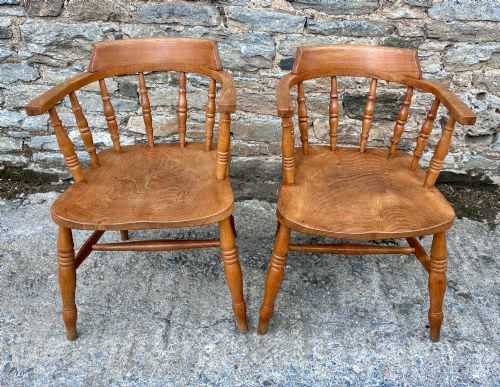
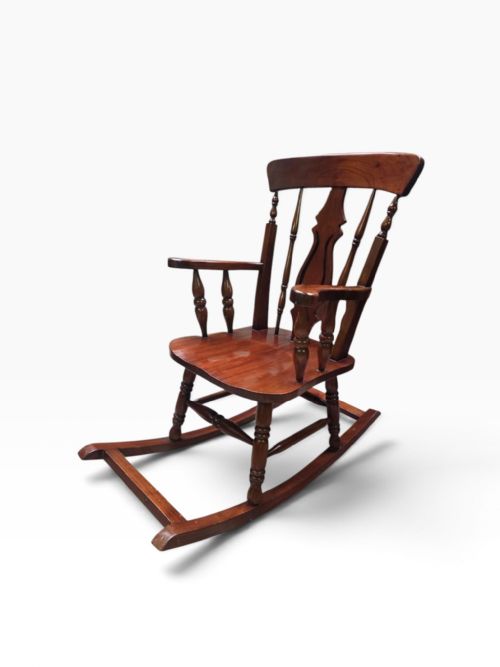
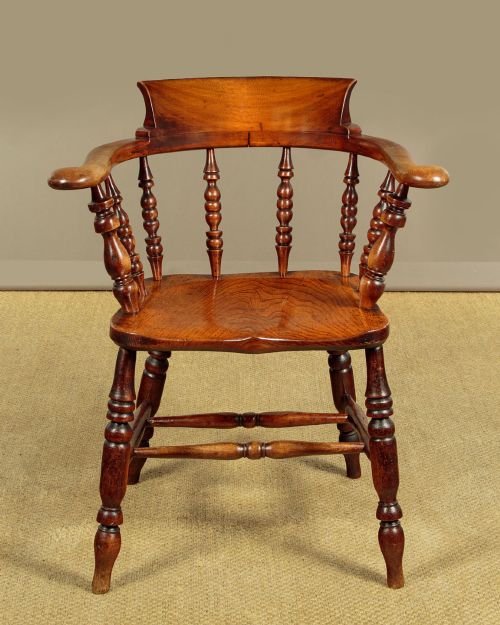
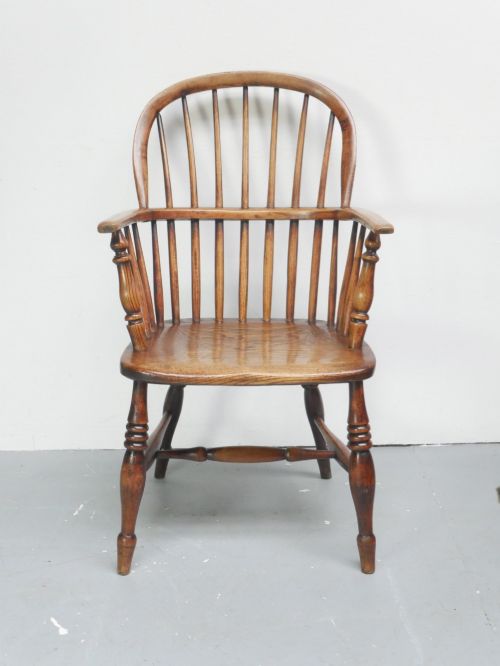
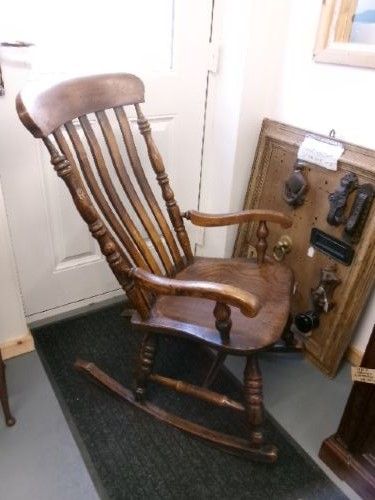
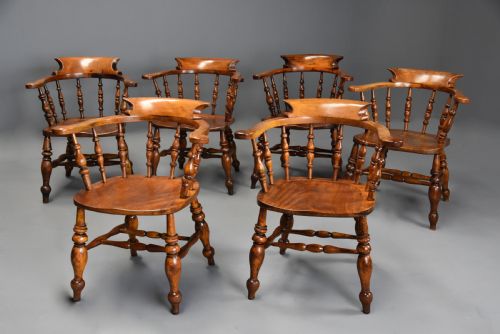
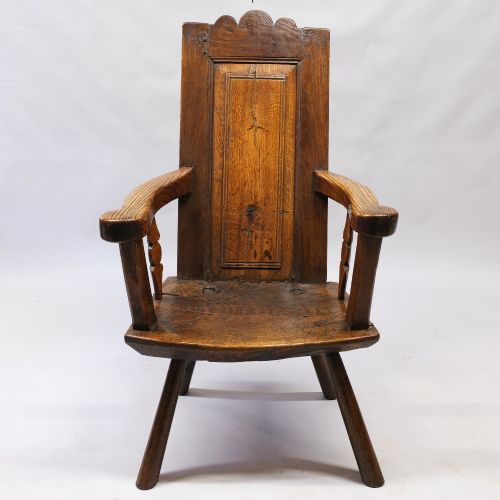
Carved Wooden Windsor Armchair
A carved wooden windsor armchair offers solid country craftsmanship, bringing rustic regional character and sturdy timber construction into domestic spaces.
Carved Wooden Windsor Armchair
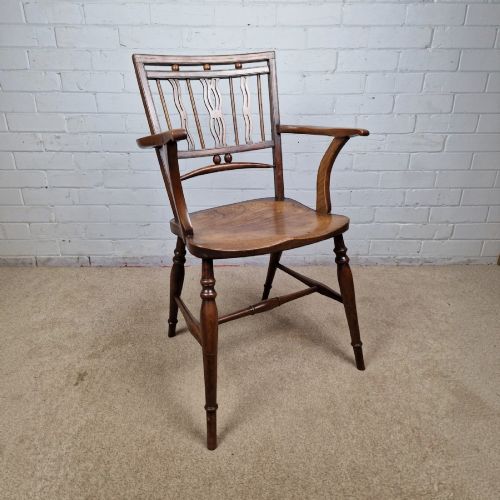
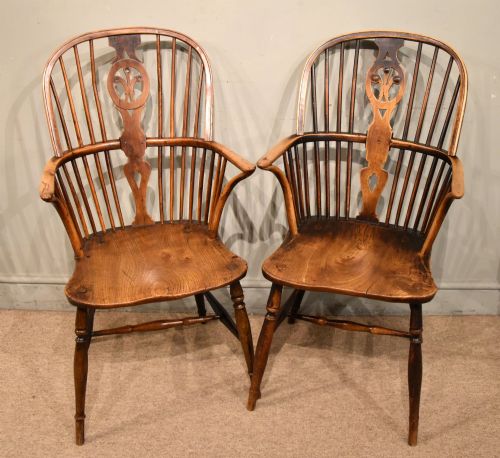
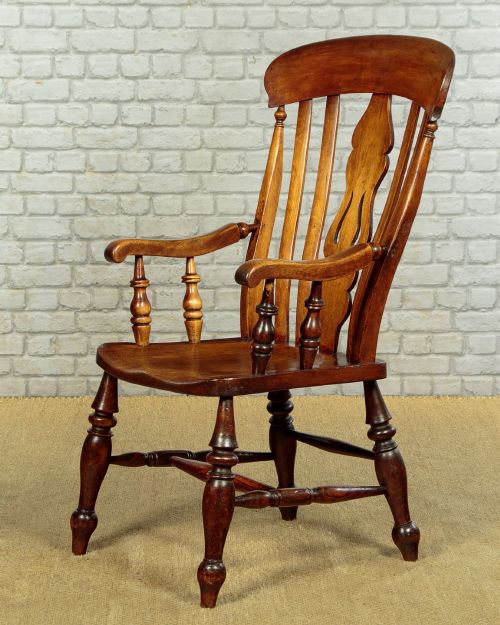
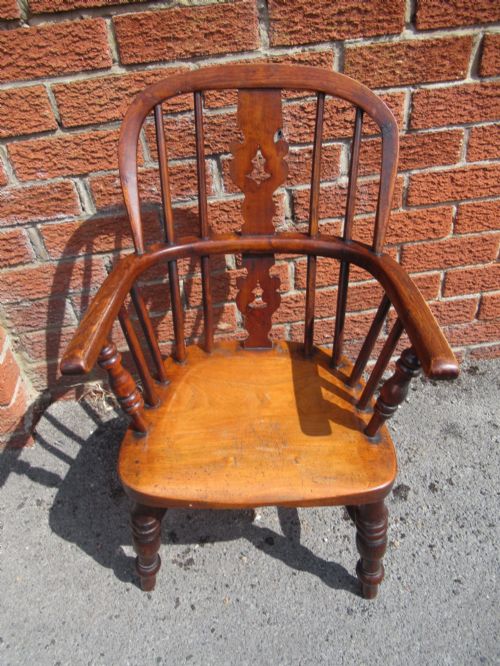
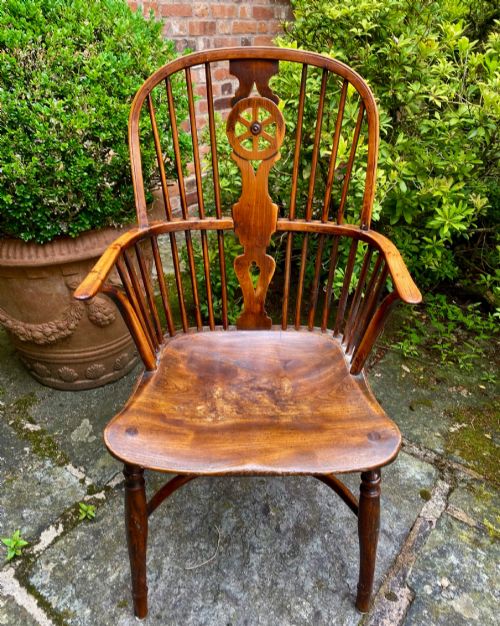
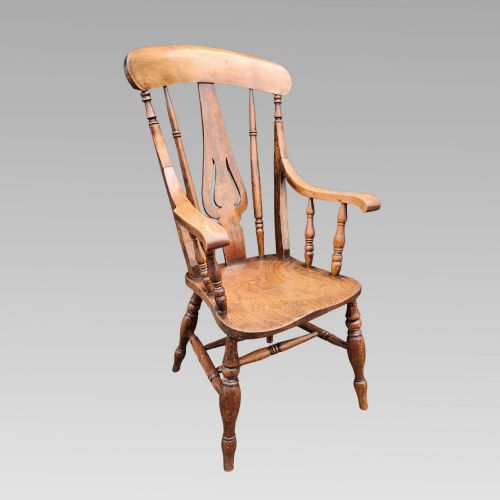
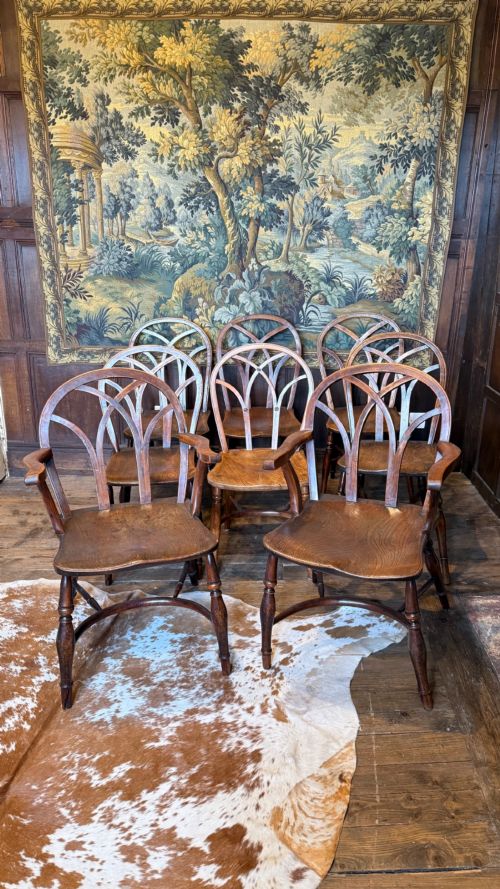
A carved wooden windsor armchair is a distinctive seating form defined by a heavy timber seat into which the legs, back spindles and arms are independently wedged and jointed. Buyers searching this phrase meet varied regional interpretations originating from the eighteenth through to the early twentieth century, spanning Georgian vernacular traditions and Victorian farmhouse production.
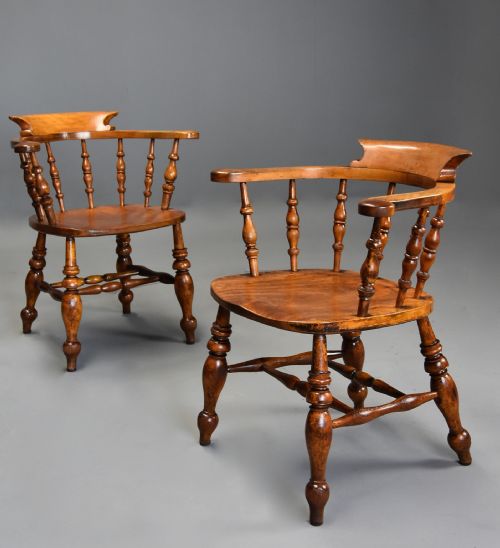
The versions most commonly encountered on this page combine elm seats with ash, beech, yew or fruitwood frames, taking forms such as low backs, high backs, smoker's bows and captains chairs. Regional variations across Scotland, Wales, Yorkshire and the Thames Valley shape the silhouette, introducing comb backs, wheel backs, bar backs and spindle and lyre back details.
Makers utilised native hardwoods to construct these seats for daily domestic, farmhouse and commercial use, resulting in practical armchairs built for durability. The selection ranges from plain kitchen seating to refined yew wood examples and primitive multi timber compositions displaying individual joinery quirks.
How they were made
Cabinet makers and bodgers constructed these armchairs by combining turned wood components with sculpted solid timber seats, boring holes at precise compound angles to receive the legs and back spindles. The saddle seat was typically scooped from a single thick plank of elm to provide comfortable seating, whilst spindles and arms were shaped using a drawknife on a shaving horse.
Traditional timber bending techniques formed the characteristic hoop back or bow back, steaming ash or other pliable hardwoods until flexible enough to be secured into mortises in the seat. Joints were secured using wedges and pegs without relying on modern adhesives, allowing the dry timber components to lock firmly together over decades of use.
Current listings demonstrate timber combinations spanning elm, ash, beech, oak, yew, fruitwood and mahogany across the nineteenth century.
What varies in quality
The quality of a carved wooden windsor armchair depends upon the selection of timber and the ambition of the regional design, with dense yew wood and complex multi wood framing sitting at the upper end of domestic production. Grain pattern, timber figure and the depth of the sculpted saddle seat distinguish basic utilitarian seating from master regional craftsmanship.
Structural integrity and the survival of original turned elements determine the standing of individual examples, alongside the presence of balanced proportions and crisp detail to carved splats or wheel backs. Pieces that retain their original wedged joints and uncompromised timber thickness demonstrate superior historical preservation.
Fred Walker Rockley
The Carved Wooden Windsor Armchair Glossary
- Smoker's Bow
- A low backed Windsor armchair with a continuous curved arm rail supported by turned spindles, originating in nineteenth century vernacular seating.
- Comb Back
- A Windsor chair variation where the vertical back spindles extend upward through a horizontal top rail, resembling the teeth of a comb.
- Bodger
- A traditional wood turner who worked in the woods producing chair legs and spindles using a pole lathe before assembly by urban or rural chair makers.
- Saddle Seat
- A wooden chair seat sculpted with hollowed depressions to replicate the contours of the human body for improved sitting comfort.
- Thames Valley
- A recognised regional English style of Windsor chair production noted for refined timber selection, particularly the use of highly figured yew wood.
Carved Wooden Windsor Armchair: Frequently Asked Questions
What is a windsor armchair?
A windsor armchair is a distinct seating form constructed by inserting individual turned legs and back spindles directly into a thick wooden saddle seat.
This method differs from standard framed chair construction by giving the timber components independent structural roles within the solid base.
Which woods were used?
Maker workshops utilised native British hardwoods, frequently pairing a heavy elm seat with ash for steam bent hoops and beech for turned legs.
Finer regional examples incorporate yew wood, fruitwood or laburnum to add decorative grain contrast and distinctive natural colour variations.
How do I date a chair?
Dating relies on observing structural evolution, tool marks, timber shrinkage patterns and the specific regional style of the back splat or arm bow.
Early eighteenth century examples display different turning profiles and wider plank construction compared to standardised nineteenth century farmhouse production.
Where were they made?
Production occurred across various British regions, with specific aesthetic traits developing in the Thames Valley, Yorkshire, Wales and Scotland.
Local timber availability and regional woodworking traditions directly influenced whether a maker built a low back, high back or spindle back design.