

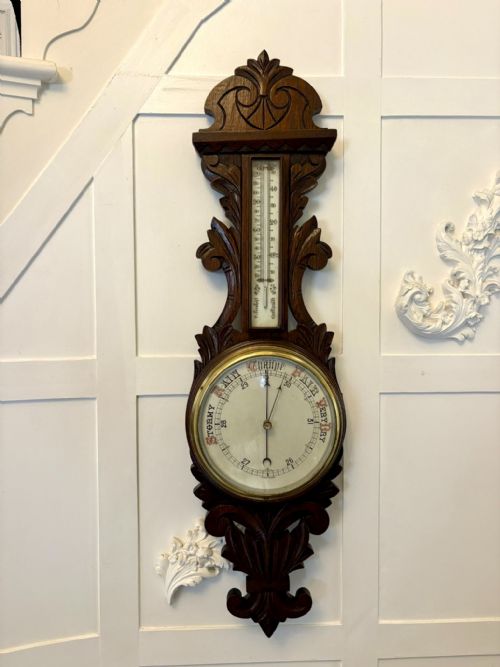


Carved Wooden Weather Glass
A carved wooden weather glass brings mechanical science into domestic spaces through rich timber housings.
Carved Wooden Weather Glass
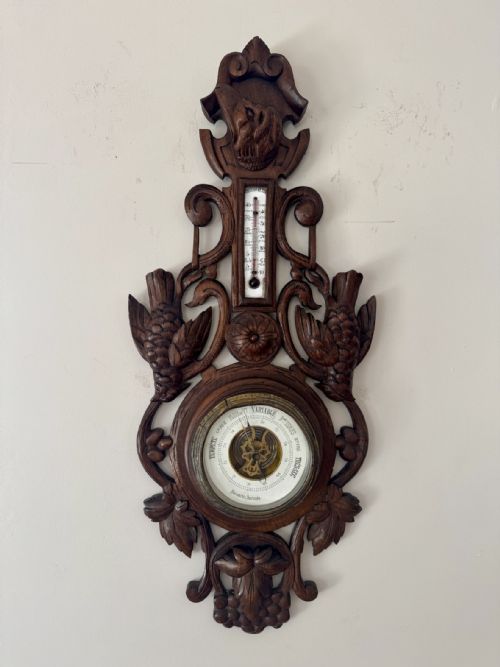
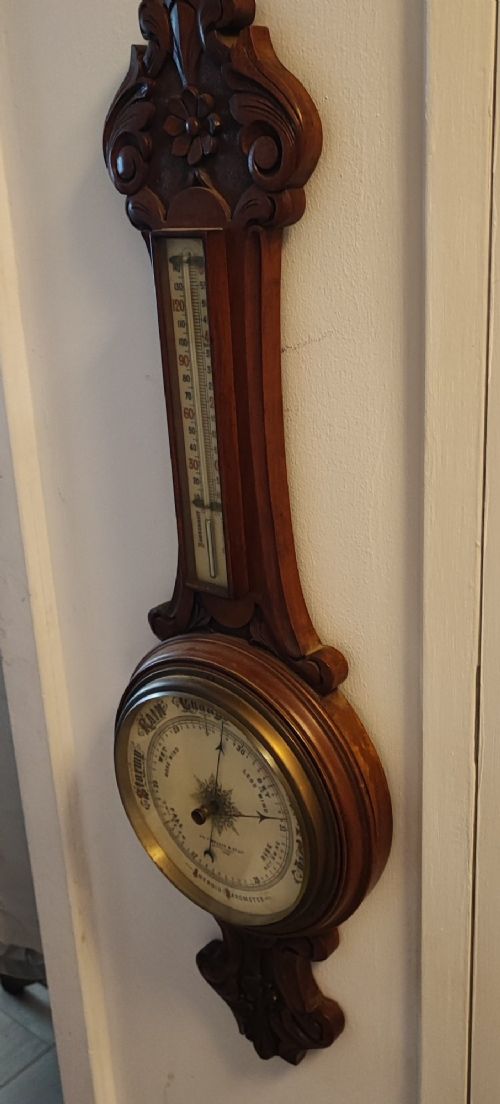
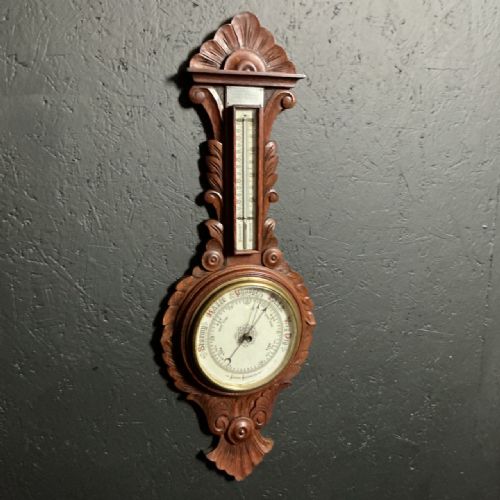
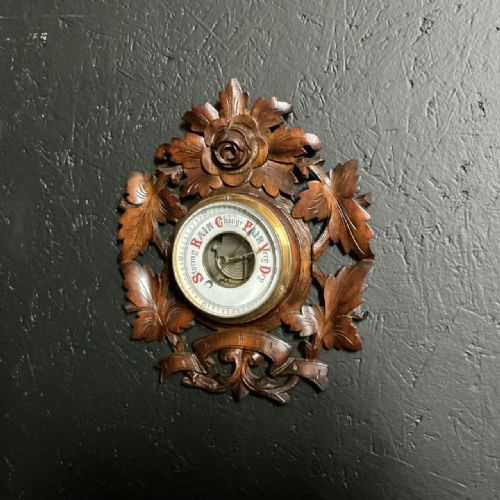
The version you are most likely to meet on this page is the Victorian carved oak aneroid barometer. These instruments frequently feature thermometer attachments and detailed foliate, bird, or geometric carvings reflecting Black Forest and Gothic revivals. Alongside these, walnut and rosewood banjo frames appear regularly, representing the domestic instrumentation typical of the nineteenth century.
How they were made
Cabinetmakers constructed the housings using dense hardwoods like oak, walnut, and mahogany, selecting timber for grain pattern and stability. Carpenters shaped these woods through hand carving, marquetry inlay, and geometric casing techniques, frequently incorporating applied ornamentation such as birds and foliate scrolls.
Instrument makers fitted brassbezels, paper dials, and glass faces into the timber bodies to protect the internal aneroid or mercury mechanisms. Thermometers and clock components were integrated alongside the primary barometer tubes, secured to the wooden backboards with brass fixtures.
Carved Wooden Weather Glass Retail Price Guide 2026
Typical asking prices for carved wooden weather glass among the pieces listed under this phrase on Sellingantiques today, from the lower quarter to the upper quarter. They describe what is for sale here now, not the wider market.
Makers represented include Negretti and Zambra alongside James Pitkin London, offering scientific precision within domestic timber cabinetry.
What varies in quality
The depth and crispness of the timber carving distinguish standard production from superior craftsmanship. Finely executed instruments display undercut foliage, sharply rendered animal figures, and balanced proportions across the banjo or wheel frame, whereas lesser examples show shallow moulding and repetitive machine stamping.
W Watson and Sons·James Pitkin London·Negretti and Zambra·J Hicks of London·Alexander Adie
The Carved Wooden Weather Glass Glossary
- Aneroid barometer
- A barometer that measures atmospheric pressure through the expansion and contraction of a flexible metal box, operating without liquid mercury. This mechanism allowed barometers to be built into compact wall-hanging wooden frames.
- Banjo barometer
- A barometer housed in a vertical wooden case shaped like a banjo, typically featuring a circular dial at the top and a larger thermometer or hygrometer lower down. This form dominated nineteenth-century domestic interiors.
- Stick barometer
- A tall, narrow barometer that displays mercury within an exposed glass tube backed by a vernier scale. These instruments generally use mahogany or oak trunk cases.
- Wheel barometer
- A barometer connected to a pulley and pointer system that indicates pressure changes on a large circular dial face. These are often housed in decorative frames incorporating hygrometers and spirit levels.
- Black Forest style
- A decorative wood-carving tradition originating in central Europe, characterised by naturalistic motifs of animals, foliage, and rustic scenes. This style appears frequently on Victorian aneroid barometers.
Carved Wooden Weather Glass: Frequently Asked Questions
How do aneroid barometers work?
Aneroid barometers measure changes in atmospheric pressure using a sealed, flexible metal capsule that expands or contracts as pressure shifts. This movement connects through levers to the pointer visible on the dial.
Because they contain no liquid, these instruments function reliably in wall-hanging wooden cases without risk of spills, making them practical for domestic settings.
Where were these placed at home?
Weather glasses were traditionally hung in hallways, libraries, or parlours where family members and visitors could check daily atmospheric conditions before going outside.
Their decorative frames ensured they doubled as ornamental wall furniture, matching the heavy timber panelling and furnishings common in nineteenth-century rooms.
How do I read a stick barometer?
A stick barometer is read by observing the height of the mercury column against the graduated scale, often utilising a sliding vernier for precise measurement. Rising mercury generally indicates fair weather, while falling mercury points towards rain or wind.
These mercury-based instruments required careful vertical mounting on sturdy wooden backboards to maintain reading accuracy.
How do I identify a Black Forest barometer?
Black Forest barometers are identified by deeply carved wooden cases depicting naturalistic scenes, such as intertwined oak leaves, birds, and rustic foliage. The timber is typically dark carved walnut or oak with high relief detailing.
These pieces reflect the nineteenth-century passion for romantic, woodland-inspired decorative arts applied to scientific instruments.