

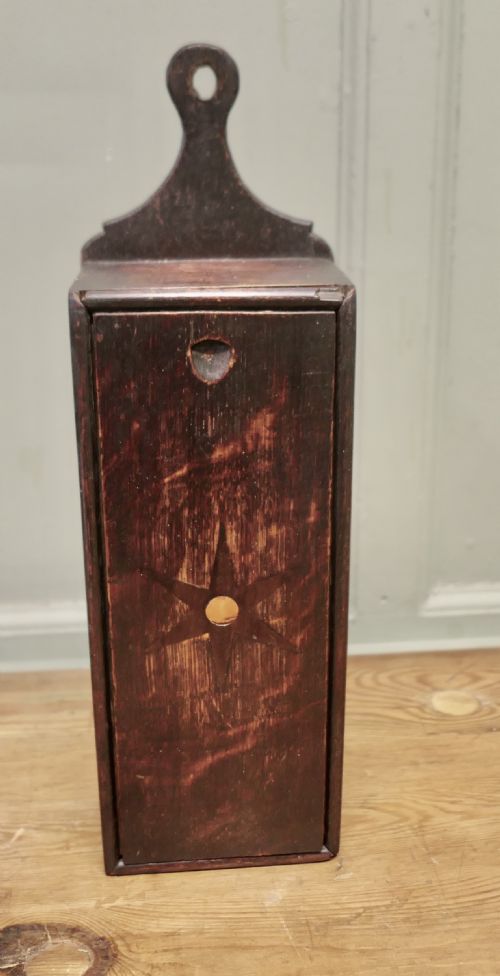
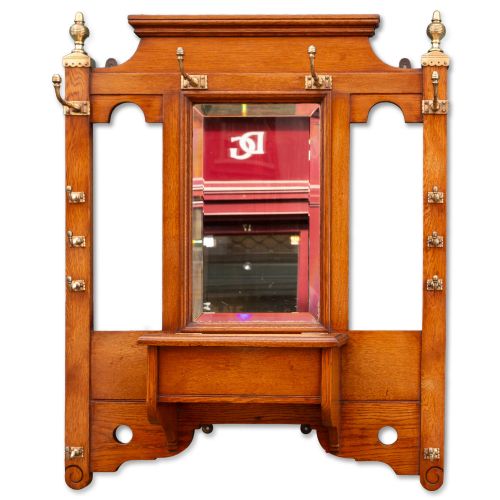
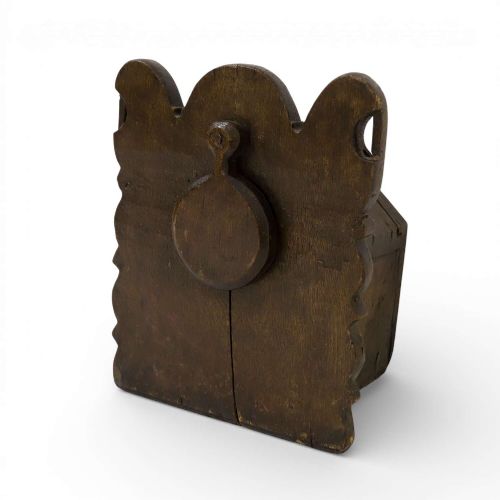
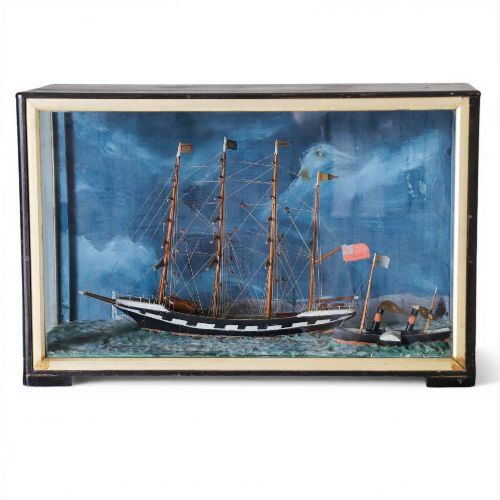





Carved Wooden Wall Box
A carved wooden wall box keeps small household necessities at hand while bringing period texture to a plain interior.
Carved Wooden Wall Box
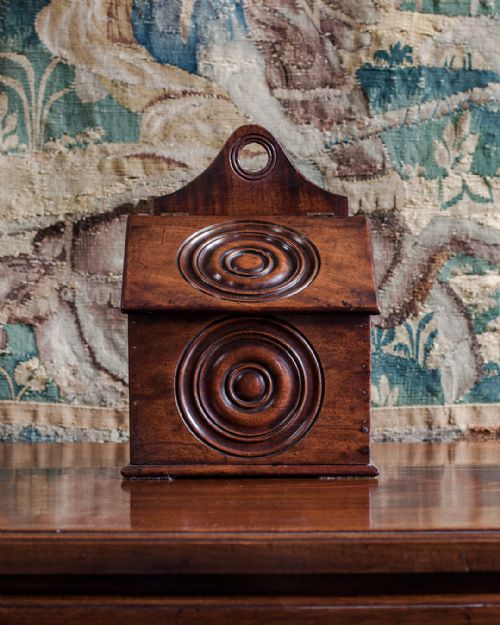
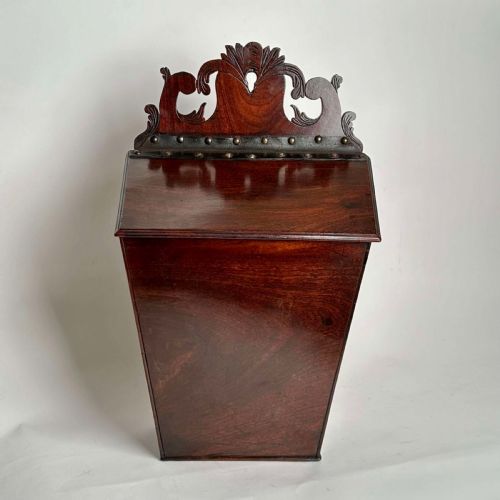
A carved wooden wall box serves as a practical storage fixture designed to be mounted directly onto the wall, freeing up surface space in domestic rooms. These items appear across the seventeenth, eighteenth, and nineteenth centuries, taking forms such as candle boxes, salt boxes, and small wall cabinets.
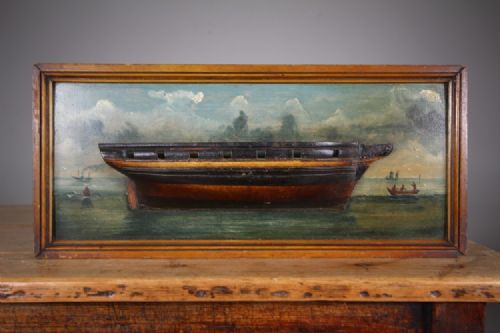
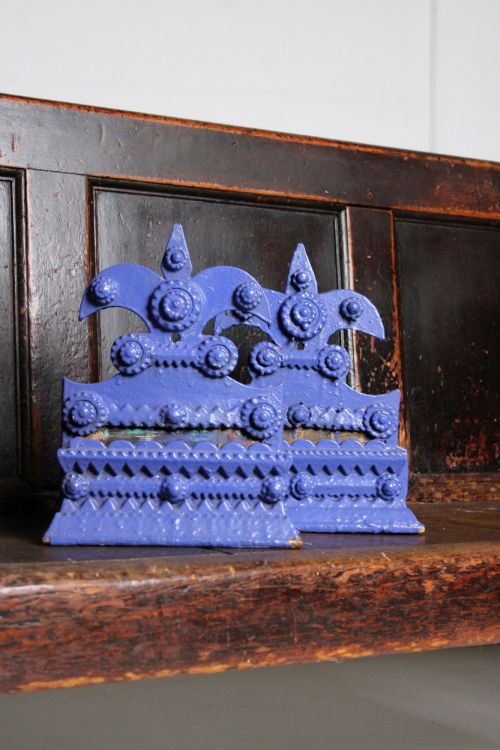
The selection on this page leans heavily towards regional British and European utility pieces constructed to hold everyday goods. Alongside traditional salt and candle containers, the grouping includes hanging cupboards, coat racks, and maritime dioramas that share a domestic wall-hanging function.
How they were made
Solid timber forms the primary structure of these wall fixtures, with native oak and mahogany predominating across the earlier periods. Artisans shaped these dense hardwoods using hand tools, often incorporating relief carving and moulded details directly into the board.
Functional metal components such as brass hinges, iron latches, and original hardware secure the lids and doors to the wooden bodies. Traces of original paint or natural wax finishes frequently survive on the timber surfaces, recording the original appearance.
One wall box preserves faint traces of red paint underneath decades of kitchen smoke.
What varies in quality
The crispness of the hand-carving and the thickness of the timber distinguish standard utility containers from finer examples. Superior pieces display confident tool marks and balanced proportions that reflect the skill of the regional maker.
The survival of original iron or brass hardware and untouched surface patination elevates a piece above those with replaced mountings or stripped finishes. Integrity of construction, from pegged joints to undisturbed backboards, determines the standing of an antique wall box.
The Carved Wooden Wall Box Glossary
- Salt box
- A wall-mounted container featuring a sloping hinged lid and a high backboard with a hanging hole, designed to keep kitchen salt dry. These vessels date primarily from the eighteenth and nineteenth centuries.
- Candle box
- A specialised storage box built to protect tallow or wax dips from dust and pests until required for evening lighting. They often feature sliding or hinged lids for quick access.
- Panetière
- A traditional French wall-mounted bread cupboard featuring turned spindles or open slats to allow air circulation around loaves. These walnut or fruitwood storage pieces originate from rural domestic interiors.
- Diorama
- A three-dimensional scenic representation featuring carved or modelled ships and maritime subjects enclosed within a glazed wooden case. These wall-hanging maritime works capture specific vessels and historical naval scenes.
- Tramp art
- A form of folk art created by itinerant workers who notched and layered scraps of common wood into decorative boxes and frames. This technique relies on chip-carving pocket knives rather than sophisticated joinery.
Carved Wooden Wall Box: Frequently Asked Questions
Where were wall boxes hung?
These items were positioned near fireplaces, stairwells, or kitchen prep areas where contents like salt, candles, or requisitions were needed constantly. The high backboard typically incorporates a pierced hole specifically designed for hanging securely on a wall peg or nail.
Placing them at reachable heights protected perishable or valuable goods from household dampness and pests while keeping surfaces clear.
How do I date an oak wall box?
Dating relies on observing construction methods, tool marks, and timber selection rather than relying solely on surface decoration. Seventeenth and eighteenth-century examples often utilise pegged mortise and tenon joints with hand-sawn boards showing distinct uneven textures.
Later Victorian pieces introduce machine-sawn elements, standard brass screws, and factory-made hinges that contrast with earlier blacksmith-produced ironwork.
Can these hang on modern walls?
Most antique wall boxes feature original hanging slots or sturdy backboards capable of supporting their own weight safely. However, the heavy dense oak or mahogany construction requires appropriate wall anchors suited to plasterboard or masonry.
Distributing the load prevents strain on the antique timber joints and centuries-old backboards during daily use.