

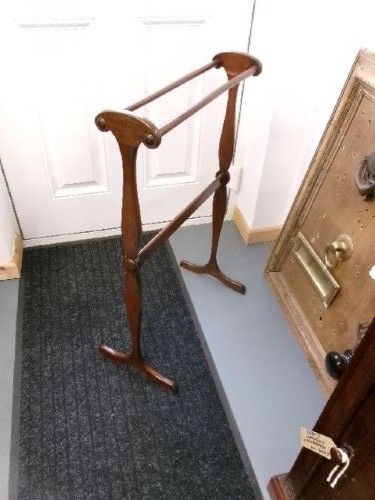
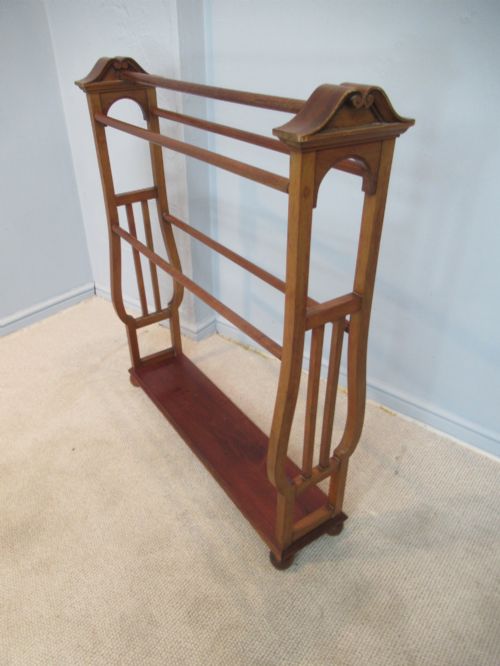


Carved Wooden Towel Rail
A carved wooden towel rail brings functional warmth to a room, offering period charm through rich timber and detailed carving.
Carved Wooden Towel Rail
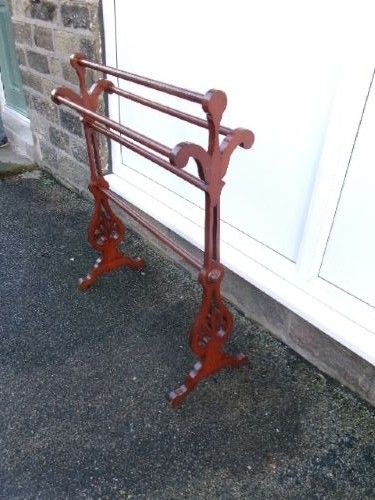
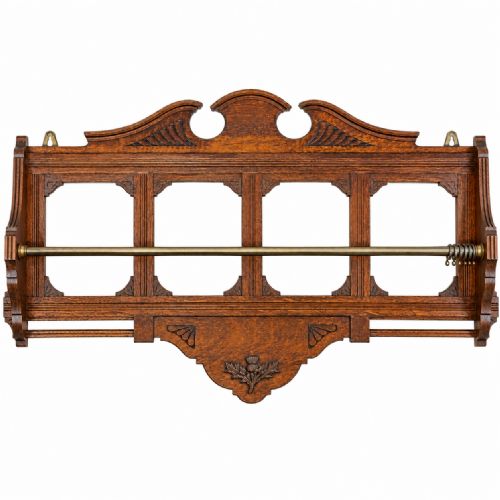
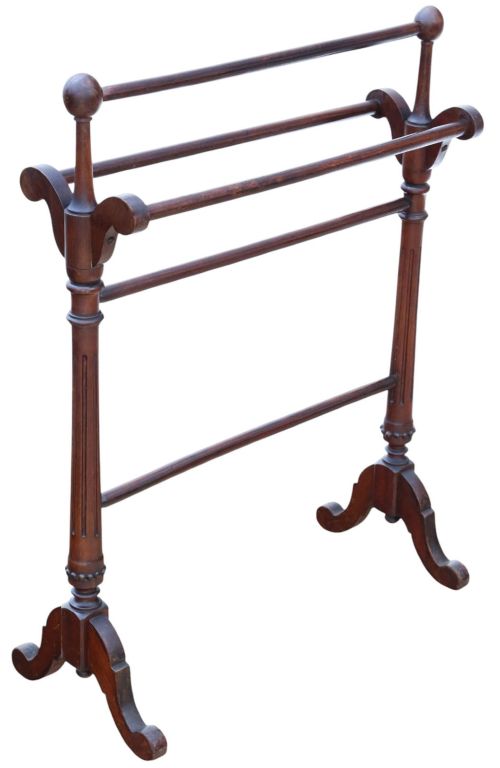
A carved wooden towel rail is a practical furnishing designed for domestic use, appearing across Victorian, Edwardian, and Chinese Qing Dynasty periods. These pieces take the form of standing towel rails, wall racks, robe stands, clothes racks, and hall stands.
How they were made
Makers shaped these items using solid timbers such as mahogany, oak, walnut, elm, and hardwood, often enhancing the surfaces with pigment and lacquer. Brass fittings frequently appear as structural components or decorative accents on the rails and stands.
Woodworking techniques of the period involved skilled joinery and manual carving to produce robust frames and ornamental details. Chinese pieces utilise lacquering methods distinct from European cabinetmaking traditions, creating glossy finishes on the robe stands.
Carved Wooden Towel Rail Retail Price Guide 2026
Typical asking prices for carved wooden towel rail among the pieces listed under this phrase on Sellingantiques today, from the lower quarter to the upper quarter. They describe what is for sale here now, not the wider market.
Materials recorded across the current selection include mahogany, oak, walnut, elm, hardwood, brass, lacquer, and pigment.
What varies in quality
Quality in a carved wooden towel rail rests upon the selection of timber and the depth of the hand-carving. Dense hardwoods like mahogany and oak hold crisp decorative details better than softer woods over decades of use.
The refinement of the joinery and the integrity of the finish separate standard utility items from finer country house or scholarly pieces. Sustained structural stability combined with well-preserved surface pigment indicates superior original construction.
The Carved Wooden Towel Rail Glossary
- Mahogany
- A durable tropical hardwood known for its deep reddish-brown colour and fine grain. It was widely utilised by Victorian cabinetmakers for domestic furniture.
- Qing Dynasty
- The final imperial dynasty of China, lasting from sixteen forty-four to nineteen twelve. Pieces from this era often feature distinctive lacquerwork and traditional joinery.
- Gothic Revival
- An architectural and decorative style drawing inspiration from medieval design. In woodwork, this manifests as pointed arches, heavy moulding, and solemn religious motifs.
- Arts and Crafts
- A design movement championing traditional craftsmanship and simple forms. Objects from this tradition reject mass production in favour of visible hand-working.
Carved Wooden Towel Rail: Frequently Asked Questions
Where were carved wooden towel rails placed?
These items stood in bedrooms, dressing rooms, and hallways to dry linens or hold garments. Wall-mounted racks were fixed near washbasins for everyday convenience.
Larger standing pieces served as clothes horses and robe stands in expansive domestic settings. Their placement depended entirely on the household layout and the specific form of the rail.
How do I date a Victorian rail?
Dating relies on timber choice, construction methods, and stylistic markers recorded in the evidence. Victorian pieces span from eighteen fifty to nineteen hundred, showing shifts from heavy mahogany to oak and walnut.
Regional variations and specific revivals, such as Gothic Revival, help narrow the decade of production. Examining the joints and finish provides further clues to the exact era.
What is a robe stand?
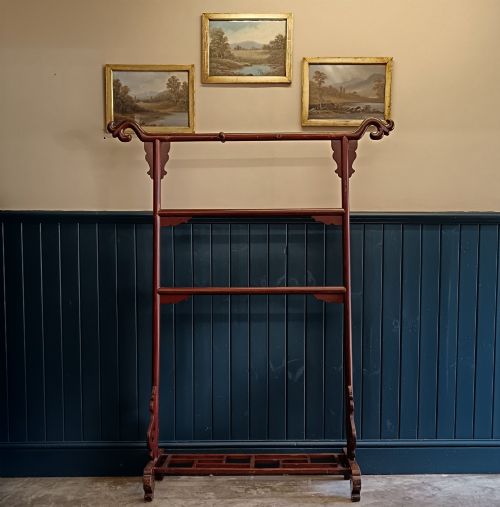
A robe stand is a tall wooden furnishing designed for hanging garments rather than flat towels. Chinese examples from nineteen hundred feature intricate lacquered woodwork and specialised framing.
These pieces acted as freestanding wardrobe alternatives in traditional interiors. Their impressive scale sets them apart from smaller domestic towel rails.
How should I care for antique timber?
Antique wood requires stable indoor humidity and protection from direct sunlight to prevent cracking. Regular dusting with a soft, dry cloth preserves the original polish and pigment.
Avoid harsh chemical cleaners that strip historical finishes and lacquers. Gentle maintenance ensures the timber grain and hand-carving remain intact.