




Carved Wooden Torchiere Stand
A carved wooden torchiere stand raises a lamp or figure above the floor with sculptural presence, bringing classical height to a room.
Carved Wooden Torchiere Stand
When you search for a carved wooden torchiere stand, you encounter tall display columns and floor supports designed to elevate lighting, sculpture, or decorative objects. These pieces function primarily as vertical accents in period rooms, utilising floor space efficiently while drawing the eye upward.
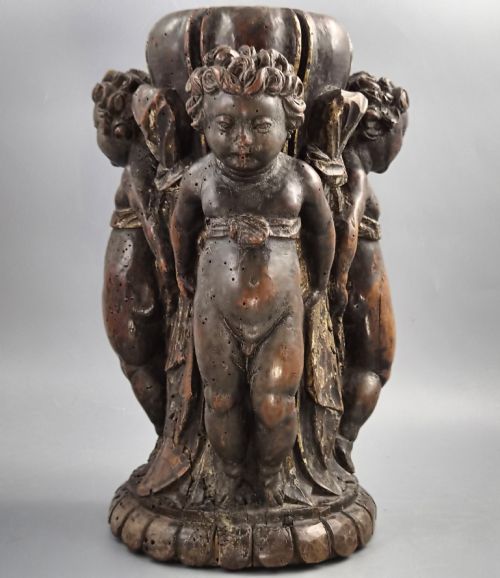
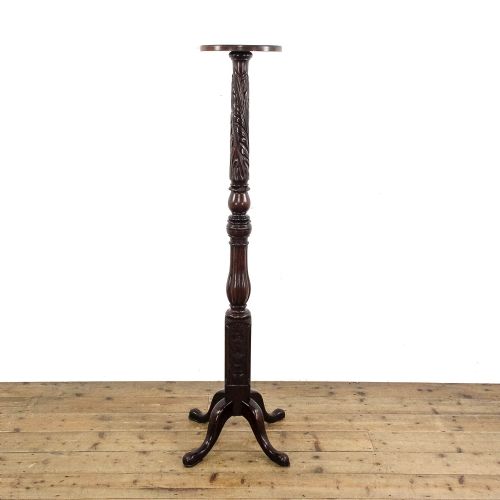
The selections available here span diverse regional traditions and design vocabularies, ranging from heavy Italian Baroque walnut bases featuring carved putti to restrained Georgian mahogany column stands. You are equally likely to find country house Victorian pairs, ornate French boudoir floor lamps, and exotic Art Deco walnut and macassar ebony pedestals.
Makers drew upon historical revivals such as Italian Renaissance, Hepplewhite, and French Chateau styles, resulting in forms that vary from slender fluted columns to figurative lime wood and dragon carvings. This wide span of origins means each stand brings a distinct architectural character to an interior.
Materials and construction
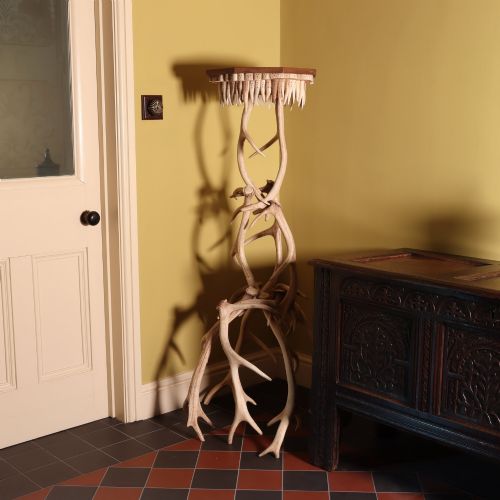
Makers relied heavily on dense hardwoods like mahogany, walnut, and burr walnut, alongside lime wood and giltwood for intricate carving work. Some unconventional pieces incorporate natural materials like antler, while others pair walnut with contrasting macassar ebony veneers.
The execution depends on deep relief carving, turned columns, and applied figurative elements such as putti, busts, or Chinese dragons. Joinery and turning support the tall, slender proportions required to keep these heavy stands stable under load.
Listings feature woods spanning mahogany, walnut, burr walnut, macassar ebony, lime wood, giltwood, and antler.
Distinctions in quality
Quality rests in the depth, crispness, and anatomical correctness of the hand carving, particularly on figurative elements like putti or animal forms. Finer examples display meticulous attention to detail in the drapery, feathers, or foliage rather than flat, mechanical shaping.
The choice of timber and veneer work dictates the upper tier of pieces, where figured mahogany, burr walnut, or contrasting macassar ebony show deliberate grain selection. Structural stability at height separates masterwork columns from simpler utility pieces.
The Carved Wooden Torchiere Stand Glossary
- Torchiere
- A tall stand or floor lamp originally intended to hold a torch or candle. Today it serves to elevate electric lamps, busts, or urns.
- Putti
- Representations of small, chubby male infants, frequently winged, carved in high relief on Baroque and Renaissance revival furniture. They often appear supporting the central column or base.
- Lime Wood
- A pale, fine-grained timber favored by master carvers because it cuts cleanly in any direction without splitting. It allows for extremely delicate undercut details.
- Pedestal
- A structural support or base that elevates a statue, vase, or column. In these listings, it often shares a category with torchieres.
Carved Wooden Torchiere Stand: Frequently Asked Questions
What is a torchiere stand used for?
These tall stands elevate lighting fixtures, urns, or sculptural figures to create vertical interest in a room. They place lamps and decorative objects at eye level.
Historically designed to hold torches or candles, modern examples frequently support electric floor lamps or display important ornaments.
How do I date a wooden torchiere?
Dating relies on identifying the prevailing style, such as Georgian mahogany columns, Victorian rustic forms, or Art Deco macassar ebony veneers. The choice of timber also offers strong clues.
Secondary indicators include construction techniques, tool marks on unexposed wood, and the specific nature of the applied carving.
Where should I place a torchiere stand?
These tall stands suit corners, empty wall spaces, or flanking points beside large pieces of furniture. They fill vertical voids without occupying much floor area.
Ensure the location offers enough clearance to protect delicate carvings from foot traffic or swinging doors.
Are these stands stable enough for lamps?
Most antique torchiere stands feature weighted or broad bases designed to support the height safely. Heavier timber construction adds necessary ballast.
Care should be taken with placement in busy households to avoid accidental tipping of top-heavy figurative or slender column designs.