

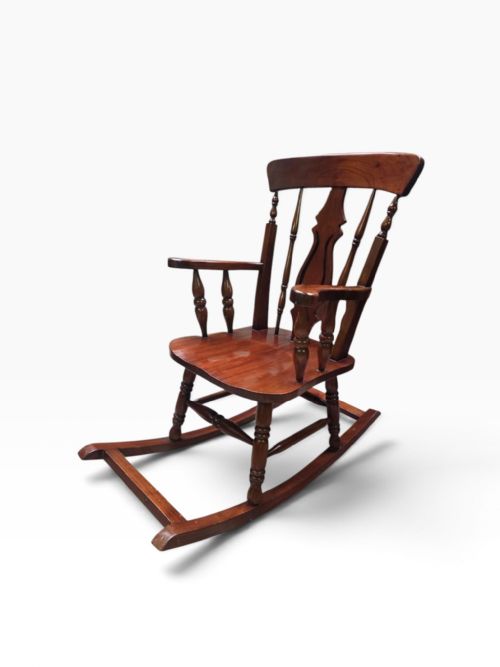
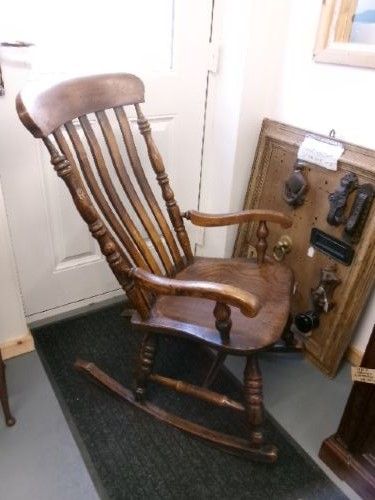
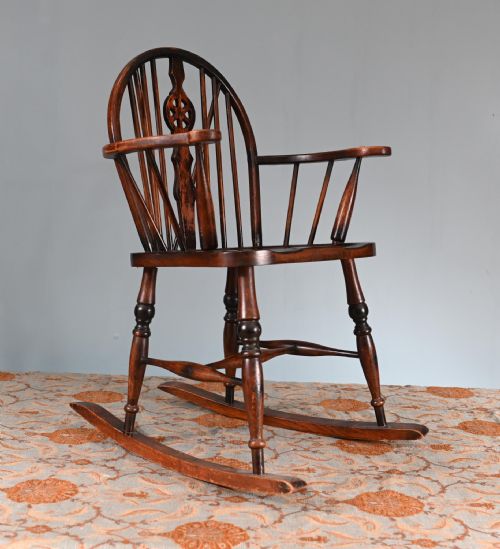
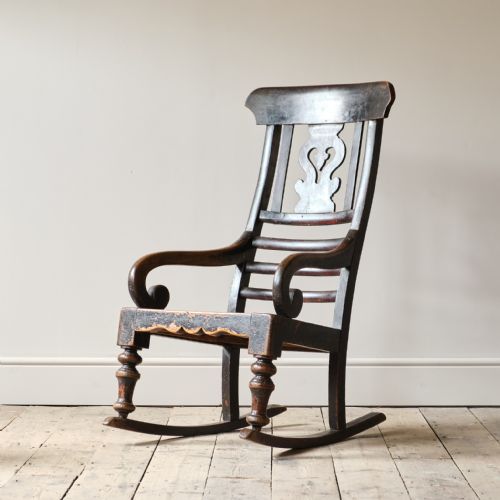
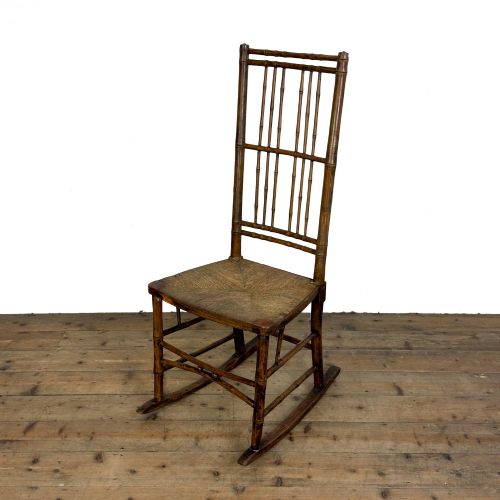


Carved Wooden Rocking Chair
These carved wooden rocking chair examples span country farmhouse forms to inlaid parlour seating.
Carved Wooden Rocking Chair
A carved wooden rocking chair brings traditional motion and sturdy seating to domestic interiors, drawing on regional British and Victorian forms. Buyers searching for a carved wooden rocking chair typically encounter Windsor designs, ladder back fireside seats, and country farmhouse variations.
The selection ranges from robust elm and ash armchairs to lighter beech and mahogany occasional pieces. Many examples incorporate spindle backs, wheelbacks, or cane seats originating from nineteenth and early twentieth-century workshops.
How they were made
Joinery relies on solid native timbers such as oak, elm, beech, and ash, shaped into spindles, curved arms, and moulded seats. Workshops utilised traditional turning and bending techniques to form the structural framework and supportive backs.
Decoration includes carved wooden details, inlaid elements, and pierced splats, alongside occasional bamboo-effect turnings. Cane seating and upholstered pads appear on specific parlour and occasional variants.
Carved Wooden Rocking Chair Retail Price Guide 2026
Typical asking prices for carved wooden rocking chair among the pieces listed under this phrase on Sellingantiques today, from the lower quarter to the upper quarter. They describe what is for sale here now, not the wider market.
Several chairs feature curved wooden rockers designed to gently soothe generations of occupants without ever leaving the fireside.
What varies in quality
The distinction between standard utility seating and finer examples rests in the selection of timber and the precision of the turning. Heavier woods like mahogany and well-figured elm often distinguish more substantial regional armchairs.
Carved ornament, inlaid woodwork, and balanced proportions separate simple farmhouse utility chairs from sophisticated Victorian parlour models. The integrity of the rocking runners and the tightness of the spindle joints dictate the overall execution.
The Carved Wooden Rocking Chair Glossary
- Windsor
- A traditional wooden chair featuring a solid moulded wooden seat into which the legs and back spindles are wedged directly. This construction provides robust support while allowing for various back designs such as wheelbacks and comb backs.
- Spindle back
- A chair back constructed from a series of turned vertical wooden rods secured between the top rail and the seat. This method creates a light yet resilient structure common in country seating.
- Ladder back
- A traditional chair design featuring several horizontal arched wooden slats positioned between the rear upright posts. These slats offer ergonomic back support in fireside and farmhouse seating.
- Cane
- Woven rattan material utilised for chair seats and backs to provide flexible support. This technique appears on lighter occasional and parlour chairs from the Victorian and Edwardian periods.
- Wheelback
- A Windsor chair variation featuring a pierced central wooden splat carved in the shape of a spoked cartwheel. This decorative motif is characteristic of nineteenth-century vernacular seating.
Carved Wooden Rocking Chair: Frequently Asked Questions
How do I identify a Victorian rocking chair?
Victorian rocking chairs frequently employ denser timbers such as mahogany, elm, or beech, often combined with carved details or inlaid decoration. They reflect the eclectic design movements of the nineteenth century, ranging from rustic country pieces to refined parlour seating.
Structural traits include turned spindles, ladder backs, and occasionally cane seats or upholstered pads.
Were rocking chairs used in bedrooms?
Occasional and nursing rocking chairs were commonly placed in bedrooms and nurseries during the Victorian and Edwardian eras. These chairs featured lower seats and supportive arms suited for quiet domestic tasks.
Lighter beech and inlaid mahogany examples are typical of this intimate domestic function.
What woods were used for country rocking chairs?
Makers of country rocking chairs utilised accessible local timbers including elm, ash, beech, and oak. These woods provided the necessary tensile strength and flexibility required for bent parts and turned spindles.
Darker woods like mahogany appeared more frequently in formal parlour settings.
How do I care for an antique wooden rocking chair?
Maintaining an antique wooden rocking chair involves keeping it away from direct heat sources and sudden temperature shifts that can dry out the timber. Regular dusting and occasional application of appropriate furniture wax help preserve the finish.
Particular care should be taken with cane seats to prevent the natural fibres from splitting.