
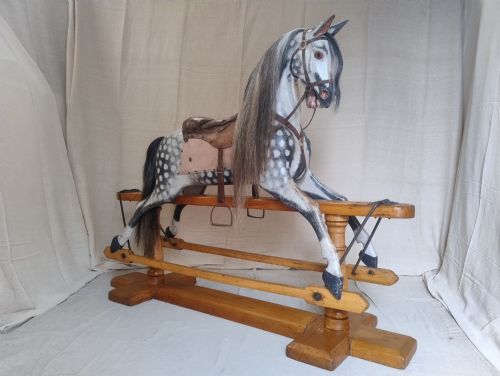


Carved Wooden Nursery Toy
A carved wooden nursery toy is a tactile piece of children's history, typically taking the form of a rocking horse that brings traditional craftsmanship into a room.
Carved Wooden Nursery Toy
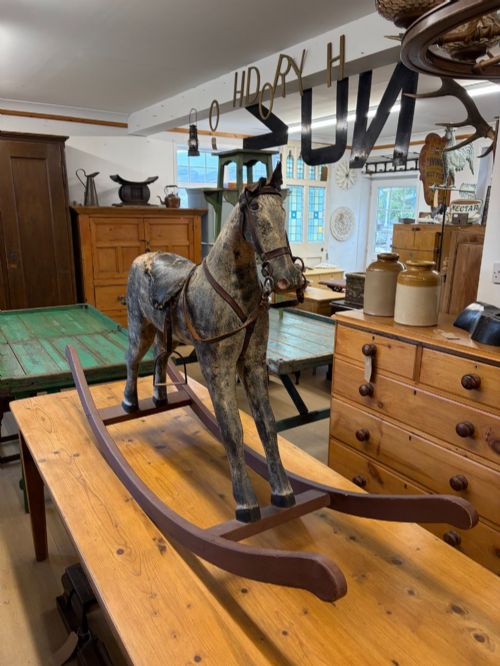
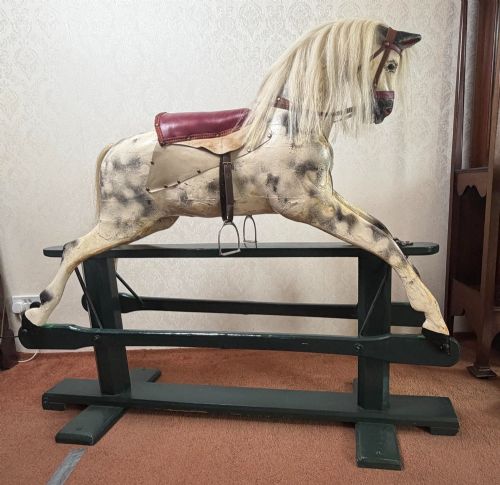
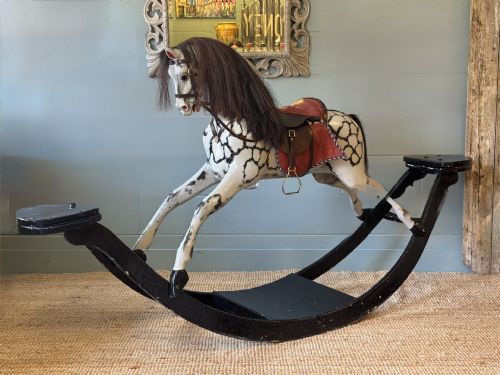
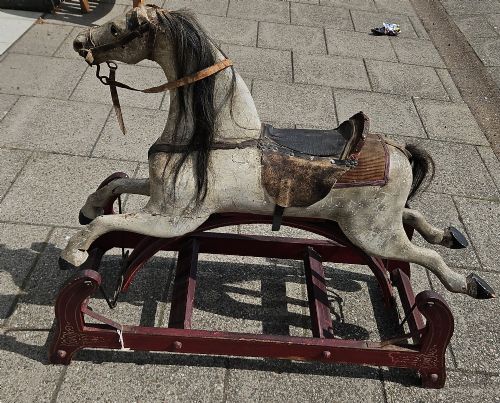
A carved wooden nursery toy is most commonly represented on this page by rocking horses and folk art figures dating from the nineteenth century through the interwar period. These objects range from large toy lionesses to substantial rocking horses mounted on original curved wooden rockers.
The versions most frequently encountered originate from British workshops and Victorian folk art traditions, though examples span from the Georgian era to the nineteen-forties. Makers such as G and J Lines, F H Ayres, and Collinson dominate the larger scale pieces found here.
Materials and construction methods
Construction relies heavily on pine and general wood carving, combined with functional structural elements in iron, steel, and metal. Artisans shaped these sturdy blocks and planks to withstand regular play.
Surfaces frequently display layers of early paint alongside organic additions like leather and horsehair for tack and manes. This combination of timber and natural upholstery defines the physical makeup of the surviving pieces.
Listings include pine rocking horses, folk art figures, and toy lionesses spanning the nineteenth century to nineteen-forties.
Distinctions in quality
Quality rests upon the sculptural confidence of the carving and the survival of original surface treatments such as early paint. Pieces retaining their initial rockers and structural integrity stand apart from heavily altered examples.
The distinction between standard commercial production and superior workshop output shows in the anatomical detail of the carved wooden body and the robustness of the underlying wooden frame.
G & J Lines of London·F.H.Ayres·Collinson
The Carved Wooden Nursery Toy Glossary
- Rocking horse
- A carved wooden nursery toy mounted on curved wooden bows or safety stands designed for children to ride. They form the vast majority of the listings on this page.
- Folk art
- Objects created within a vernacular tradition rather than by academic or formally trained artists. This style describes many of the naive painted wooden figures seen here.
- Original paint
- The initial surface coating applied to the wood during manufacture, highly prized by collectors for showing age truthfully. It contrasts with later overpainting.
- Rockers
- The curved wooden pieces attached to the base of a toy to permit a swinging motion. Original rockers are specific to the period of the horse.
- Playworn
- A descriptor for toys that show the genuine marks of use by children in past decades. This condition reflects the primary historical function of the object.
Carved Wooden Nursery Toy: Frequently Asked Questions
What periods do these wooden toys come from?
The listings span from the Georgian and Victorian eras through the nineteenth and early twentieth centuries, extending into the interwar period and nineteen-forties.
Victorian and Edwardian examples are particularly common, reflecting the industrial expansion of toy production in Britain alongside traditional folk art.
How were these rocking horses constructed?
Carvers used pine and other hardwoods to shape the bodies, mounting them onto curved wooden rockers or floor stands. Metal and iron brackets provided internal and external reinforcement for stability.
Additional materials such as leather, horsehair, and traditional paint finishes completed the tactile appearance of each horse.
Are these toys suitable for modern children?
These historical pieces function primarily as decorative objects or collector's items due to their age and fragile original condition. Many display the wear of past decades.
Placing them in a nursery requires careful consideration of their structural stability and historical surfaces, which differ from modern manufactured toys.
How do I identify a specific maker?
Makers like F H Ayres, G and J Lines, and Collinson often stamped their wooden frames or exhibited distinct carving characteristics in the heads and bodies. Examining the construction of the rockers and the style of the paint helps attribute pieces correctly.
Comparative study with documented workshop examples remains the most reliable method for identification.