




Carved Wooden Netsuke
These carved wooden netsuke are tactile miniature sculptures born from traditional dress, offering collectors a compact piece of Japanese artistry.
Carved Wooden Netsuke
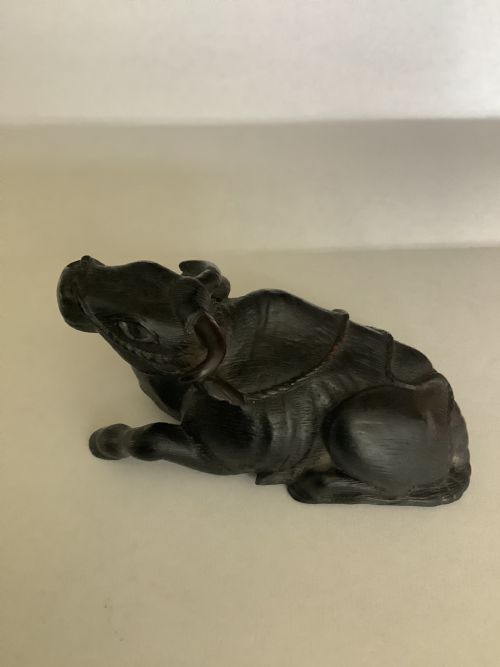
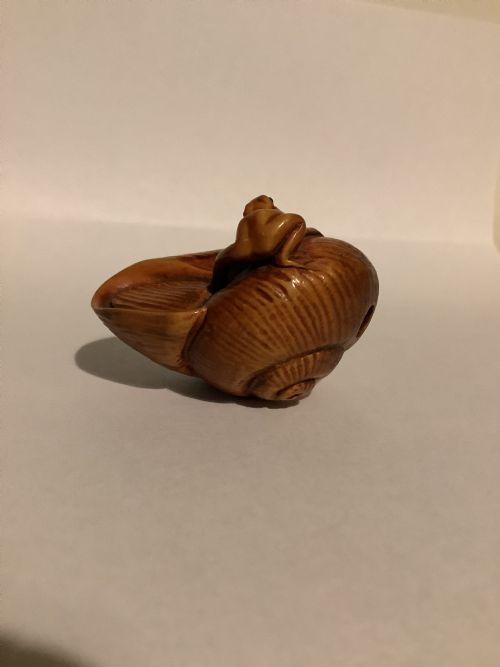
When you search for carved wooden netsuke, you are looking at small toggle-like fasteners traditionally used to secure personal pouches and boxes to the sash of a kimono. The pieces available here span the nineteenth century and the Edwardian era, capturing subjects ranging from animals and figures to symbolic clusters.
The commonest forms you will meet combine utility with expressive carving, encompassing traditional Japanese motifs such as Daruma, Ebisu with a tai fish, and toad subjects. Alongside standard netsuke, the selection includes related formats like okimono, tobacco boxes, and kagamibuta featuring wood paired with copper alloy or champleve cloisonne enamel.
How they were made
Carvers relied heavily on boxwood and exotic wood varieties selected for fine grain and tactile qualities, allowing for intricate detail without splintering. Artisans frequently integrated contrasting elements such as horn, mother-of-pearl, and cord to enrich the visual texture of each miniature sculpture.
Techniques relied on precise hand-carving supported by signatures from makers such as Tomochika and Masayuki, indicating professional workshop production. Structural elements occasionally incorporated applied copper alloy and enamel work, particularly in hybrid formats like kagamibuta.
A young boy sits comfortably atop a patient ram, reminding us that nineteenth-century carvers delighted in quiet moments of animal companionship.
What varies in quality
Quality rests on the depth and naturalism of the carving, distinguishing stiff, repetitive work from lively, observant renderings of animals and human figures. Superior pieces demonstrate complete command over the timber grain, transforming the natural material into convincing textures like fur, shell, or cloth.
The presence of a clear signature from an established carver elevates a piece, as does the preservation of original cord channels and smooth, tactile surfaces shaped by handling.
Tomochika·Masayuki
The Carved Wooden Netsuke Glossary
- Netsuke
- A small carved toggle used historically in Japan to suspend a pouch or medicine box from a kimono sash. They often feature perforated channels for threading the cord.
- Okimono
- A Japanese decorative figurine intended for display rather than functional use as a toggle. These objects share the same craftsmanship and subject matter as netsuke.
- Kagamibuta
- A specific style of netsuke resembling a shallow bowl, featuring a metal disc fitted into a wooden base. The metal lid is often decorated with enamels or metalwork.
- Boxwood
- A dense, pale hardwood favoured by carvers for its fine, even grain and capacity to hold minute detail. It forms the primary material for many nineteenth-century examples.
- Mejl Period
- The era in Japanese history spanning from 1868 to 1912, marked by opening trade and exceptional output in decorative arts. Pieces from this time frequently bear artist signatures.
Carved Wooden Netsuke: Frequently Asked Questions
How were netsuke used?
These objects functioned as toggles, threaded onto a cord attached to a purse or medicine box and tucked over the edge of a kimono sash.
The weight of the sash held the toggle in place, securing personal items safely against the wearer's body during daily movement.
How do I date an antique netsuke?
Dating relies on stylistic markers, historical periods such as the Edo or Meiji eras, and the specific characteristics of the wood and carving technique.
Signed pieces often provide a direct link to known nineteenth-century makers, helping to place the object within a specific workshop tradition.
How should I display netsuke?
Because these objects are tactile and meant to be handled, they sit well in shallow display cases or on open surfaces where their three-dimensional form is visible.
Keeping them away from direct sunlight and extreme humidity protects the boxwood and any inlaid horn or enamel elements.