
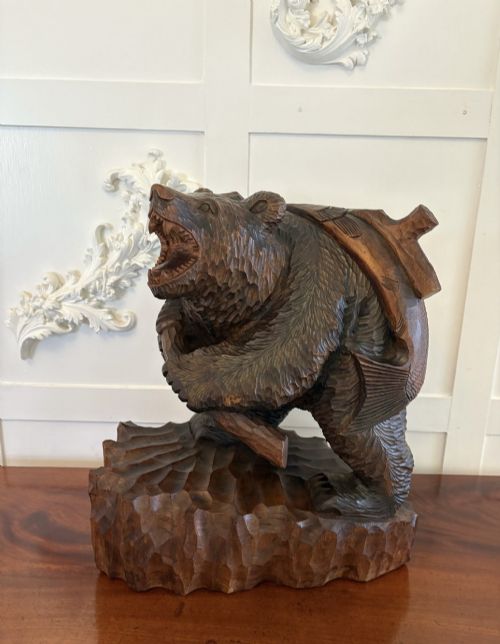
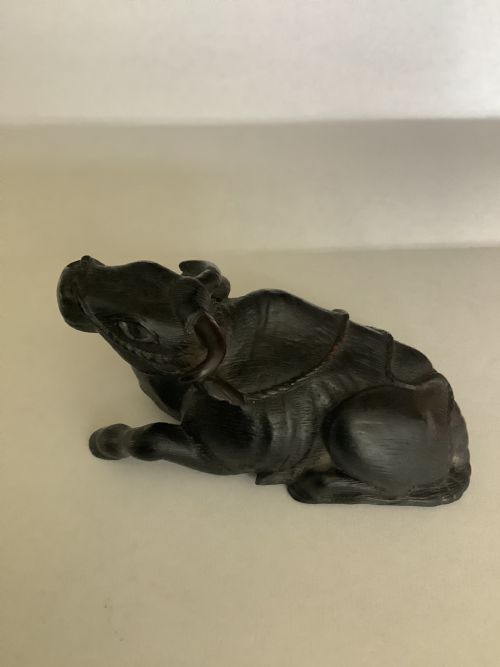
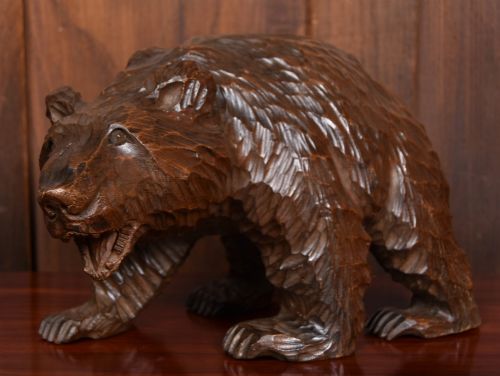
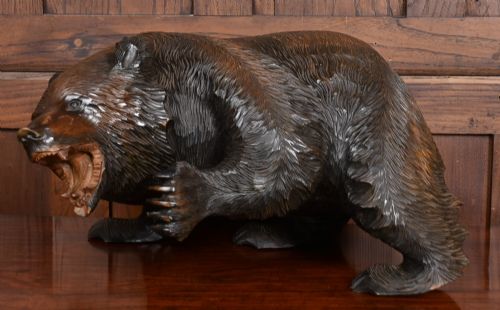


Antique Japanese Animal Carving
These antique japanese animal carving examples bring vigorous nineteenth-century craftsmanship into your room, offering spirited bears, tigers, and frogs modelled in wood and bronze.
Antique Japanese Animal Carving
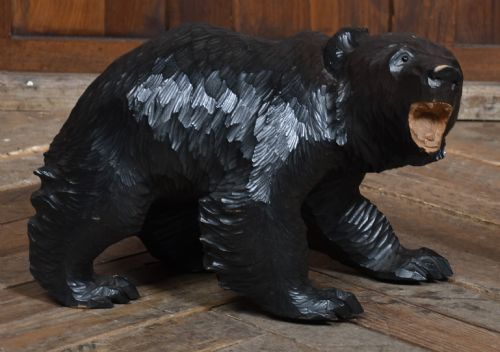
An antique japanese animal carving encompasses sculptural works produced during the nineteenth century and around nineteen hundred, capturing natural subjects with striking realism. Buyers seeking these figures encounter various forms including netsuke, okimono, incense burners, and larger wooden sculptures depicting bears, tigers, rabbits, and rodents.
The selections available here lean heavily into traditional wooden animal representations, notably the carved linden wood bears and boxwood figures originating from Japanese folk art and Meiji period workshops. These pieces range from miniature toggles designed to secure garments to substantial decorative sculptures intended for display on tables and shelves.
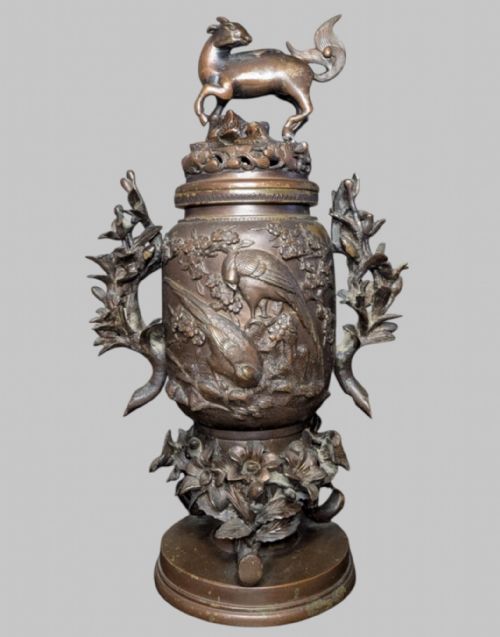
Originating predominantly from the Meiji and late Edo periods, these carvings reflect the rich sculptural heritage of Japanese traditional artistry. Whether you examine a fierce bronze tiger with a goat finial or a charming wooden rabbit, each object demonstrates the distinct aesthetic priorities of its maker.
How they were made
Makers utilised traditional carving techniques on organic materials such as boxwood, linden wood, and general hardwood, often applying subtle stain to enhance natural grain textures. Woodcarvers worked with fine hand tools to render fur, muscle, and posture with remarkable accuracy.
Metalworkers employed bronze casting methods to create robust incense burners and animal figures complete with detailed finials. These bronze works balance sculptural presence with functional utility, exhibiting patination achieved through specialised cooling and finishing processes.
Forms on this page include netsuke, okimono, incense burners, and wooden animal sculptures.
What varies in quality
The distinction between standard and superior examples rests upon the animator's command of proportion, anatomical truth, and surface expression. Master carvers imbued their subjects with vitality and accurate musculature, whereas lesser pieces remain stiff and formulaic in posture.
The Antique Japanese Animal Carving Glossary
- Netsuke
- A small carved toggle fastened to the end of a cord attached to a small container worn on the kimono sash. These miniature sculptures often depict animals and display intricate hand-carved details.
- Okimono
- A standalone decorative sculpture designed for display in a traditional Japanese room. Unlike netsuke, these pieces serve purely aesthetic purposes.
- Kibori Kuma
- A traditional style of wooden carved bear originating from the Hokkaido region of Japan. These bears often hold fish in their jaws and represent prominent folk art.
- Koro
- A traditional Japanese incense burner typically featuring a lid and decorative finial. They are cast in bronze or ceramic materials.
- Meiji Period
- The era in Japanese history spanning from eighteen sixty-eight to nineteen twelve, characterised by immense artistic output and the opening of trade with Western nations.
Antique Japanese Animal Carving: Frequently Asked Questions
What is an okimono?
An okimono is a standalone decorative sculpture intended for display within a home rather than practical use as a garment fastener. These carved figures often portray animals with great charm and character.
Collectors prize them for their artistic merit and the skill required to render organic forms in wood or ivory.
How do I identify a netsuke?
A netsuke is a small miniature carving featuring small holes known as himotoshi through which a cord passes. They were historically utilised to anchor small pouches to traditional clothing.
Their compact scale and highly detailed animal subjects distinguish them from larger decorative sculptures.
What wood was used?
Carvers utilised dense and workable timbers including boxwood, linden wood, and assorted hardwoods. These woods allowed artisans to achieve smooth finishes and sharp details without splintering.
The natural grain was frequently highlighted with stain or left to age gracefully over time.
When were these carved?
The majority of these sculptural works date from the nineteenth century through to nineteen hundred, encompassing the Edo and Meiji periods. This era saw a peak in traditional Japanese animal carving.
Makers worked within established folk art and imperial craft traditions to produce these enduring figures.
How were incense burners used?
Incense burners, or koro, functioned as vessels for burning aromatic incense resins during quiet reflection or ceremonies. They often featured removable lids adorned with animal finials.
Bronze examples provided durable vessels that combined practical utility with sculptural elegance.