






Carved Wooden Immortal Statue
A carved wooden immortal statue brings traditional Chinese craftsmanship into a room, depicting figures from Daoist and Buddhist traditions with enduring detail.

Carved Wooden Immortal Statue
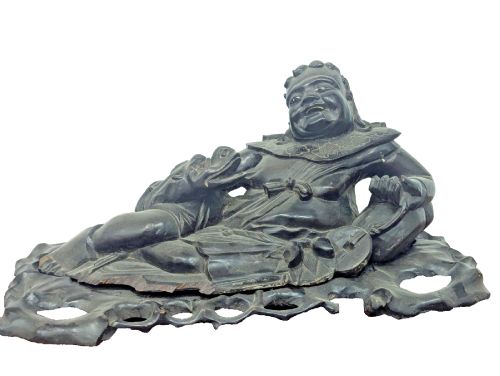
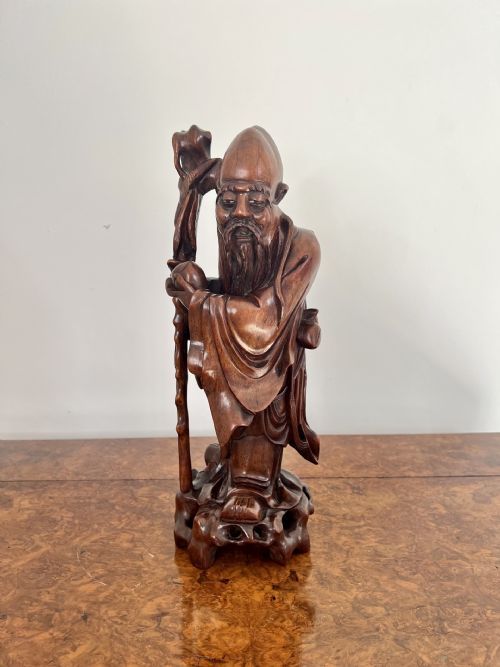
A carved wooden immortal statue represents figures such as Budai, Liu Hai, or various Daoist and Buddhist immortals and deities. These sculptures span from the eighteenth century through the late Qing and Republic periods, capturing centuries of carving traditions.
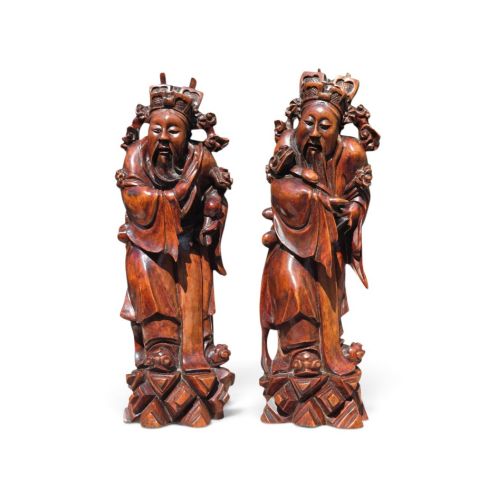
Buyers will encounter single figures, matched pairs, and larger groups carved from dense timbers. Many depict traditional subjects accompanied by attributes like mythical creatures, lotus flowers, or sacks.
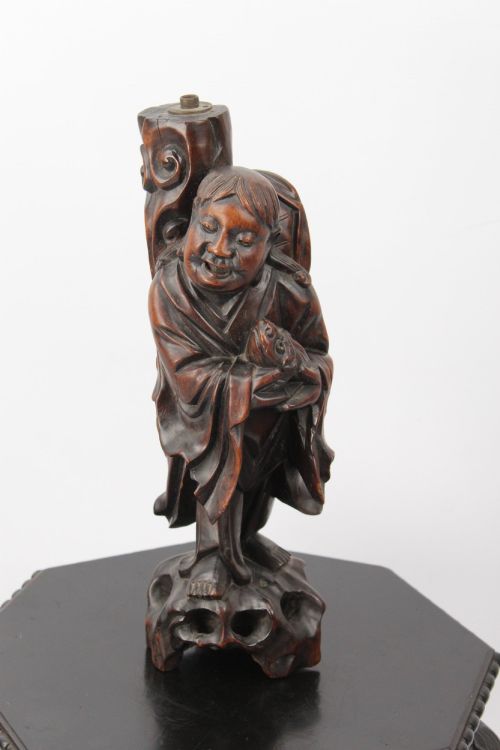
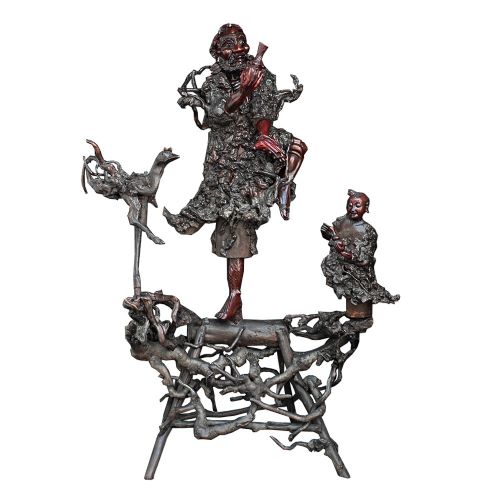
The forms range from monumental matched pairs to intimate scholarly carvings in burr root wood. Each piece reflects the sculptural conventions of Chinese traditional art across different centuries.
Materials and methods
Carvers utilised hardwood, burr root wood, and bamboo, selecting timbers with dense grain to allow for deep, intricate relief. Root wood pieces exploited the natural contours of the timber to shape the figures.
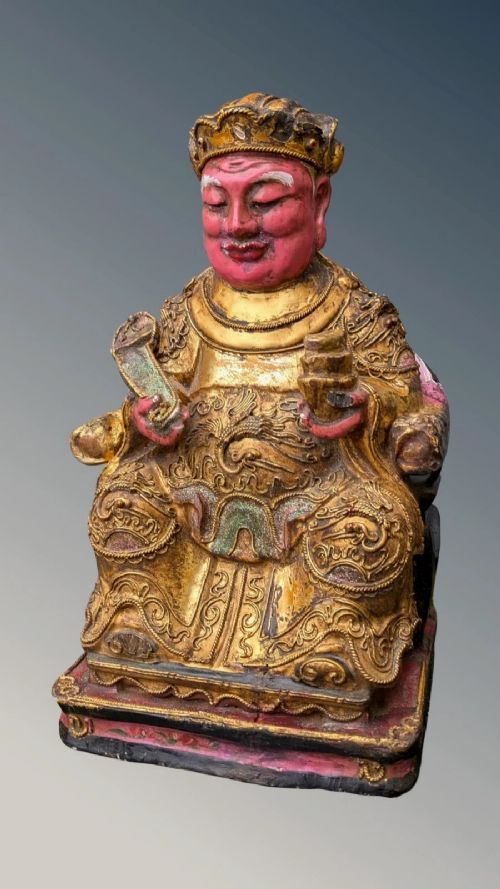
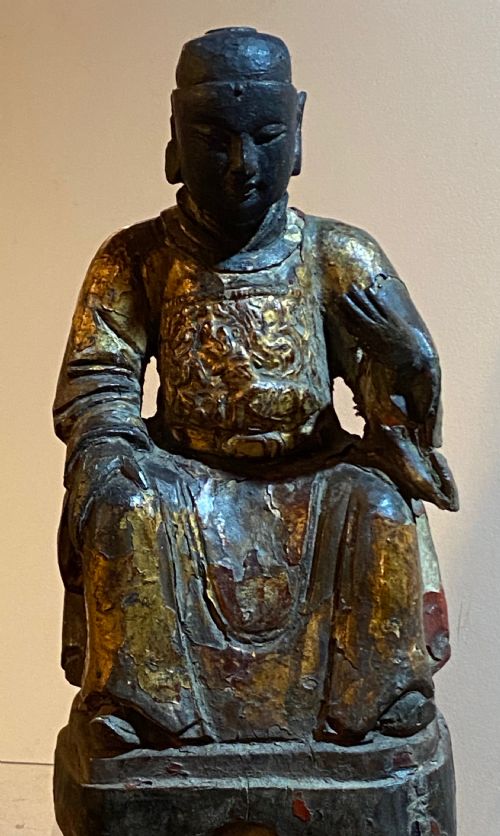
Surface treatments in the evidence include gesso, gold leaf, and polychrome pigments applied over the carved wood. These finishes highlighted facial expressions, robes, and symbolic accessories.
Listings span the eighteenth century, the nineteenth century, and circa nineteen hundred, utilising hardwood, burr root wood, and bamboo.
Assessing the craftsmanship
Scale and proportion distinguish ambitious sculptural groups from standard figures, particularly in matched pairs or large works featuring mythical beasts. The preservation of original gesso, gold leaf, or polychrome pigment adds significant depth to the piece.
The Carved Wooden Immortal Statue Glossary
- Immortal
- A mythological figure associated with longevity and spiritual attainment in Daoist and Buddhist traditions. These characters appear frequently in Chinese sculpture.
- Hardwood
- Dense, slow-growing timber selected by carvers for its durability and capacity to hold fine detail. It forms the foundation of the majority of these sculptures.
- Root Wood
- Timber sourced from the root system of a tree, prized for its gnarled, organic shapes. Carvers incorporated these natural formations directly into the design of scholar figures.
- Qing Dynasty
- The final imperial dynasty of China, lasting from sixteen forty-four to nineteen twelve. Many pieces on this page originate from the later years of this period.
Carved Wooden Immortal Statue: Frequently Asked Questions
What is a carved wooden immortal statue?
These sculptures depict revered figures from Chinese tradition, carved from timber during the eighteenth and nineteenth centuries.
They serve as decorative works of art that reflect historical carving styles and mythological subjects.
How do I care for antique wood carvings?
Keep wooden sculptures away from direct sunlight and dramatic shifts in temperature or humidity to prevent the timber from splitting.
Dust them gently with a soft, dry cloth without applying modern polishes or cleaning agents.
How can I tell the age of a carving?
Age is assessed through the tool marks, the patina of the timber, and the specific sculptural style associated with periods like the Qing Dynasty.
Comparing the wear patterns and material composition against dated examples helps confirm the era of production.