


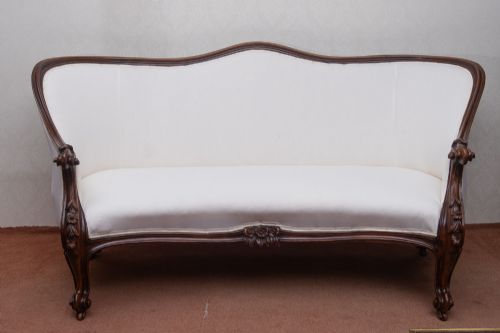


Carved Wooden Frame Settee
A carved wooden frame settee anchors a room with structural timber and upholstery, offering generous seating rooted in period craftsmanship.
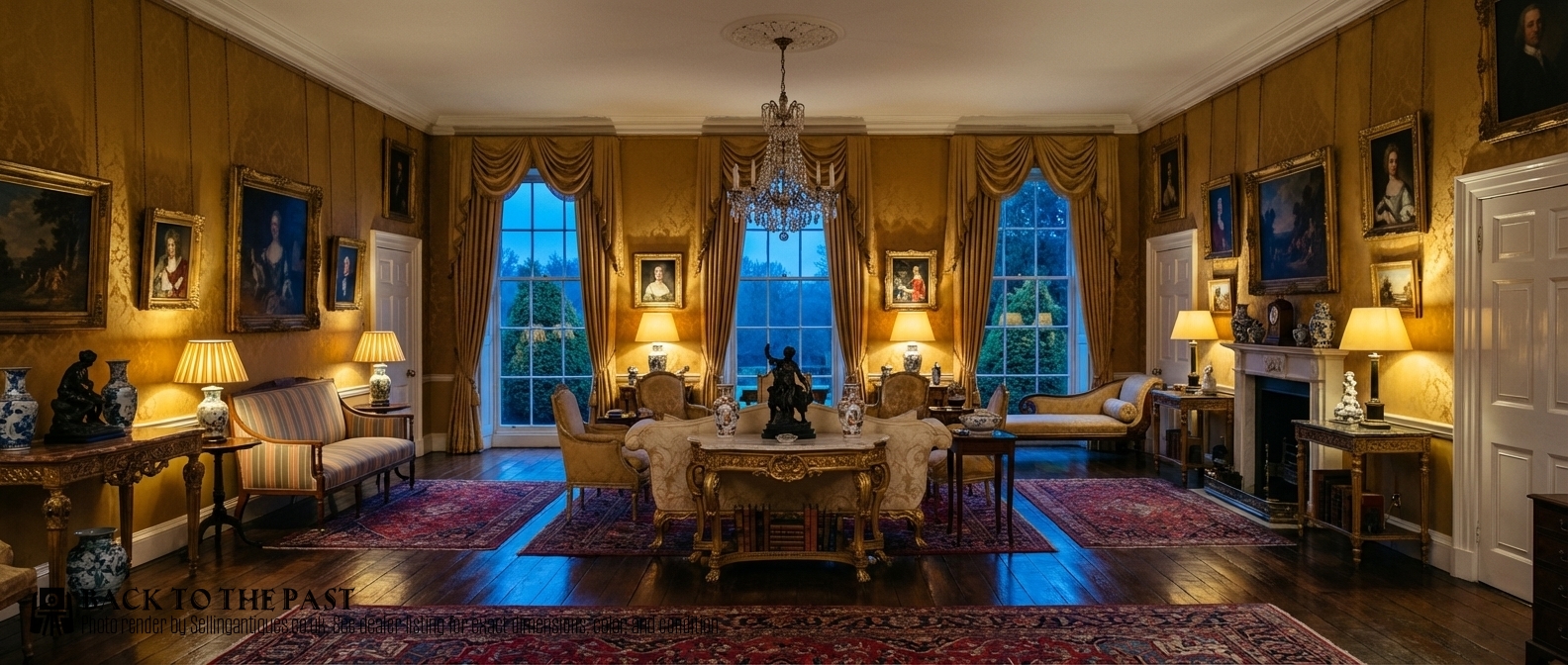
Carved Wooden Frame Settee
A carved wooden frame settee brings together exposed timber frames and upholstered seats, taking forms from the eighteenth century through the Edwardian period. These pieces range from George III and Regency designs to Victorian and Edwardian iterations.
Buyers encounter country house sofas, salon settees, hall seats, and scroll-end forms designed for formal rooms and intimate spaces alike. Upholstery varies from leather and hessian to patterned fabric.
How they were made
Cabinetmakers constructed the structural carcasses from hardwoods like mahogany, walnut, and oak, often shaping the timber with hand tools to achieve curved cabriole legs, scroll ends, and intricate crest rails.
Surface decoration involved carving directly into the timber, applying giltwood finishes, or incorporating satinwood inlay and ebonised details. Frames were then webbed, stuffed, and covered in textiles, leather, or hessian.
One unexpected settee arrives with a literary pedigree, linked directly to Daphne Du Maurier and her novel Rebecca.
What varies in quality
The definition and depth of the carved woodwork separate standard examples from finer pieces, where crisp mouldings and confident scrollwork demonstrate superior joinery. Timber selection also dictates the hierarchy, with figured mahogany and rich walnut commanding attention.
Proportion and structural integrity define the overall standing of a settee, particularly in larger country house sofas and delicate salon seating. Original surface patination and intact framing enhance the character of older pieces.
The Carved Wooden Frame Settee Glossary
- Giltwood
- Wood coated with gold leaf or a gold-coloured finish. This technique highlights carved details on formal nineteenth-century frames.
- Satinwood
- A durable tropical timber with a lustrous yellowish grain. Makers utilised this wood for delicate inlay work on Edwardian and turn-of-the-century settees.
- Scroll-end
- A structural arm or terminal shaped into a spiral curve. This profile appears frequently on Regency and nineteenth-century English sofas.
- Hessian
- A coarse woven fabric typically made from jute or hemp. It serves as traditional internal upholstery support beneath outer covers.
Carved Wooden Frame Settee: Frequently Asked Questions
What periods do these settees cover?
The selection spans from the eighteenth century through the Edwardian era, including George III, Regency, Victorian, and early twentieth-century designs.
Individual pieces reflect the shifting stylistic preferences of each decade, from classical revivalism to country house comfort.
Which woods were used for the frames?
Carcases are constructed from timbers such as mahogany, walnut, oak, and satinwood, alongside giltwood and simulated rosewood finishes.
Certain pieces feature regional materials, including teak and painted surfaces tailored to French or Italian tastes.
How do I choose between salon and country house settees?
Salon settees generally offer lighter proportions and decorative inlay suited to formal reception rooms. Country house sofas tend to be larger, built for durability and relaxed seating.
Scale and woodwork detail dictate the intended placement within a historical interior.
Are these settees upholstered in original fabrics?
Upholstery ranges from period leather and hessian to later fabric coverings, with some pieces sold specifically for re-upholstery.
Internal webbing and stuffing methods vary according to the decade of manufacture.