
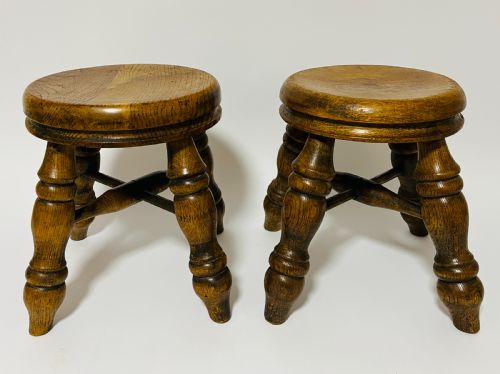
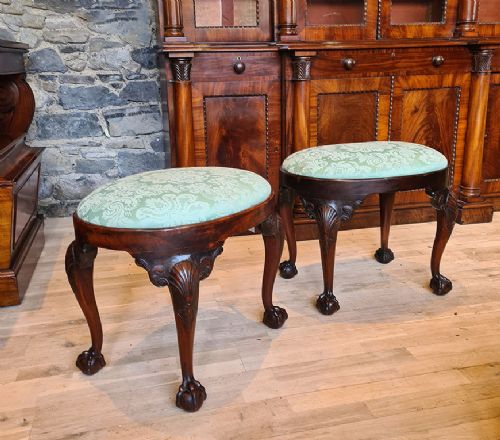
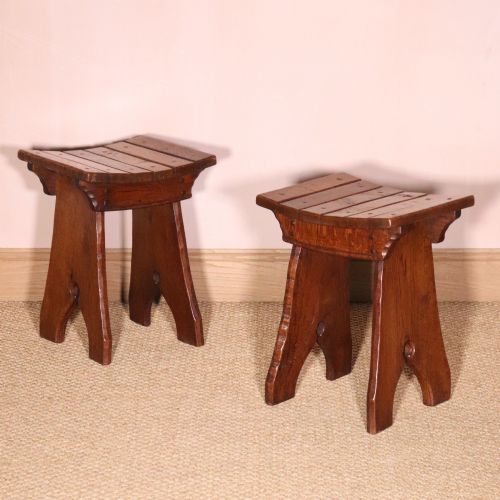


Carved Wooden Footstool Pair
A carved wooden footstool pair brings paired craftsmanship to a room, offering matching seats or rests shaped by period hands.
Carved Wooden Footstool Pair
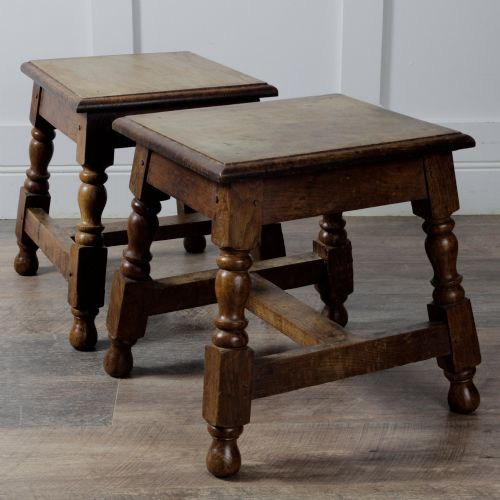
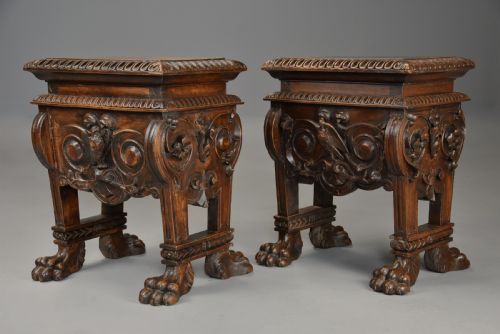
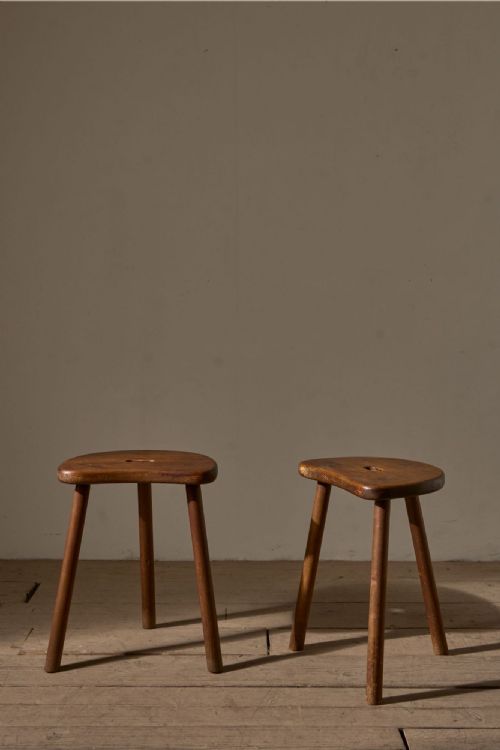
When you search for a carved wooden footstool pair, you encounter matching pairs of low seats and supports shaped from timber across several centuries. The selections on this page span the eighteenth, nineteenth, and twentieth centuries, taking forms from vernacular oak and pine to revival styles in walnut, beech, and mahogany.
Most entries reflect regional domestic traditions and specific stylistic revivals, including Arts and Crafts pieces and continental interpretations. These items function as low seats, stands, or foot supports, often retaining their original fabric or carved wooden surfaces.
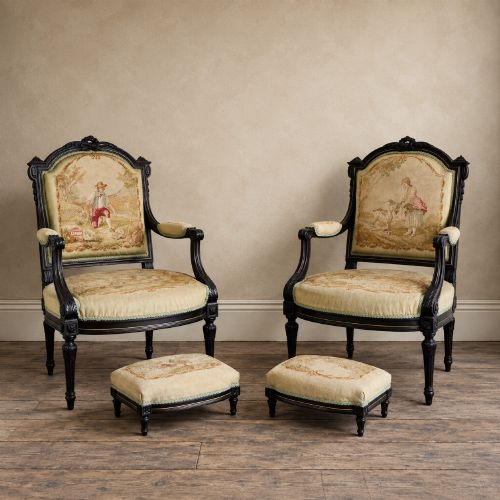
The varieties range from rustic farmhouse and country pieces to refined Italian Renaissance style and Louis XVI revival examples. Buyers find sturdy jointed oak constructions alongside delicate carved rosewood and painted finishes.
What varies in quality
The distinction between standard domestic items and finer examples rests on the crispness of the woodcarving and the selection of timber. Dense woods like walnut and yew, combined with deeply carved detail, mark out the more ambitious pieces.
Structural integrity and the retention of original surface finishes determine the standing of each pair. Retaining untouched timber grain, original paint, or period upholstery elevates an item above standard utility wares.
Some wooden stools conceal carved elephant bodies and tusks, bringing unexpected animal forms to domestic foot rests.
Jack Grimble
The Carved Wooden Footstool Pair Glossary
- Vernacular
- Items built by local craftsmen using regional traditions and readily available timber rather than following high-style metropolitan fashions. These pieces often display straightforward utility and robust construction.
- Revival
- A design movement that emulates historical aesthetics from earlier centuries, such as Louis XVI or Italian Renaissance styles. Makers reinterpreted these past forms for contemporary interiors.
- Jointed
- A method of framing furniture using traditional interlocking wooden joints like mortise and tenon without relying on modern metal fasteners. This technique provides structural durability to early oak items.
- Ebonised
- Timber treated with a finish to imitate expensive ebony wood. This dark, formal treatment appeared frequently on nineteenth-century salon seating.
- Gustavian
- A Swedish aesthetic characterised by pale painted finishes and simplified classical motifs. It reflects Scandinavian adaptations of French court styles.
Carved Wooden Footstool Pair: Frequently Asked Questions
How were footstools used?
These items served primarily to elevate feet off cold floors or to provide low auxiliary seating in domestic parlours and bedrooms.
Pairs were often placed beside armchairs or flanking fireplaces to maintain symmetry in formal room arrangements.
Are all these pairs matching?
The listings comprise matched pairs created together by a workshop or matched subsequently by collectors based on style and timber.
Each pairing shares corresponding dimensions, wood types, and decorative carving schemes suitable for balanced placement.
How do I identify the wood?
Examination of the grain pattern, colouration, and weight helps distinguish between timbers like oak, walnut, mahogany, and pine.
Darker hardwoods often display distinct figuring, while painted finishes conceal the underlying timber entirely.
Can I use them as seats?
Most sturdy wooden and upholstered examples support sitting, though some delicate stand stools suit decorative display better.
Checking the internal joinery and frame stability ensures safe daily usage in modern living spaces.