

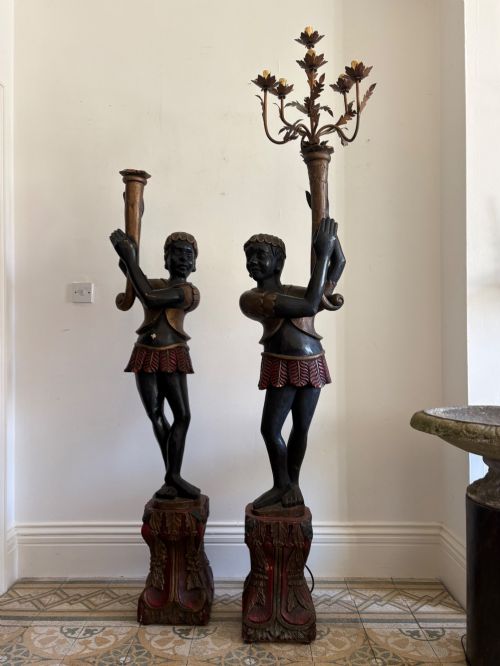


Carved Wooden Floor Statue
A carved wooden floor statue brings striking sculptural presence and historical character to a room.
Carved Wooden Floor Statue
A carved wooden floor statue encompasses a range of large-scale figurative works and functional sculptures designed to stand directly upon the floor. Buyers browsing this selection encounter tall figures, decorative figures, and statues dating from the nineteenth century up to the middle of the twentieth century.
The objects take diverse forms, including Venetian figures on stands, Black Forest bear lamps, Japanese card butlers, and figural lamps. European folk art traditions and Venetian Baroque influences appear frequently across the available inventory.
Origins span various European and international workshops, incorporating pieces from the nineteenth century and decades such as 1850, 1890, 1900, 1910, 1920, and 1940. These sculptures often double as functional items like torcheres or floor lamps alongside their primary decorative role.
How they were made
Makers shaped these items primarily from carved wood, applying structural gesso to prepare surfaces for subsequent decoration. Wood forms the essential body of each sculpture, whether depicting a human figure or an animal subject.
Artisans enhanced the wooden surfaces using gold leaf, parcel-gilt, and polychrome paint. Some examples retain original paint finishes or incorporate glass and metal elements to complete the design.
Carved Wooden Floor Statue Retail Price Guide 2026
Typical asking prices for carved wooden floor statue among the pieces listed under this phrase on Sellingantiques today, from the lower quarter to the upper quarter. They describe what is for sale here now, not the wider market.
Listings feature carved wooden floor statues spanning the nineteenth century up to 1940, utilising materials like gold leaf, glass, and polychrome paint.
What varies in quality
The preservation of original surface decoration dictates much of the distinction between examples, particularly where polychrome paint and gilt remain intact versus later repainting. Sculptural depth and the finesse of the carving in the wood define the visual impact of each figure.
Complexity of form also plays a role, separating simple decorative figures from intricate works that incorporate functional elements like torcheres, card trays, or integrated lighting.
The Carved Wooden Floor Statue Glossary
- Polychrome paint
- Decoration utilising multiple distinct colours applied to the surface of wood or gesso. This technique brings vibrant realism and detail to figurative carvings.
- Torchere
- A tall ornamental stand or floor lamp designed to hold a light source. These pieces combine sculptural carving with functional illumination.
- Gesso
- A plaster-like mixture applied to wood as a smooth base for gilding and painting. It allows intricate surface detail before the application of gold leaf or colour.
- Parcel-gilt
- A decoration method where only specific portions of an object are covered in gold leaf while other areas show paint or natural wood. This creates contrast across the carved surface.
- Black Forest
- A regional style of wood carving originating from the mountainous European region of the same name, famous for realistic animal figures and furniture. Bears are a common subject within this tradition.
Carved Wooden Floor Statue: Frequently Asked Questions
Where should I place a floor statue?
These large sculptures require adequate floor space and vertical clearance to be fully appreciated within a room. Placing them in corners, entryways, or flanking larger furniture pieces allows the carved details to stand out.
Because many examples incorporate functional elements like lamps or stands, positioning them near power sources or utilising them to hold small items enhances both their utility and visual impact.
How do I care for antique wood sculptures?
Maintain these pieces by dusting them gently with a soft, dry cloth to protect delicate surfaces and original paint finishes. Avoid using harsh chemical cleaners or exposing the wood to direct sunlight and extreme humidity fluctuations.
Preserving the original gilt and polychrome paint requires a stable indoor climate to prevent flaking or cracking of the underlying gesso and wood.
How can I tell different periods apart?
Nineteenth-century pieces often reflect distinct regional movements such as Venetian Baroque or Victorian design preferences. The materials used, including specific types of polychrome paint and gilding techniques, offer clues to the era of production.
Works from the twentieth century, such as those from the 1920s or 1940s, frequently introduce different subject matter like folk art animals or themed character sculptures.