
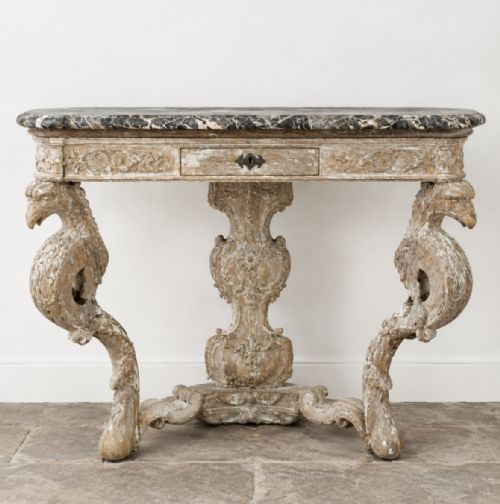
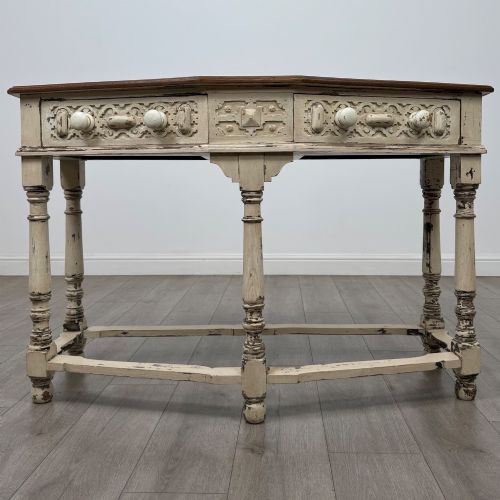
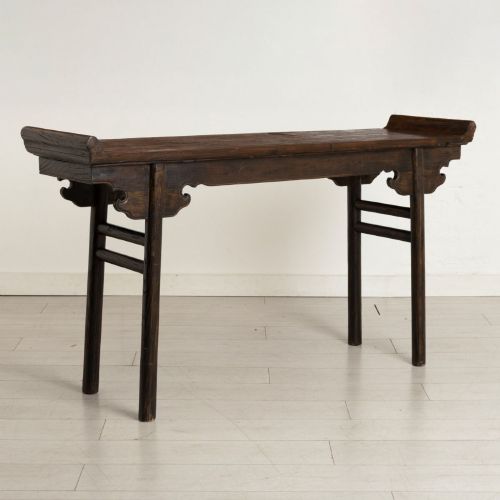


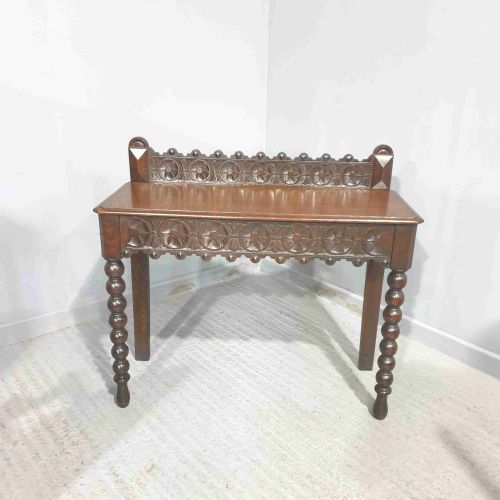
Carved Wooden Entryway Table
A carved wooden entryway table sets the tone the moment the door opens, grounding the hall with solid timber and carved detail.
Carved Wooden Entryway Table
When you search for a carved wooden entryway table, you encounter console tables, hall tables, hall stands, and side tables designed for narrow spaces. These items originate from periods spanning the eighteenth century through to the twentieth century, including Georgian, Regency, Victorian, Edwardian, and Country House styles.
The versions you are most likely to meet on this page include mahogany serpentine hall tables, oak console tables, and painted half-moon demi-lune tables. Pieces also draw upon French Rococo, Neoclassical, William IV, and Chinese Qing Dynasty influences, offering varied silhouettes for a hallway or entryway.
How they were made
Cabinet makers utilised primary timbers such as oak, mahogany, walnut, and burr walnut, often pairing the wooden frames with marble tops or parcel gilt accents. Construction methods relied on traditional joinery to shape console tables and hall stands designed to sit flush against a wall.
Surface treatments range from plain polished wood and bleached oak to painted wood finishes and gesso details. Carving serves as the primary decorative technique across the pieces, appearing on friezes, legs, and mirror backs.
Listings feature woods including oak, mahogany, walnut, and gesso, spanning periods from the eighteenth century to the twentieth century.
What varies in quality
The depth and crispness of the carved woodwork separate standard examples from finer works, particularly on Rococo or Neoclassical console frames. Timber selection also dictates grade, with figured flame mahogany or burr walnut marking out superior items from basic oak or painted pine.
Integration of secondary materials influences the overall standard, such as the weight and veining of an inset marble top compared to a plain wooden surface. The harmony between the structural form and the decorative carving determines the visual success of each hall or side table.
The Carved Wooden Entryway Table Glossary
- Console table
- A table designed to be fixed against a wall, frequently supported by decorative brackets or front legs. These items form a primary category within entryway furnishings.
- Demi-lune table
- A half-moon shaped table that sits flat against a wall to save space in narrow halls. This form appears frequently in painted and carved wooden variations.
- Gesso
- A plaster-based material applied to wood surfaces as a smooth base for gilding or painting. It allows for intricate moulded decoration on period frames.
- Serpentine
- A furniture front or edge that curves outward in the centre and inward at the sides. This contour adds movement to nineteenth-century mahogany hall tables.
Carved Wooden Entryway Table: Frequently Asked Questions
What is a console table?
A console table is a narrow table designed to stand against a wall, often in a hallway or entryway.
Because of its shallow depth, it provides a surface for display without obstructing walking space.
How do I date a hall table?
Dating relies on identifying the prevailing style, timber choice, and construction techniques used by the maker.
Comparing the decorative details, such as Neoclassical carving or Victorian proportions, helps establish the period.
Where should I place an entryway table?
An entryway table works best against a clear hallway wall where it can be seen upon entering.
Many people pair them with a mirror above or use them to hold everyday items like keys and post.
What is the difference between a console and a side table?
A console table is traditionally shaped to stand flat against a wall, sometimes requiring wall fixings for stability.
A side table is typically freestanding and can be moved around a room more easily.