


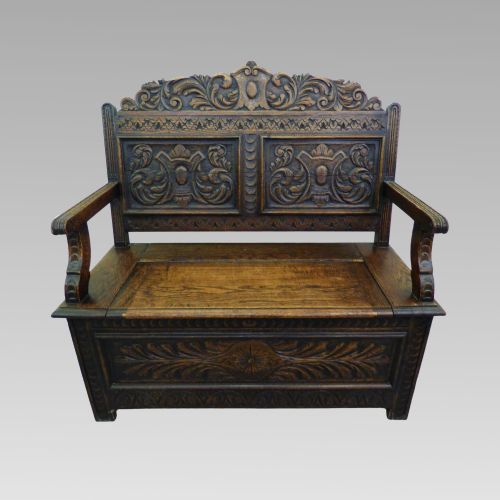


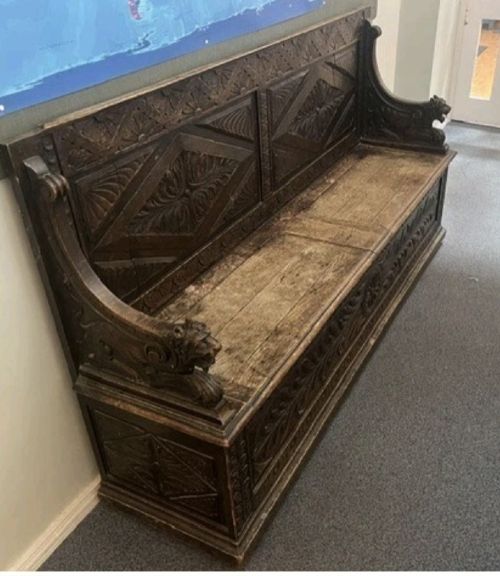
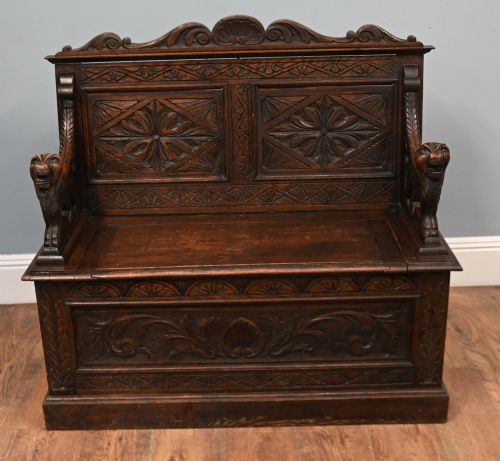


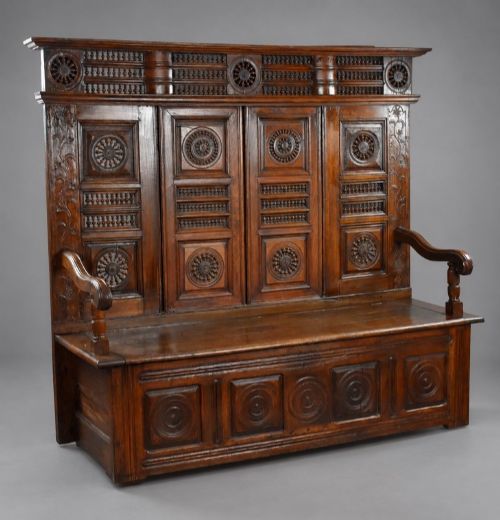
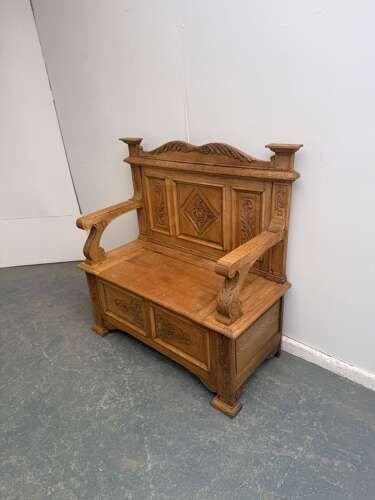
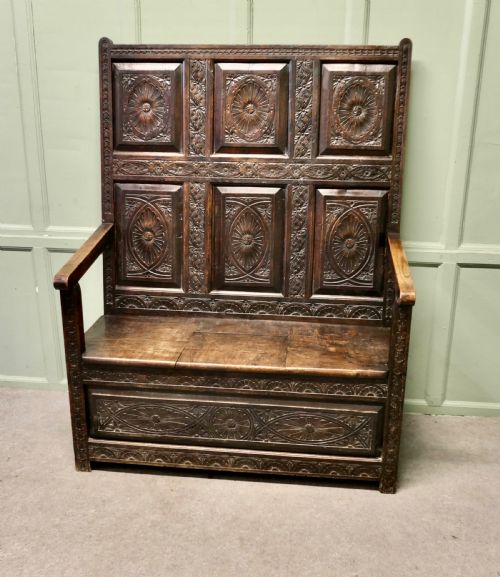
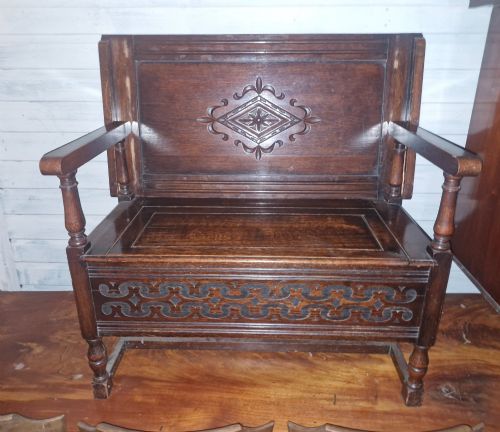
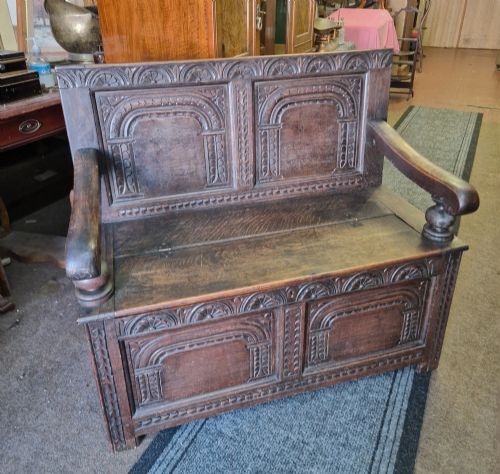
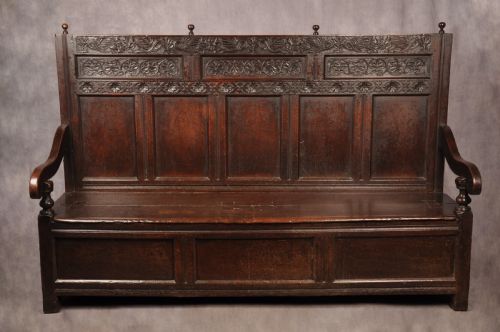


Carved Wooden Coffer Settle
A carved wooden coffer settle combines a high-backed seat with integrated chest storage, offering utility and traditional presence for a hallway or reception space.
Carved Wooden Coffer Settle
A carved wooden coffer settle functions as both a seating bench and a storage container, often incorporating a hinged lift-up seat or fold-over top. These pieces serve primarily in hallways, reception rooms, and grand entrance spaces, designed to withstand heavy daily use while concealing items within the base.
The selections available span multiple centuries and regional workshops, though oak forms the predominant material across British, French, and Italian examples. Pieces range from straightforward vernacular country seating to heavily carved revival styles incorporating panelled backs and armrests.
Design and Execution
Quality separates through the depth and crispness of the hand carving, the selection of timber grain, and the structural integrity of the box base. Superior examples display balanced proportions, integrated panel work, and well-preserved original timber surfaces rather than heavy later restoration.
Regional execution dictates much of the character, ranging from restrained English country designs to ornate continental Renaissance and Gothic revival models. The handling of the joinery around the box seat and the arm supports indicates the standard of the original workshop.
Carved Wooden Coffer Settle Retail Price Guide 2026
Typical asking prices for carved wooden coffer settle among the pieces listed under this phrase on Sellingantiques today, from the lower quarter to the upper quarter. They describe what is for sale here now, not the wider market.
Several Victorian oak examples feature carved Green Man faces glaring out from the back panels to ward off unwelcome spirits.
The Carved Wooden Coffer Settle Glossary
- Coffer settle
- A high-backed wooden bench featuring a concealed box or chest beneath the seat for storage. This dual-purpose form provides both seating and vessel capacity.
- Wainscot
- A style of wooden panelling utilising framed construction with pegged joints. It frequently appears on the backs of early oak seating.
- Monks bench
- A convertible form of settle featuring a hinged top that folds down to create a table surface. It combines a seat, storage box, and occasional table.
- Jacobean revival
- A nineteenth-century stylistic movement imitating seventeenth-century British decorative arts. Pieces in this style typically feature deep geometric relief carving and dark waxed oak.
Carved Wooden Coffer Settle: Frequently Asked Questions
How are these settles used today?
These pieces function well in entrance halls and boot rooms to provide seating alongside hidden storage for everyday items. The internal box compartment accommodates bulky goods like blankets, shoes, or winter garments.
Positioning a settle against a hallway wall creates a strong architectural focal point while keeping entryways organised. The high back also helps drafty corridors by blocking air movement.
What timber materials do they use?
Oak forms the vast majority of the surviving framework across seventeenth, eighteenth, and nineteenth-century examples. Walnut, mahogany, fruitwood, pine, and exotic hardwoods also appear in specific regional or later pieces.
Finish treatments generally rely on traditional clear wax to protect the grain and develop a natural sheen over decades of handling.
How do I identify a 17th-century piece?
Seventeenth-century examples display heavy solid oak construction with pegged mortise and tenon joinery rather than modern mechanical fasteners. The surface carving tends to show hand-chiselled tool marks and deep patination accumulated over centuries.
Construction details like hand-riven panels and forged iron strap hinges further distinguish early period originals from later revival interpretations.
Do the lids open on all models?
Most variants incorporate either a lift-up seat lid, a hinged box top, or a fold-over mechanism to access the storage cavity below. Some specific hall bench formats utilise fixed seating without the internal coffer.
Checking the hardware reveals whether the opening mechanism relies on traditional butt hinges, pivot pins, or later replacement brass brackets.