
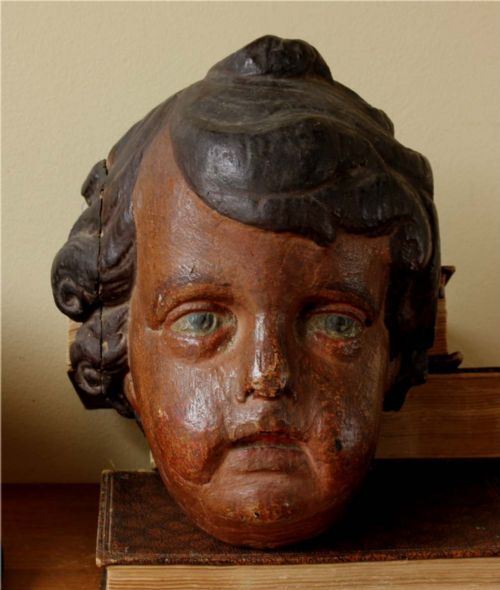


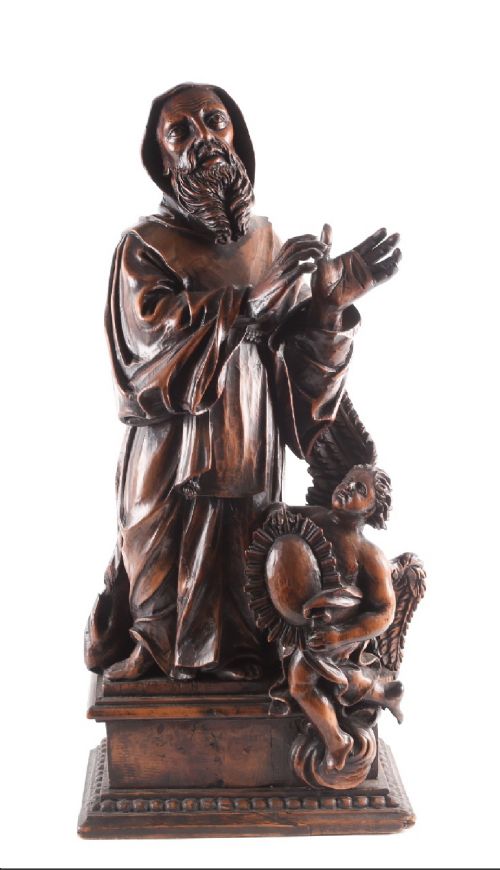


Carved Wooden Cherub Statue
These carved wooden cherub statue pieces bring continental baroque presence into a room, offering tactile hand-carved forms that collectors prize for church and domestic display.
Carved Wooden Cherub Statue
A carved wooden cherub statue typically appears as an individual head, a kneeling figure upon clouds, or a pair of putti originating from continental workshops. The pieces encountered here span from the seventeenth century through the nineteenth century, drawing heavily on baroque traditions.
Forms range from Italian and French putti to German limewood praying figures and altar angels. These sculptures serve both religious and decorative roles, often finished with polychrome paint, silvering, or gold leaf over gesso.
Buyers will find individual heads, saints accompanied by putti, and matched pairs designed for altars or architectural placement. The majority date to the eighteenth and nineteenth centuries, reflecting diverse regional interpretations of the baroque style.
Materials and construction methods
Surfaces received layers of gesso before painters applied polychrome pigments, gold leaf, or silvering to enhance theatrical lighting effects. This preparation provided a smooth ground for rich coloration and metallic gilding characteristic of the period.
Listings feature pieces spanning the seventeenth, eighteenth, and nineteenth centuries, executed in woods such as oak and limewood with polychrome and gilt finishes.
Judging quality and execution
Quality rests upon the sensitivity of the hand carving, where fluid muscle definition and anatomical proportion separate masterwork sculpture from commercial workshop output. Expression in the face and the crispness of wing feather details determine the piece's artistic success.
The preservation of original polychrome paint, silvering, and gold leaf significantly elevates an object's integrity. Intact ground layers and undisturbed historic finishes show how the sculpture looked when it left the maker's bench.
The Carved Wooden Cherub Statue Glossary
- Putti
- Plumed or naked infant figures frequently depicted in classical and religious art. They form the primary sculptural subject across many baroque church ornaments.
- Polychrome
- Decorated in multiple colours using paint or pigment. This surface treatment brings lifelike warmth to carved wooden faces and garments.
- Gesso
- A plaster mixture applied to wood as a base for gilding or painting. It creates a smooth, absorbent surface for gold leaf adherence.
- Limewood
- A fine-grained hardwood favoured by continental carvers for detailed sculpture. Its subtle grain permits delicate undercutting without splitting.
Carved Wooden Cherub Statue: Frequently Asked Questions
Where were these statues originally displayed?
These figures typically belonged to church altars, private chapels, or grand domestic architectural schemes. They stood above lintels or flanked religious tabernacles.
Over time, many migrated into private collections where they sit on mantelpieces, brackets, or dedicated display tables.
How do I care for wooden polychrome figures?
Keep them in stable environments away from direct sunlight, extreme heat sources, and damp conditions. Sudden humidity changes cause wood to expand and paint layers to flake.
Dust gently with a dry, soft brush rather than using cloths or chemical cleaning solutions that might damage fragile historic surfaces.
How can I distinguish eighteenth century pieces?
Eighteenth-century examples display distinct tool marks from hand chisels and gouges rather than mechanical saws. The timber shows dry, stable ageing characteristics appropriate to the period.
Stylistic cues lean towards exuberant baroque movement, often paired with authentic gesso and mineral-based polychrome pigments.
Are these pieces always sold as pairs?
While many statues survive as matched pairs intended for symmetrical altar placement, numerous examples exist as single figures. Individual heads and solitary angels appear frequently in the record.
Pairs often command greater interest for balanced interior decoration, though single figures carry strong focal presence alone.