

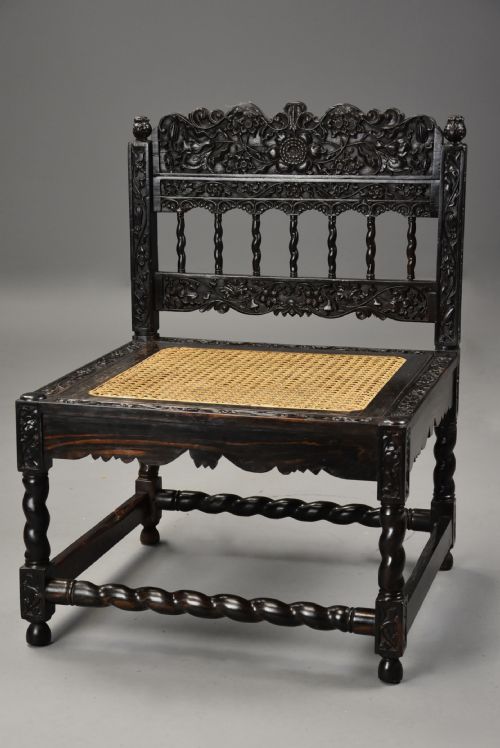


Carved Wooden Cane Chairs
These carved wooden cane chairs bring together centuries of skilled handiwork and practical seating, offering both structural grace and tactile woven panels.
Carved Wooden Cane Chairs
Carved wooden cane chairs span formal dining sets, library armchairs, and low hall chairs produced across the nineteenth and early twentieth centuries. These seats combine sturdy timber frames with woven cane panels set into backs and seats.
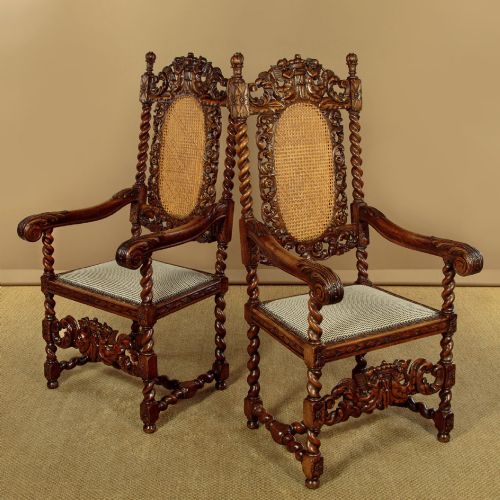
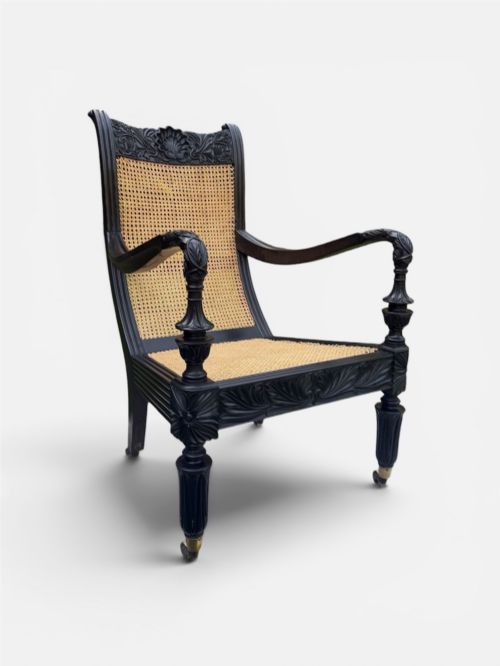
The selection ranges from revival styles referencing Carolean and Jacobean eras to French Louis XV designs and Anglo-Indian colonial pieces. Dining chairs and side chairs appear frequently, alongside occasional armchairs and specialised child high chairs.
How they were made
Frames rely on hardwoods such as oak, walnut, mahogany, and ebony, shaped with detailed chisel carving and joinery. Artisans shaped these dense timbers into curved rails, sabre legs, and elaborate crests.
Cane panels use woven natural plant fibres threaded through drilled holes in the wooden frames to create a resilient, flexible surface. Additional materials like brass, fabric, and paint appear on selected frames.
Listings feature oak, walnut, mahogany, ebony, and satinwood, paired with woven cane and occasional fabric or paint.
What varies in quality
Quality depends on the crispness of the hand-carved wood details and the tightness of the woven cane work. Sharply defined motifs on walnut or mahogany frames indicate superior craftsmanship.
The integrity of the timber joinery and the matching of grain across pairs or sets define the upper tiers of production. Original painted surfaces or scumble finishes also separate standard examples from finer works.
The Carved Wooden Cane Chairs Glossary
- Cane
- Woven plant material used for flexible seat and back panels. It provides a breathable surface stretched across drilled wooden frames.
- Carolean Revival
- A late nineteenth-century style imitating seventeenth-century English seating. These pieces display rich carving, crown motifs, and twisted wooden turnings.
- Sabre Leg
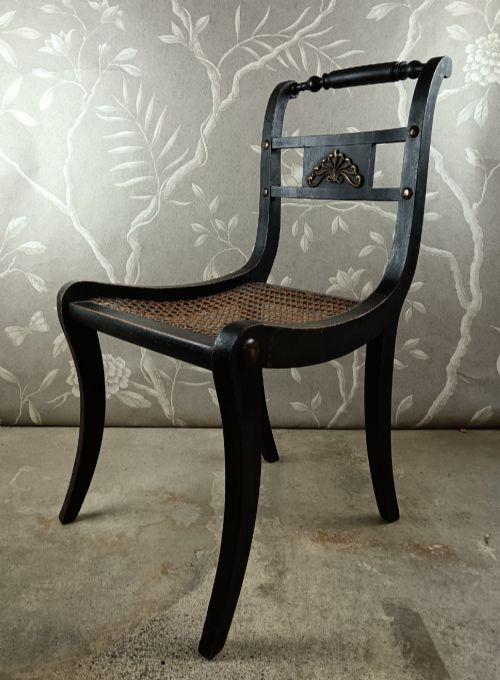
- A concave curving leg that tapers toward the foot, popular in Regency design. This form derives from classical Greek klismos chairs.
- Scumble Paint
- A decorative finish applied to imitate more expensive woods or grain patterns. It involves manipulating translucent paint over a base coat on furniture like Victorian side chairs.
Carved Wooden Cane Chairs: Frequently Asked Questions
How do I care for cane seats?
Keep the woven panels lightly hydrated with a damp cloth to prevent the natural fibres from becoming brittle.
Avoid placing these chairs in direct sunlight or near intense heat sources that dry out the cane.
Are these chairs suitable for daily dining?
Many examples function well for regular seating, particularly sturdy oak and mahogany dining chair sets from the nineteenth century.
Lighter frames or antique armchairs benefit from careful handling to preserve delicate hand-carved details and woven panels.
How do I identify a revival style?
Revival pieces borrow decorative vocabulary from earlier periods, such as seventeenth-century Carolean scrollwork or Jacobean turnings, executed with nineteenth-century tools.
Examine the construction methods and timber ageing to distinguish these interpretations from actual period items.
What is a bergere chair?
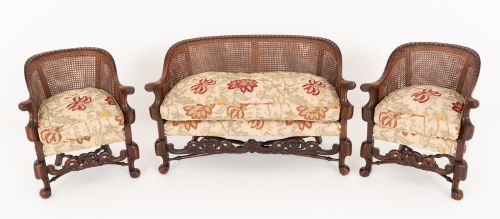
A bergere is a French-style armchair featuring enclosed sides filled with cane work or upholstery.
These comfortable seats often pair carved wooden frames with low profiles suited for libraries and parlours.