

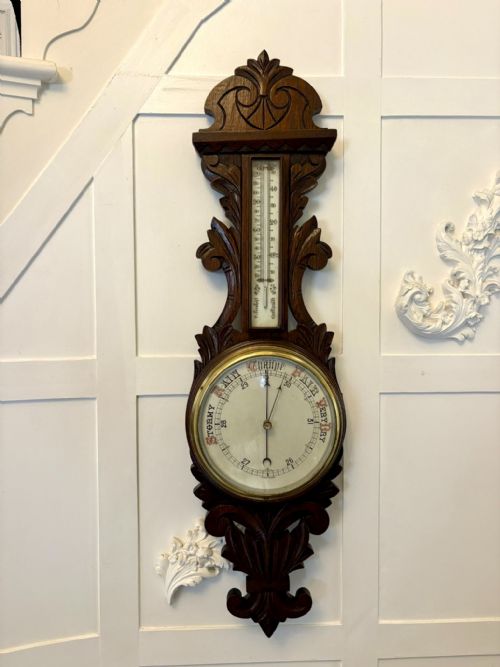


Carved Wooden Aneroid Barometer
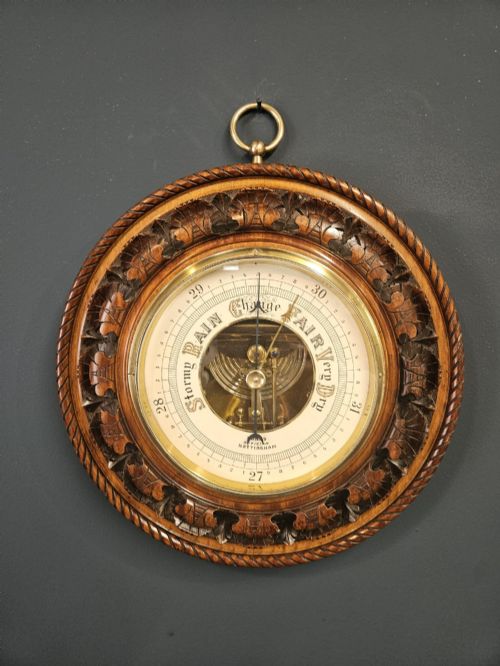
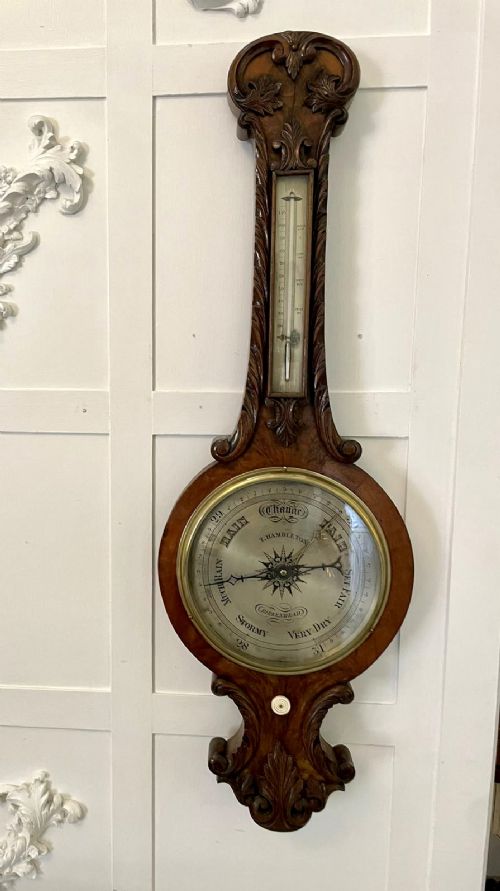
These carved wooden aneroid barometer examples combine domestic forecasting with the skilled hand of the nineteenth-century woodcarver.
Carved Wooden Aneroid Barometer
A carved wooden aneroid barometer uses a sealed metal capsule to measure atmospheric pressure without liquid mercury, housed within decorative timber frames. These wall-hanging instruments emerge predominantly from the Victorian and Edwardian eras, spanning walnut, oak, and mahogany variants.
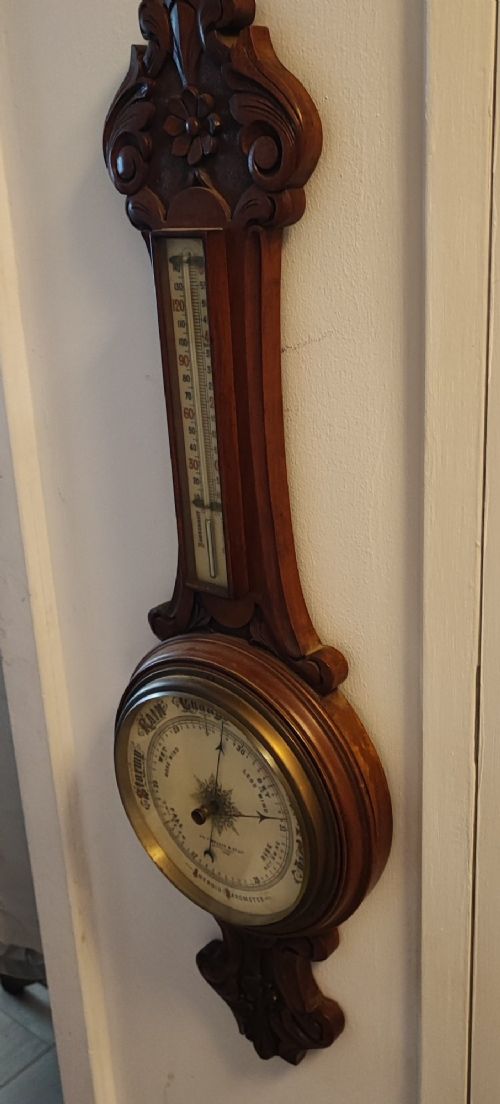
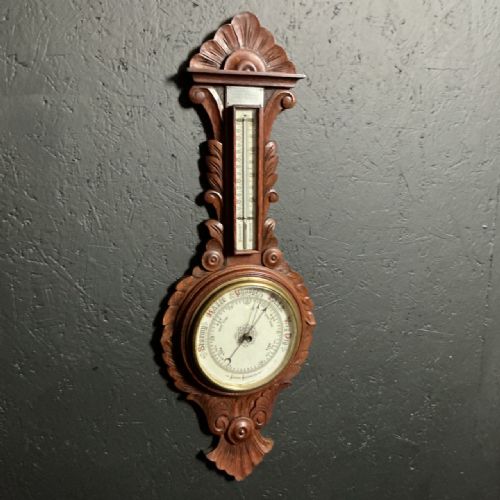
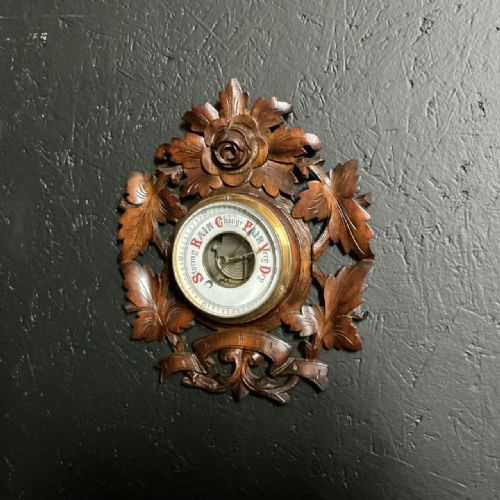
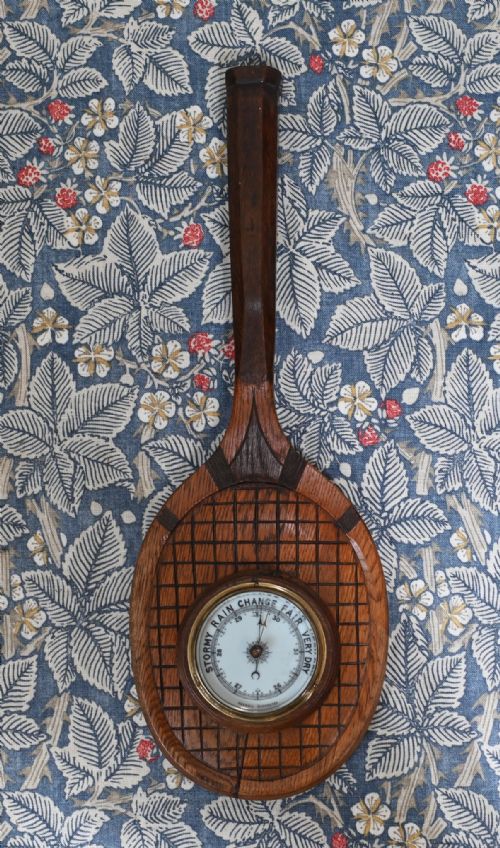
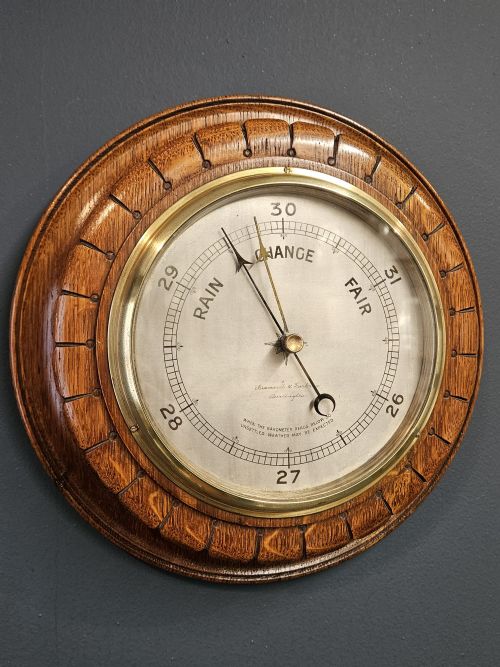
The version most commonly met on this page takes the form of the banjo barometer, frequently enriched with Black Forest foliage carvings or geometric oak designs. Makers applied these decorative housings to domestic walls to serve both practical meteorological functions and ornate interior ornamentation.
Materials and construction methods
Cabinetmakers constructed the architectural and banjo frames from seasoned hardwoods, particularly oak, walnut, and mahogany, often utilising burr walnut veneers for richer grain patterns. Carvers then worked directly into the timber to execute deep relief foliage, birds, or Neo-Classical motifs.
Makers set glass dial faces, brass bezels, and silvered metal register plates into the timber housings to protect the delicate internal aneroid mechanisms and thermometers. Many incorporate subsidiary porcelain or brass components alongside the primary pressure-sensing units.
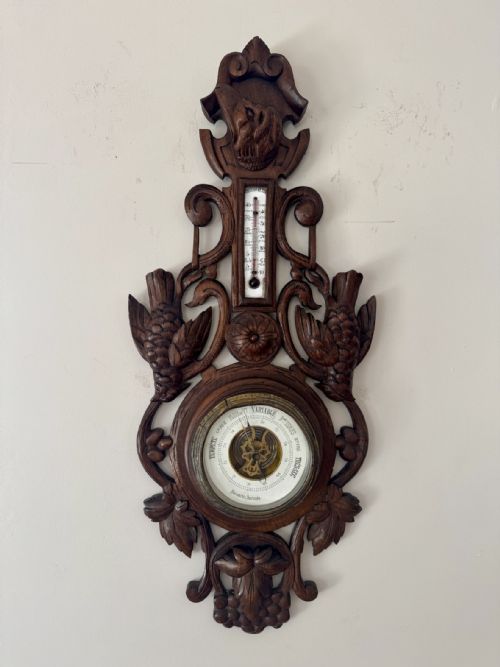
One exceptional Victorian oak barometer is carved with birds.
Distinctions in craftsmanship and design
The distinction between standard domestic barometers and superior examples rests upon the depth, ambition, and execution of the wood carving. Deeply undercut Black Forest foliage or figural carvings involving birds require considerably more skill from the artisan than simple geometric mouldings.
Quality also appears in the integration of secondary instruments, such as functioning thermometers or clock movements, and the calibre of the signed brass dial plates. Finer pieces demonstrate crisp lettering on silvered scales and balanced proportions across the banjo or architectural frame.
Bramwell and Harbron of Darlington·W Watson and Sons·James Pitkin London
The Carved Wooden Aneroid Barometer Glossary
- Aneroid barometer
- An instrument that measures atmospheric pressure using a flexible metal capsule that expands or contracts as pressure changes, without using liquid mercury.
- Banjo barometer
- A wall-hanging barometer housed within a tall, curving wooden case shaped loosely like a banjo, typically featuring a dial at the base and a thermometer above.
- Black Forest style
- A carving tradition originating in central Europe, characterised by deeply modelled naturalistic motifs including leaves, branches, and animals rendered in walnut.
- Silvered dial
- A metal faceplate treated to achieve a frosted, silvery finish, upon which barometric measurements and maker details are engraved.
Carved Wooden Aneroid Barometer: Frequently Asked Questions
What is an aneroid barometer?
An aneroid barometer measures changes in atmospheric pressure through the expansion and contraction of a sealed internal metal box. This mechanism removes the need for liquid mercury columns.
Invented in the nineteenth century, these domestic instruments allowed households to track impending weather changes safely upon interior walls.
How do I hang a wall barometer?
These wooden instruments hang securely from sturdy wall fixtures using the designated hanging loops or brackets built into the rear of the timber frame. Ensure the chosen wall position remains free from direct heat sources and heavy vibrations to protect the delicate internal mechanism.
Once mounted, gentle calibration using the adjustment screw aligns the needle with local meteorological conditions.
Did these barometers include thermometers?
Many examples on this page combine an aneroid barometer dial with an integrated vertical thermometer mounted into the upper stem of the wooden frame. This dual arrangement provided households with simultaneous temperature and barometric readings.
Some more complex variants also housed clock movements alongside the weather instruments.