




Vintage Oak Weather Glass
These vintage oak weather glass pieces are solid timber scientific instruments designed to measure atmospheric pressure with practical elegance in any room.
Vintage Oak Weather Glass
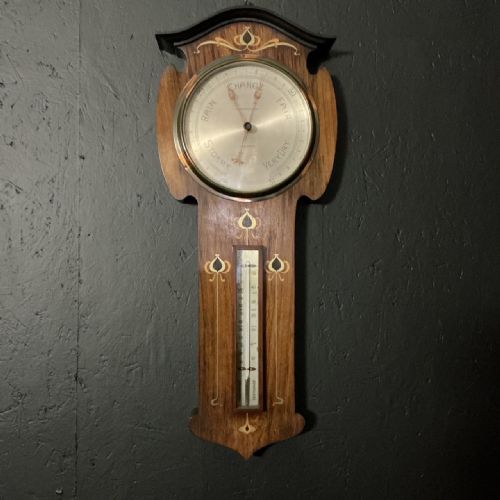
When you search for vintage oak weather glass, you encounter wall barometers, stick barometers, and table-top barographs encased in timber frames. The examples on this page span the Victorian and Edwardian eras, alongside Black Forest and Arts and Crafts styles.
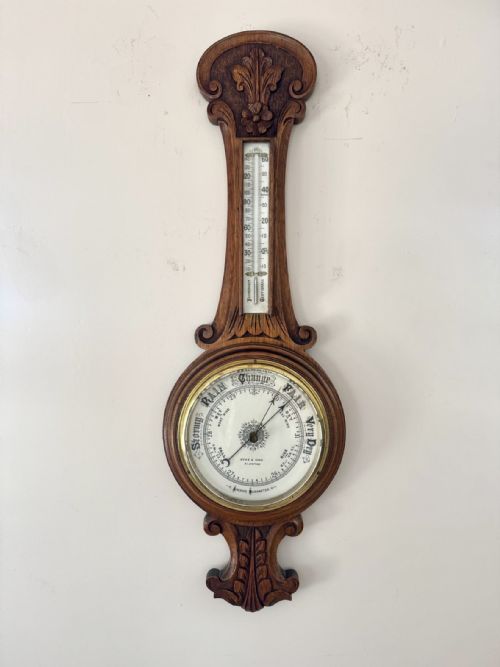
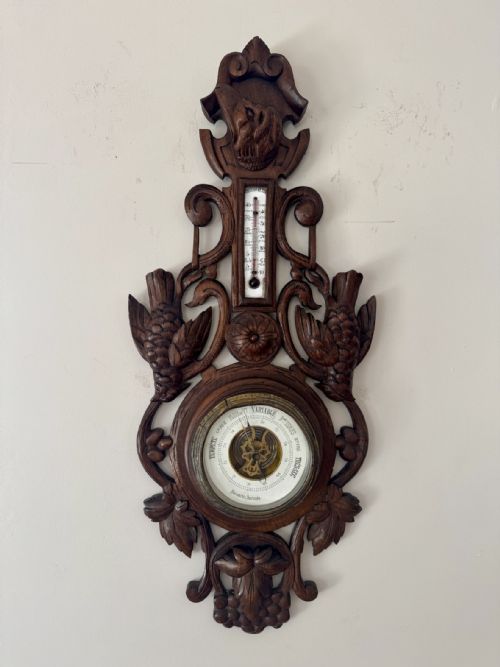
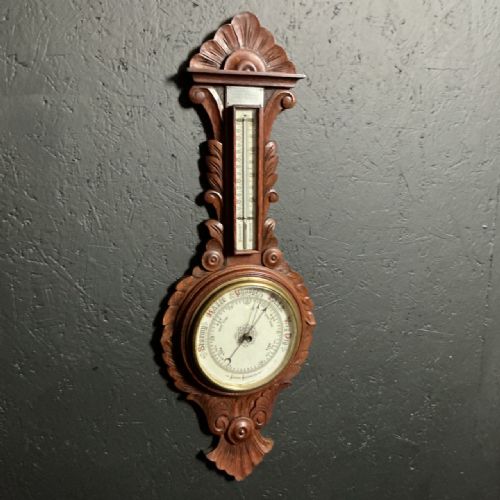
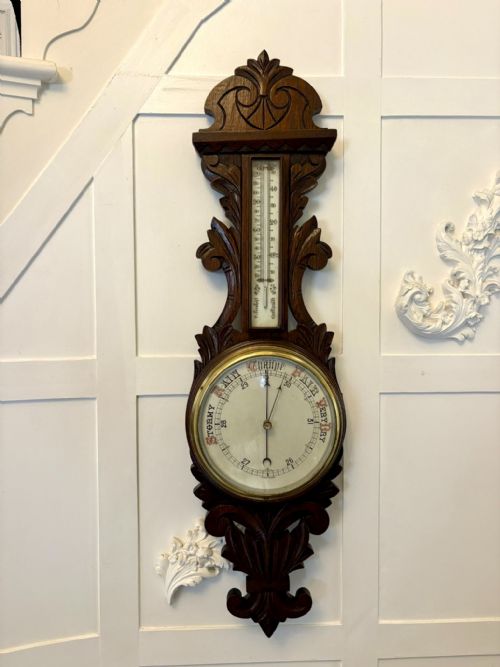
Most pieces you meet here utilise carved oak cases, often featuring thermometers, ceramic dials, and bevelled glass panels. Wall hanging banjo barometers and heavy oak cased barographs form the core of the selection.
Origins stretch from English workshops to continental makers, capturing nineteenth and early twentieth century domestic science. The timber frames range from plain circular designs to deeply carved geometric and foliate motifs.
Materials and construction methods
Carpenters built the heavy cases using solid oak, sometimes accented with carved wood details or mahogany and walnut elements. Master instrument makers fitted brass bezels, mercury tubes, or aneroid dials into these timber housings.
Makers utilised bevelled glass to protect the paper charts of barographs or the delicate indicator needles of aneroid barometers. Ceramic dials and paper scales provided clear, legible readings for daily domestic use.
Listings feature oak, mahogany, walnut, brass, and glass across Victorian and Edwardian scientific instruments.
Quality differences in the collection
Depth and precision of the carved wood decoration separate standard wall barometers from exceptional exhibition pieces. Crisp lettering on the ceramic dials and robust movement construction distinguish master instrument makers.
The integrity of the oak case, the clarity of the bevelled glass, and the presence of original components like chart drawers or thermometers determine the standing of each scientific instrument.
Hyde & Sons Sleaford·Negretti & Zambra·W Watson & Sons·Short & Mason·J Hughes London·Admiral Fitzroy
The Vintage Oak Weather Glass Glossary
- Aneroid barometer
- An instrument measuring atmospheric pressure without liquid, using a flexible metal box that expands or contracts. This mechanism allowed barometers to be housed securely in wall-hanging oak cases.
- Barograph
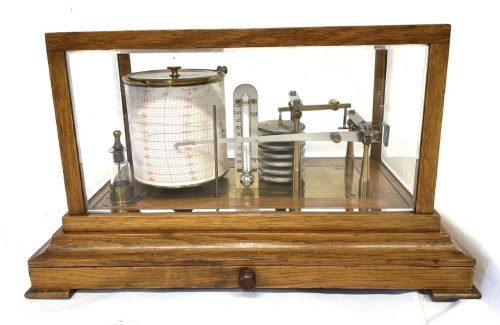
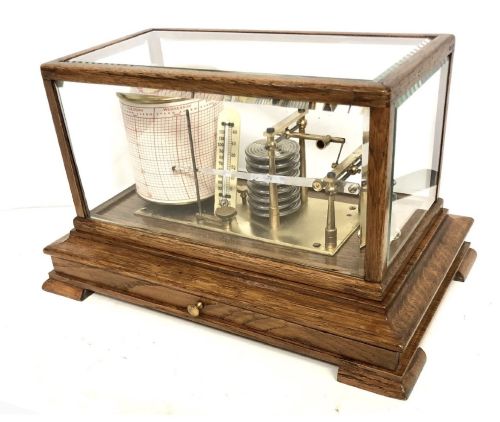
- A recording barometer that plots pressure changes over time onto a revolving paper chart housed in a glass case. These instruments often feature built-in chart drawers and thermometers.
- Stick barometer
- A tall, vertical barometer containing a column of mercury within a protective wooden frame. These traditional instruments offer precise readings through visible mercury columns.
- Banjo barometer
- A weather glass shaped like a banjo, featuring a circular dial at the base and a longer thermometer shaft above. Carved oak versions of this form are common in Victorian interiors.
- Bevelled glass
- Glass with an angled edge set into the brass bezels or wood cases of barometers and barographs. This detail diffuses light and frames the dial clearly.
Vintage Oak Weather Glass: Frequently Asked Questions
How do aneroid barometers work?
Aneroid barometers use a sealed corrugated metal capsule that expands or contracts as atmospheric pressure changes. This movement transfers through levers to the indicator needle on the dial.
These mechanical units allowed makers to house barometers in compact wall-hanging wooden cases without worrying about spilling liquid mercury.
What is an Admiral Fitzroy barometer?
Admiral Fitzroy barometers are specific stick barometers designed following nineteenth-century guidelines for predicting coastal storms. They often include integrated thermometers and descriptive remarks printed on the register plates.
Craftsmen housed these instruments in solid oak frames to serve as reliable domestic weather stations for households.
How do I maintain a barograph?
Barographs require occasional winding of their internal clockwork drum and periodic replacement of the ink nib and paper charts. The oak and glass case should be kept clean with dry cloths to protect the mechanism.
Placing the instrument away from direct heat sources ensures the internal linkages remain stable and accurate.
What period do these pieces come from?
The pieces on this page originate primarily from the Victorian and Edwardian eras, spanning the nineteenth and early twentieth centuries. Styles range from heavy Victorian Gothic to Arts and Crafts and Black Forest carving.
Each period brought distinct aesthetic preferences to the oak cases, from plain circular frames to elaborate foliate carvings.
Are ceramic dials original?
Many Victorian and Edwardian barometers feature ceramic dials that provided a bright, clean surface for pressure scales. These dials were standard fittings for quality aneroid instruments of the period.
They sit securely within brass bezels mounted directly into the carved oak timber frames.