



Traditional Wall Hung Barometer
These traditional wall hung barometer pieces measure atmospheric pressure while anchoring a room with period timber and glass.
Traditional Wall Hung Barometer
A traditional wall hung barometer combines domestic utility with decorative woodwork, serving as a functional weather instrument mounted on domestic walls. The selection centres on Victorian and Edwardian examples alongside Georgian or Regency pieces.
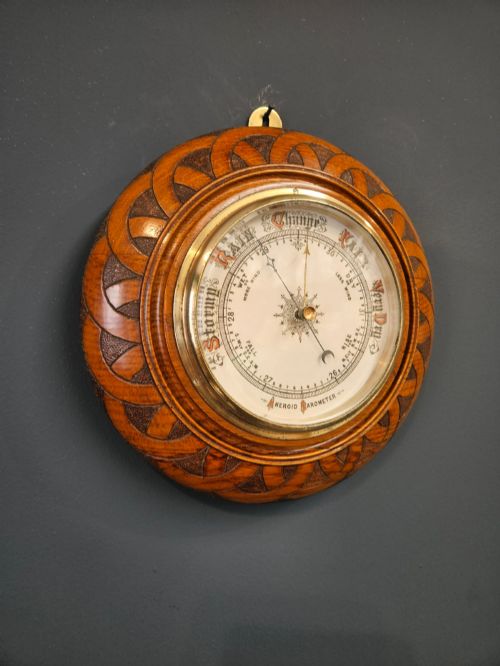
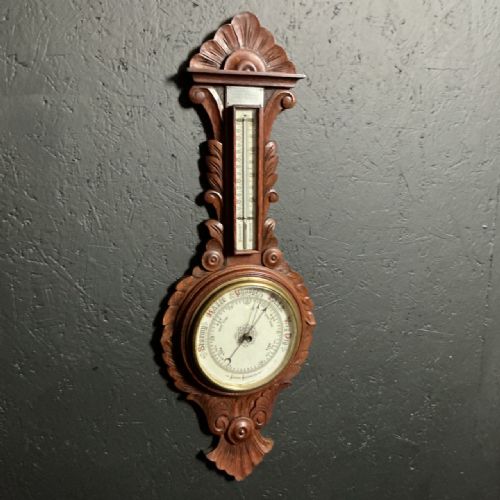
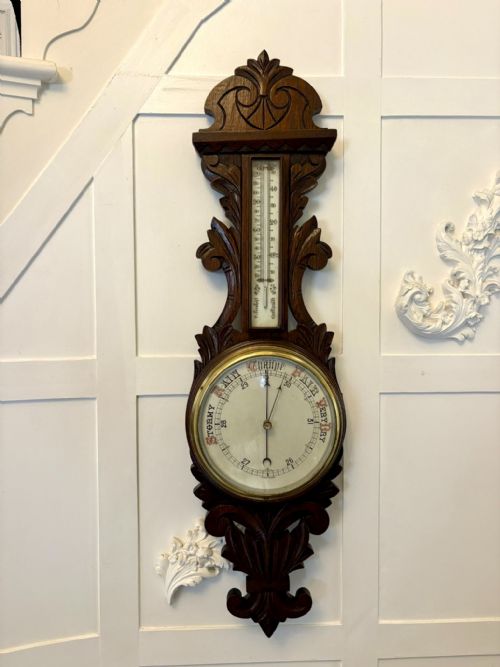
Most pieces encountered on this page take the form of banjo barometers, stick barometers, or circular wall-mounted instruments. They range from compact turned oak cases to large carved mahogany banjo configurations complete with integrated thermometers.
The materials span oak, mahogany, flame mahogany, beechwood, and walnut, frequently detailed with glass faces and brass bezels. Many incorporate bone scales or supplementary dials for weather forecasting.
How they were made
Cabinetmakers shaped the timber housings using solid and veneered woods such as oak, mahogany, and walnut, often applying turning or intricate carving techniques. Flame mahogany veneers provided rich figure grain on prominent banjo bodies.
Instrument makers fitted brass bezels, glass viewing windows, and sensitive aneroid or mercury tube mechanisms into the wooden chassis. Bone or metal dial plates received hand-engraved weather scales and graduations.
Some models squeeze three instruments into one wall case, leaving no excuse not to know the temperature, pressure, and time.
What varies in quality
The refinement of the cabinetwork and the crispness of the wood carving dictate the visual standard of the piece. Deeply carved foliage and well-executed boxwood inlay separate standard utility items from distinguished examples.
The reputation of the maker and the legibility of the engraved dial scale influence the standing of the barometer. High-grade instruments feature signed dials by established opticians alongside precise mechanical movements.
Maple & Co·Negretti & Zambra·George Dollond of London
The Traditional Wall Hung Barometer Glossary
- Aneroid barometer
- A barometer that measures air pressure using a flexible metal vacuum capsule without liquid. This mechanism allowed for more compact and varied cabinet shapes.
- Banjo barometer
- A household barometer housed in a characteristic curved wooden case resembling a banjo. These typically display a hygrometer or thermometer above the main dial.
- Stick barometer
- A tall, narrow wall barometer containing a vertical glass tube filled with mercury. This form provides a direct reading of barometric height against an ivory or bone scale.
- Bezel
- The metal ring that holds the glass face in position over the barometer dial. Brass is the most common metal found on these instruments.
- Thermometer
- A temperature-measuring instrument integrated into the body of the barometer. Many period banjo barometers include this as a secondary display above the main dial.
Traditional Wall Hung Barometer: Frequently Asked Questions
How do I hang a wall barometer safely?
These instruments require a secure wall fixing matched to the weight of the timber case. Use a robust wall plug and screw rather than a simple picture hook.
Ensure the hanging bracket on the back of the case is firmly attached before mounting the barometer at eye level.
Are these barometers still accurate?
Aneroid barometers can often be calibrated to local air pressure using the small adjustment screw on the back or front dial. Mercury stick barometers generally reflect true atmospheric changes if the tube remains intact.
Transport or temperature shifts may require minor resetting against a known local reading.
How do I clean the wood and glass?
Dust the timber case gently with a dry, soft cloth to protect the antique polish or wax finish. Avoid liquid polishes that can seep into carved details.
Clean the glass face with a mild glass cleaner applied to a cloth rather than sprayed directly near the wood or brass bezel.
How do I date a barometer?
Examine the style of the wood case, the shape of the dial, and the construction methods used on the backboard. Victorian and Edwardian pieces often feature standardised aneroid movements and machine-turned details.
Earlier Georgian and Regency examples usually display simpler stick configurations or distinctive wheel dial layouts.