




Antique Carved Weather Station
An antique carved weather station brings together practical science and intricate woodwork to track atmospheric changes on your wall.
Antique Carved Weather Station
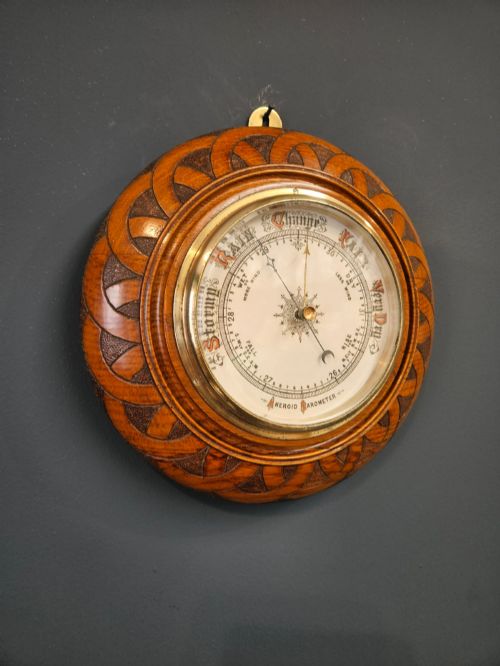
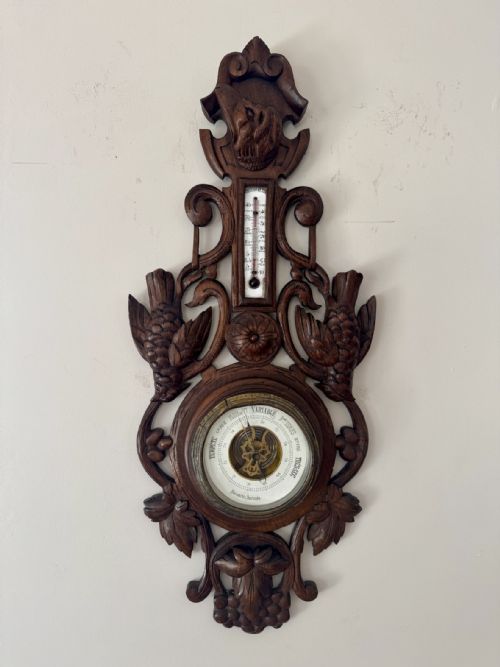
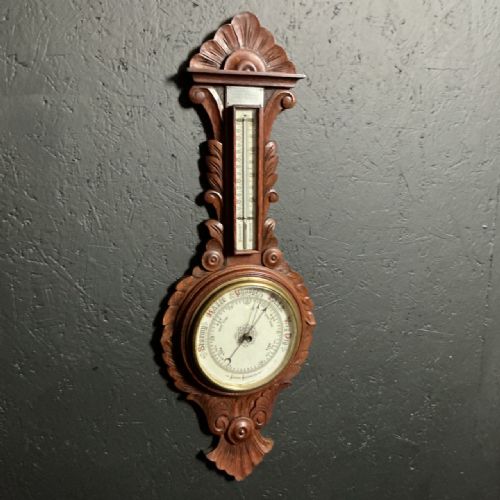
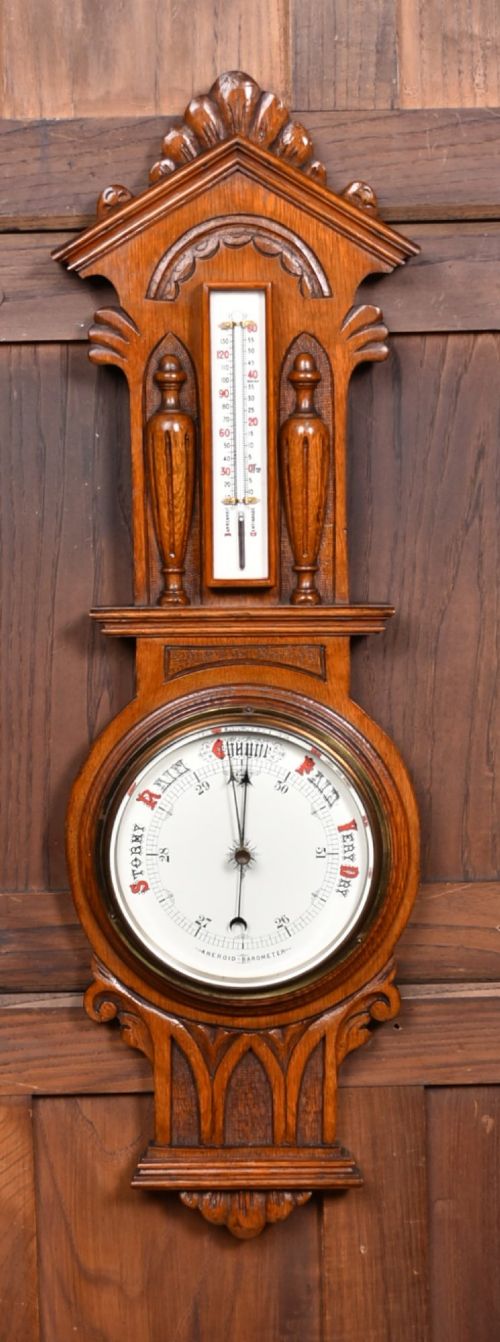
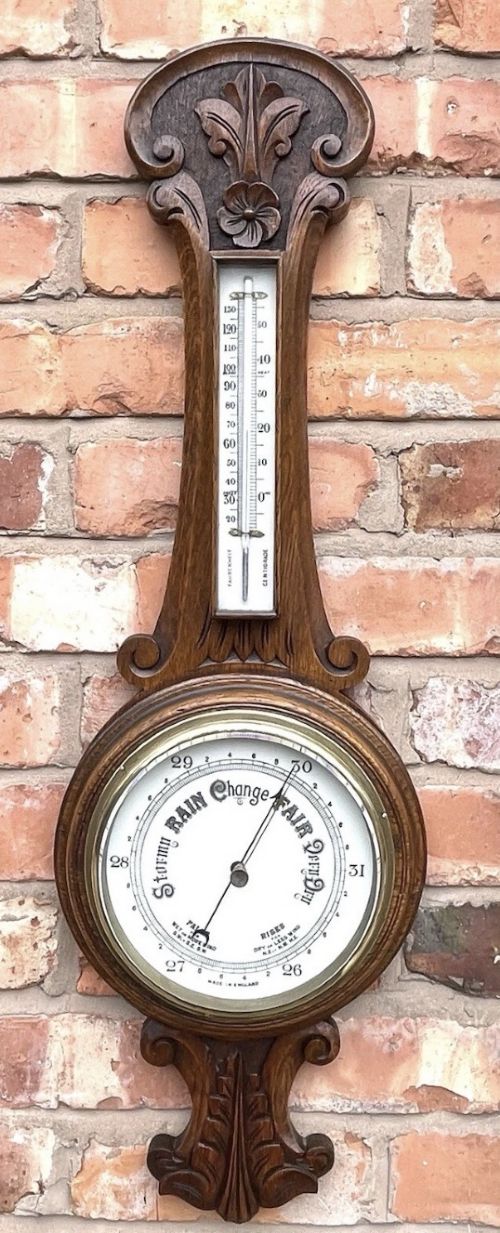
An antique carved weather station combines scientific instruments such as barometers and thermometers with ornate woodwork, typically housed in oak, walnut, or mahogany. These instruments measure atmospheric pressure and temperature while serving as decorative wall panels or banjo-shaped units.
Most pieces seen here belong to the Victorian and Edwardian periods, featuring styles that range from restrained British domestic designs to elaborate Black Forest carvings and German folk art interpretations. Banjo barometers and wall-mounted combination units dominate the forms available.
Makers and retailers such as Negretti & Zambra and Maple & Co supplied these functional objects for domestic interiors. Buyers encounter both simple circular frames and grand architectural wall hangings incorporating clocks alongside the barometric dials.
Materials and construction
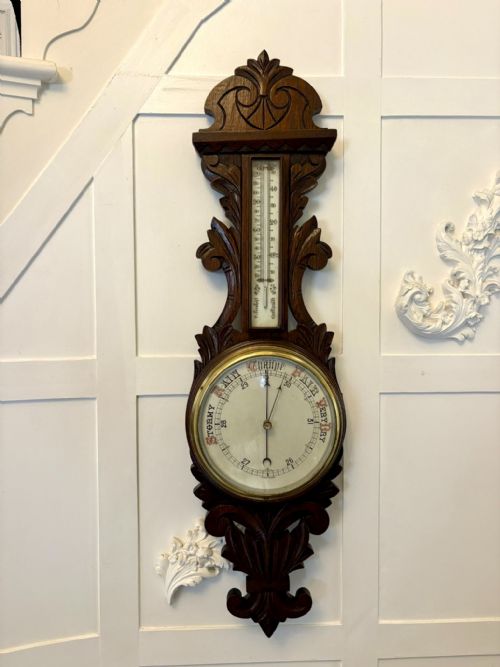
Carpenters utilised solid timbers like oak, walnut, and mahogany, shaping them through deep relief carving and turning techniques. Dense hardwoods allowed carvers to execute foliage, animal motifs, and architectural scrolls without compromising the structural integrity of the wall mount.
Instrument faces paired brass bezels with bevelled glass to protect porcelain or ceramic dial plates. Mercury tubes in stick barometers and aneroid metal mechanisms inside banjo cases required precise calibration alongside the carved wooden surrounds.
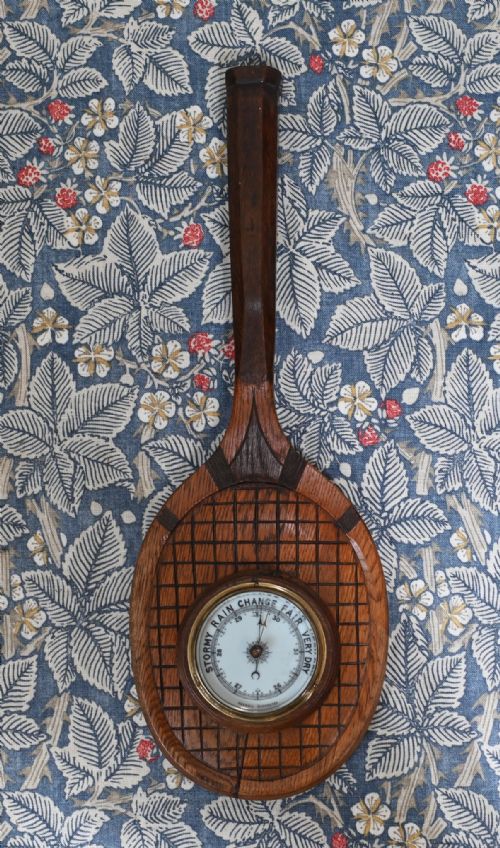
Certain banjo barometers incorporate tennis racquet club plaques, blending domestic sports enthusiasm directly with meteorological forecasting.
The spectrum of quality
Quality rests primarily on the depth and sharpness of the wood carving, where crisply undercut foliage and balanced symmetry separate superior pieces from plain production items. The integration of multiple instruments, such as combined clocks and thermometers, also elevates the complexity of the piece.
The reputation of the retailer or maker, including firms like Negretti & Zambra, indicates higher standards of instrument precision and cabinet-making. Well-figured timber veneers and intact brass fittings further distinguish the finer examples from standard domestic pieces.
W Watson & Sons·J Hughes London·Negretti & Zambra·Maple & Co·James Pitkin London
The Antique Carved Weather Station Glossary
- Aneroid barometer
- An instrument that measures atmospheric pressure without liquids by using a flexible metal box. It expands and contracts with pressure changes to move a dial pointer.
- Stick barometer
- A tall, vertical barometer containing a column of mercury in a glass tube. It offers direct reading of atmospheric pressure against a calibrated scale.
- Black Forest carving
- A style of ornate, highly detailed woodwork originating from Central Europe. It frequently incorporates naturalistic motifs such as leaves, game, and woodland animals.
- Bezel
- The grooved metal ring that holds the glass face securely in front of the barometer dial. It allows access to the instrument whilst protecting the paper or porcelain face.
Antique Carved Weather Station: Frequently Asked Questions
How do aneroid barometers work?
Aneroid barometers use a sealed, corrugated metal capsule that expands or contracts as atmospheric pressure shifts. This movement connects through mechanical levers to the pointer visible on the dial.
Unlike mercury columns, this design contains no liquid, making the instrument safer for wall hanging and less susceptible to spills during relocation.
Where should I hang a wall barometer?
Wall barometers require stable interior locations away from direct sunlight, radiators, and heavy draughts. Sudden temperature swings affect the internal mechanisms and wood casing.
Most units hang securely from a sturdy wall plug or picture hook via a dedicated mounting bracket on the reverse of the wooden case.
How do I read a combined weather station?
Combined instruments usually feature a central barometer dial flanked or stacked with a thermometer and sometimes a hygrometer. You tap the barometer glass lightly before reading to settle the needle.
The pointer indicates current pressure, while the secondary hand, set by hand, shows whether pressure is rising or falling since your last check.
How do I distinguish Victorian from Edwardian pieces?
Victorian weather stations often feature heavy, dark timbers with deep, elaborate carving, sometimes reflecting Gothic Revival or Black Forest influences. The decoration tends to be dense and prominent.
Edwardian examples generally shift towards lighter oak frames with cleaner lines and more restrained decoration, reflecting a preference for simpler domestic interiors.