


Carved Wood Writing Slope
A carved wood writing slope is a portable desk designed for correspondence, offering hinged surfaces and fitted compartments for ink and paper.
Carved Wood Writing Slope
When you search for a carved wood writing slope, you encounter practical portable desks and stationery boxes designed for correspondence. These pieces span centuries from the eighteenth period to the twentieth century, emerging in various timbers.
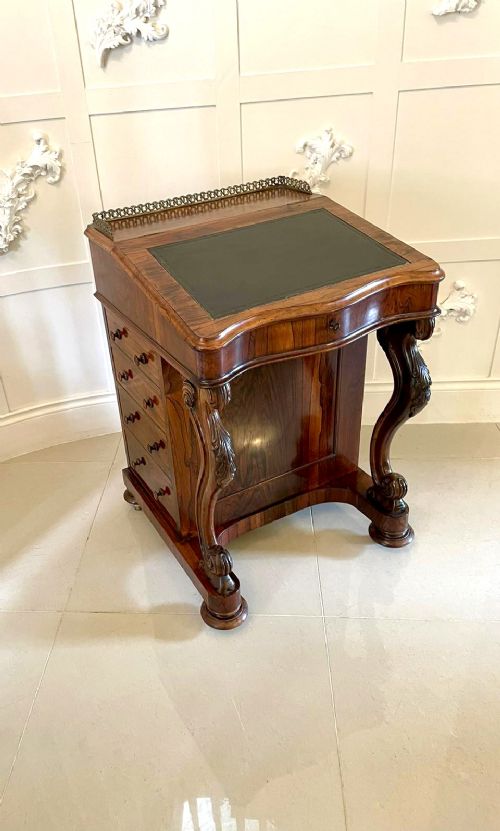
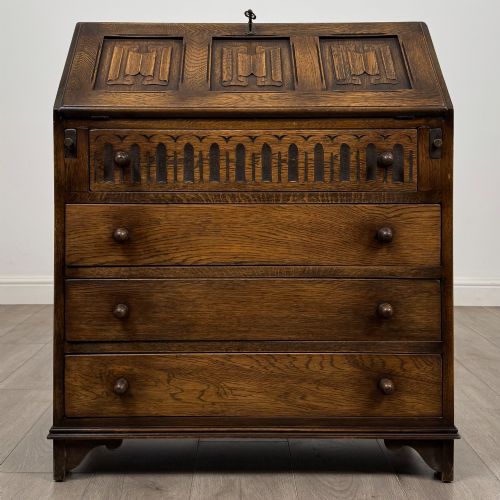
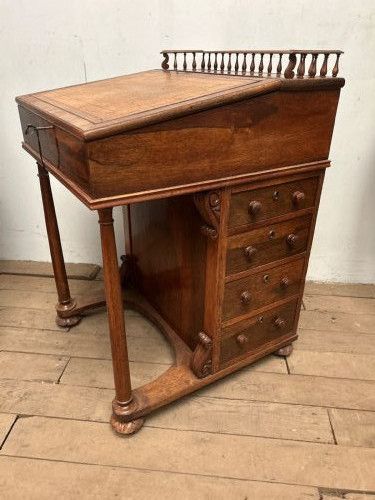
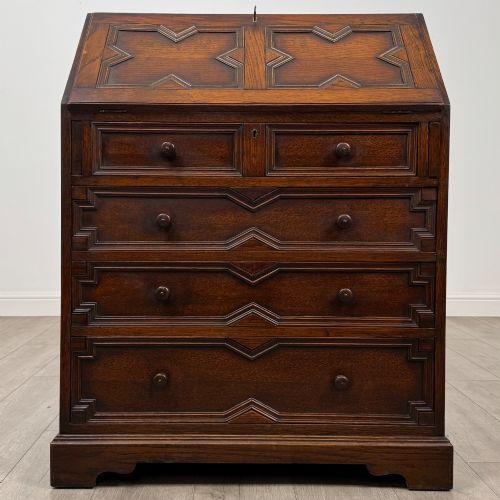
The most common forms on this page include nineteenth-century rosewood and burr walnut davenports alongside oak bureaus and writing boxes. Makers utilised dense hardwoods to create sturdy compartments for paper, quills, and inkwells.
Examples range from compact Victorian designs to larger Anglo-Indian stationery boxes decorated with bone inlay and deep relief carving. Each object reflects the writing habits and interior styles of its respective era.
How they were made
Cabinet makers constructed these pieces using dense timbers such as rosewood, mahogany, burr walnut, and oak, often reinforced with brass hardware. Surfaces feature intricate hand-carving, floral marquetry inlay, or linenfold panels depending on the revival style of the period.
Internal compartments incorporate leather writing surfaces, small pigeonholes, and secret drawers operated by concealed latches. Sloping lids are hinged to provide an ergonomic angle for handwriting while protecting the internal stationery storage.
Some nineteenth-century models hide secret compartments behind dummy drawers, meant for private letters and small fortunes.
What varies in quality
The refinement of the timber grain and the depth of the hand-carving distinguish finer examples from standard production pieces. Figured veneers like burr walnut and richly grained rosewood indicate careful selection of raw materials by the cabinet maker.
Interior complexity also defines the grade of a piece, with superior models featuring sophisticated pop-up mechanisms, secret compartments, and finely fitted stationery galleries. The integration of contrasting materials like bone inlay adds another layer of craftsmanship.
Gillows Designed·James Winter and Son
The Carved Wood Writing Slope Glossary
- Davenport
- A compact desk featuring a sloping top hinged to lift over a pedestal of drawers, popular during the nineteenth century.
- Marquetry
- Decorative patterns formed by fitting together thin veneers of wood and other materials onto a structural surface.
- Linenfold
- A style of wood carving that imitates folded parchment or linen, frequently seen on oak panels of the period.
- Bespoke
- Made to individual order and specification rather than produced in standard batches for general retail.
- Stationery box
- A desk accessory or small cabinet designed specifically to hold writing paper, envelopes, and sealing wax.
Carved Wood Writing Slope: Frequently Asked Questions
What is a writing slope?
A writing slope is a portable box with a slanted lid that opens to reveal a flat or angled writing surface and storage compartments for paper and ink.
These pieces were essential for correspondence before the widespread availability of fitted home writing desks.
How do I date a wooden slope?
Dating relies on identifying the primary timber, construction methods, and decorative styles characteristic of periods like the Georgian or Victorian eras.
Hardware types, such as brass hinges and escutcheons, also provide clues to the approximate decade of manufacture.
Where were these pieces used?
They were utilised primarily in domestic libraries, drawing rooms, and studies, or packed into carriages for travel by literate travellers.
The portable nature allowed owners to write letters wherever they settled temporarily.
How do I care for timber surfaces?
Maintain the wood by keeping the piece away from direct sunlight and extreme temperature fluctuations that cause timber to split.
Apply traditional wax polish sparingly to nourish the grain without building up heavy chemical residues.