


Carved Wood Virgin Mary
These carved wood virgin mary figures bring centuries of devotional art into your home, ranging from medieval oak panels to nineteenth-century painted statues.
Carved Wood Virgin Mary
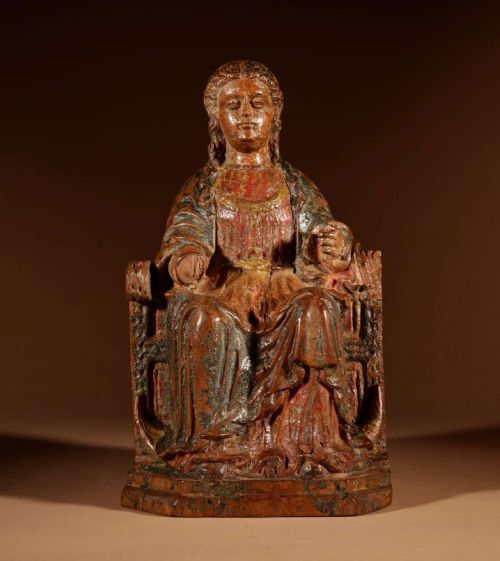
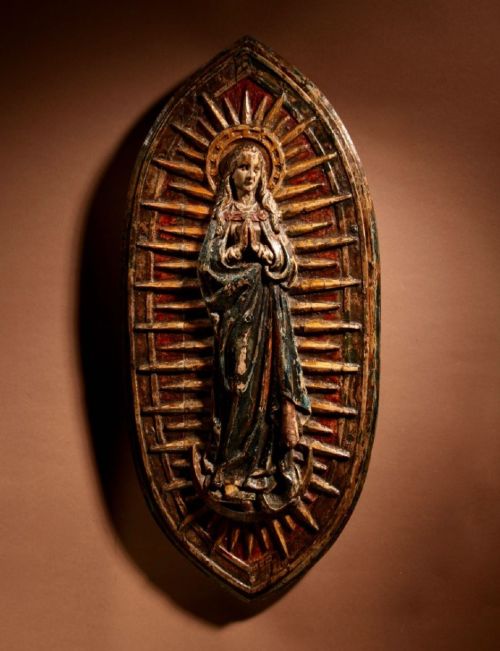
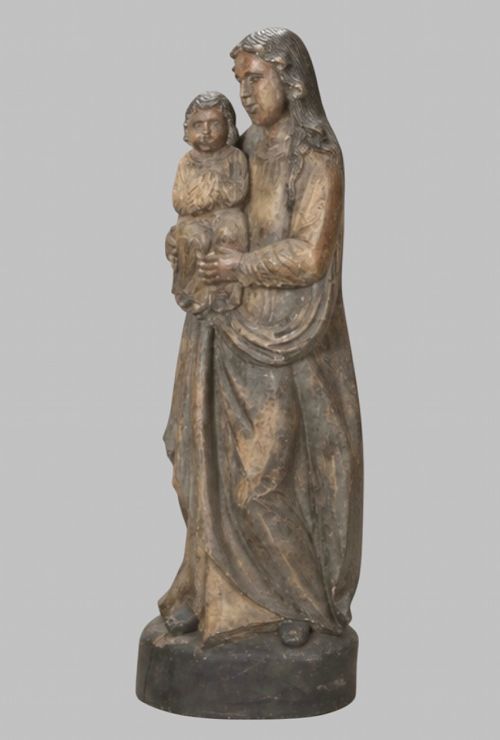
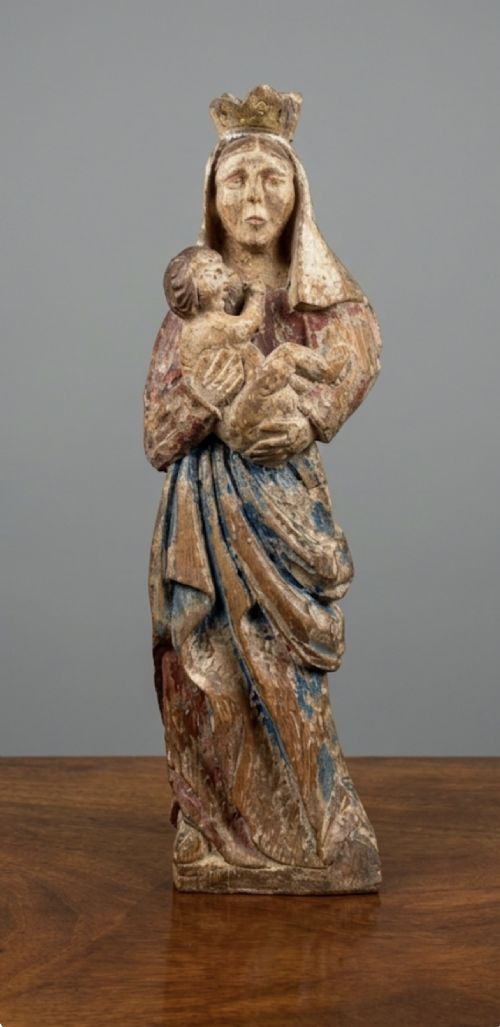
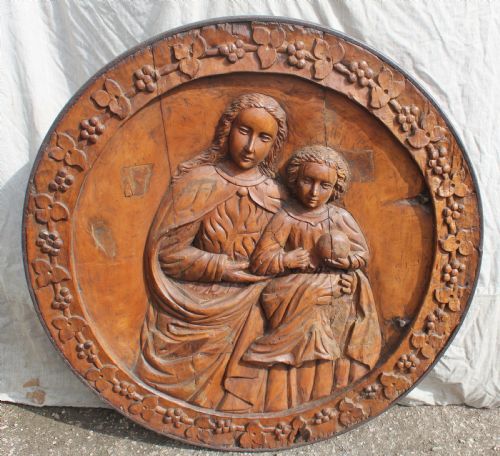
When you search for carved wood virgin mary, you encounter centuries of religious sculpture spanning the medieval period to the twentieth century. The selection includes freestanding statues of the Madonna and child, wall plaques, and central panels from altarpieces.
You meet pieces originating from various European regions, including Spain, Italy, Germany, and the Low Countries. Oak and walnut form the primary wooden bodies of these devotional figures, often enriched with historic paint layers.
The forms range from seated madonnas on thrones to dramatic pietas and standing figures on crescents. Pieces span periods from pre-sixteenth century Gothic works through the Renaissance, Baroque, and into nineteenth-century revivals.
What varies in quality
The survival of original surface treatments, including historic polychrome paint and gilding, alters the character and desirability of a piece. Traces of early gesso and pigment indicate the authentic age and untouched condition of the wooden substrate.
Represented eras stretch from pre-sixteenth century Gothic pieces through Renaissance and Baroque styles to nineteenth-century revivals.
The Carved Wood Virgin Mary Glossary
- Polychrome
- Painted in several colours. This term describes historic wooden sculptures decorated with layers of pigment.
- Gesso
- A plaster mix applied to wood as a base for gilding or painting. It creates a smooth surface for detailed decoration.
- Pieta
- A subject depicting the Virgin Mary supporting the dead body of Christ. These sculptures convey intense grief and solemnity.
- Altarpiece
- A structure set above an altar, often featuring carved wooden panels depicting religious scenes. Central panels frequently show the Virgin Mary.
- Giltwood
- Wood decorated with gold leaf. This finish added luminosity to devotional figures in dim church interiors.
Carved Wood Virgin Mary: Frequently Asked Questions
How old are these wooden figures?
The pieces span from pre-sixteenth century medieval works up to twentieth-century devotional carvings. Many examples date from the Renaissance and Baroque eras.
Carbon dating and stylistic analysis of the oak, walnut, or applewood help determine the exact period of creation.
Where did these sculptures originate?
Origin locations include Italy, Spain, Germany, and the Low Countries. Regional carving styles often reveal the specific workshop background.
European religious traditions heavily influenced the design and posture of each madonna and child representation.
Are the paint finishes original?
Some pieces retain historic polychrome paint and gesso layers from their creation centuries ago. Overpainting or stripping occurred on other examples during later restorations.
Examining the pigment under magnification helps ascertain the age of the surface decoration.
How should I display a wooden religious statue?
Place statues away from direct sunlight and sudden temperature changes to protect the ancient wood and paint. Wall sculptures require secure fixings suited to heavy oak or walnut panels.
Maintain stable humidity levels in the room to prevent the historic timber from cracking.