
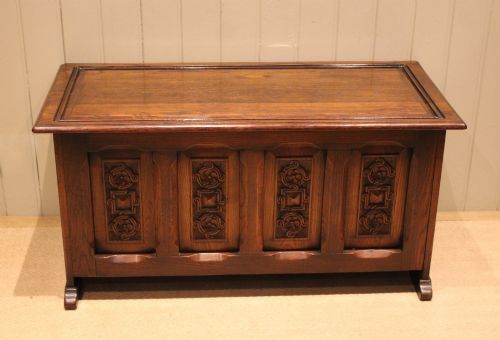
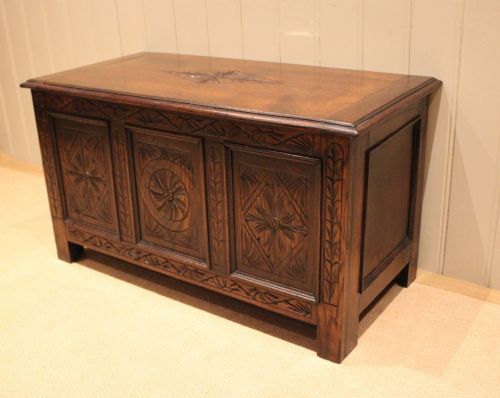
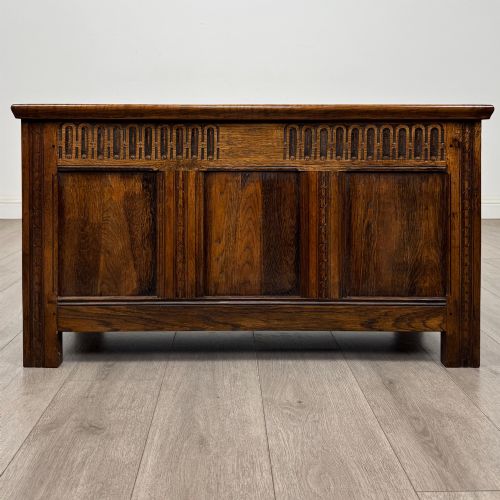


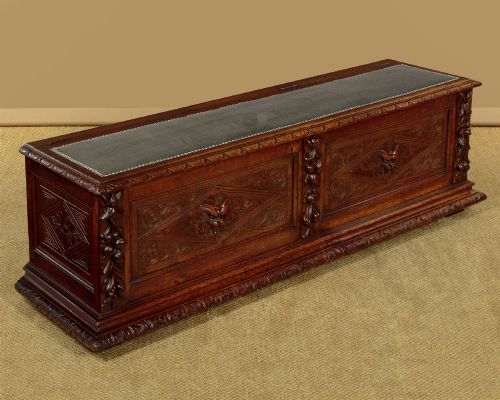
Carved Wood Trunk
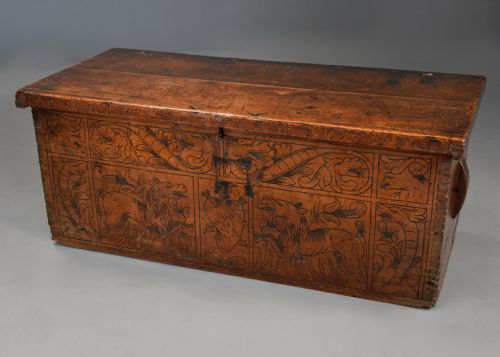
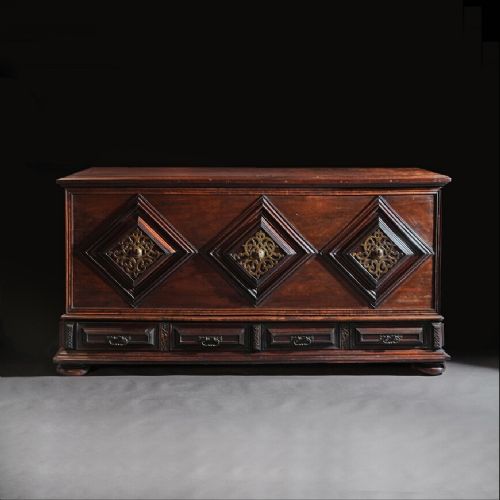
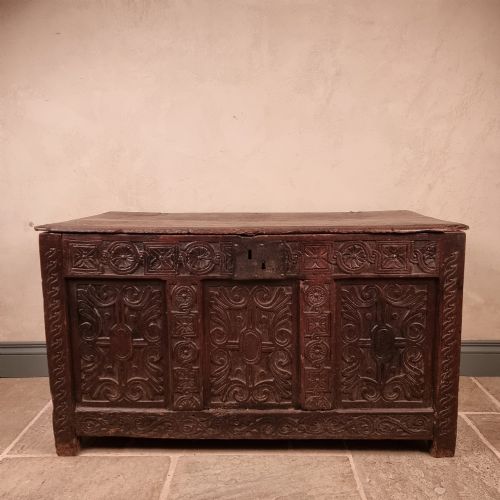
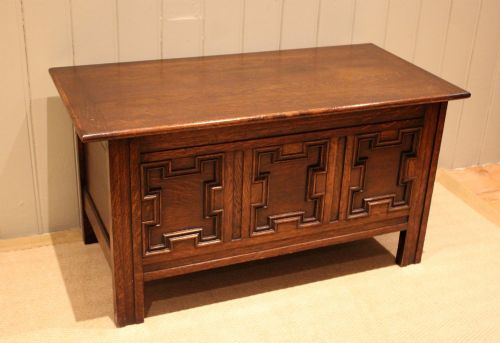
When you search for a carved wood trunk, you are looking at substantial storage pieces shaped by traditional joinery and deep surface ornamentation.
Carved Wood Trunk
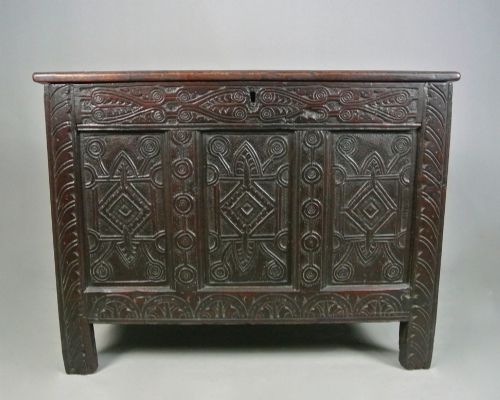
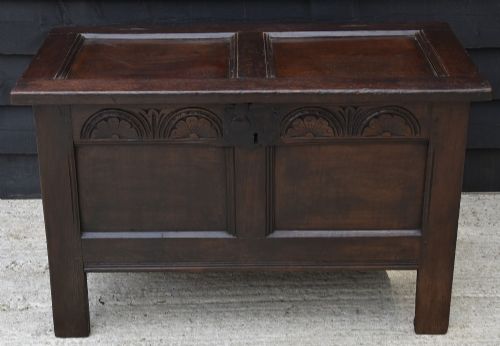
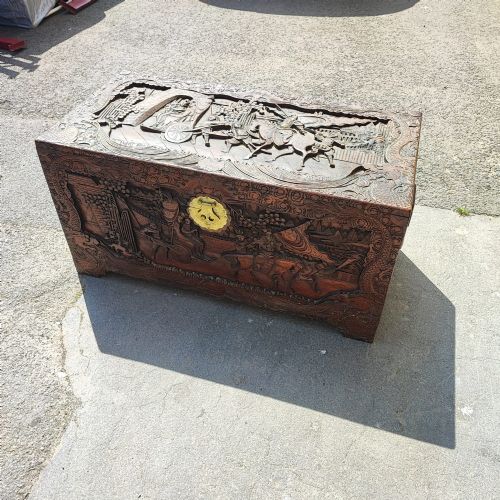
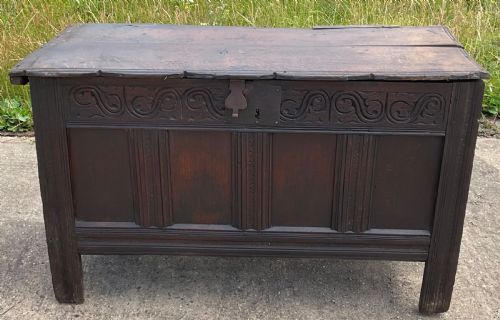
A carved wood trunk encompasses sturdy storage chests, coffers, and blanket boxes built to hold textiles, valuables, and household goods. These items frequently appear as heavy oak seventeenth-century coffers alongside later nineteenth-century camphor wood and Oriental trunks.
The selections span distinct regional workshops, ranging from English county joinery to Anglo-Indian, Chinese, and Middle Eastern production. Oak and camphor wood dominate the forms, supplemented by occasional mahogany, cypress, and hardwood examples.
Buyers will encounter simpler dowry chests and mule chests sitting alongside densely decorated spice and traders chests. Functional storage remains the core purpose across every period represented.
How they were made
Joinery relies on solid timber construction using pegged mortise and tenon joints for early oak coffers, ensuring rigid structural integrity without metal fasteners. Panels are frequently bevelled to fit within grooved framing timbers.
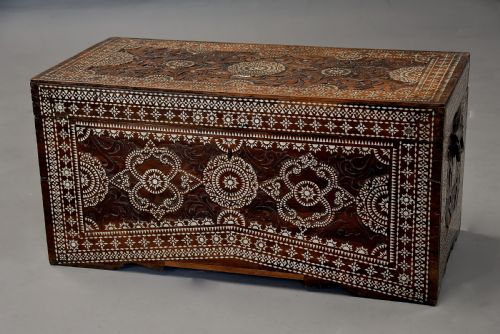
Surface decoration employs gouge carving, chip carving, and relief work directly into the primary timber. Later pieces incorporate applied brass studwork, iron hinges, and inlaid mother of pearl or contrasting woods.
Exotic timbers such as camphor wood and hardwood utilise natural aromatic oils for preservation, joined tightly to protect contents from humidity and insects.
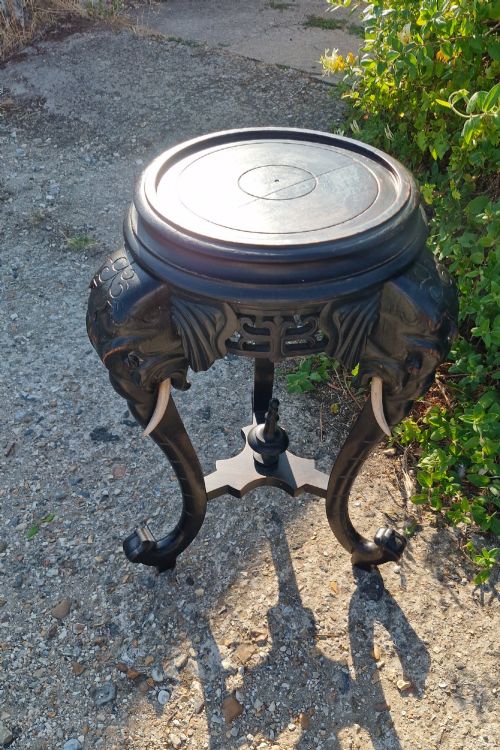
Elephants occasionally make an appearance on this page, disguised rather helpfully as wooden tables complete with painted tusks.
What varies in quality
Depth and crispness of the carving dictate the visual hierarchy, distinguishing hurried workshop output from patient, deeply chiselled relief work. Architectural mouldings and proportioned panel divisions reflect the maker's competence.
Originality of surface patina and hardware strongly influence the standing of a piece. Retaining period ironwork, hinges, and locks without intrusive later repairs preserves historical integrity.
Timber selection and seasoning determine stability over centuries, where quarter-sawn oak displays stable medullary rays while lesser woods show splitting or shrinkage along grain lines.
The Carved Wood Trunk Glossary
- Coffer
- A heavy wooden chest traditionally used for storing valuables and documents. These pieces often feature hinged lids and sturdy boarded construction.
- Linenfold
- A style of wood carving representing folded linen fabric, popular on Tudor and seventeenth-century panels. This motif gives flat wooden surfaces a textured, textile-like appearance.
- Patina
- The surface sheen and colour developed through age, handling, and waxing over many decades. A desirable patina shows genuine tactile history rather than modern chemical finishes.
- Camphor wood
- An aromatic timber native to Asia, prized for furniture making due to its insect-repellent properties. The distinct scent protects stored garments from moths.
- Mule chest
- A traditional storage chest featuring one or more drawers built beneath the main compartment. This form bridges the evolution from simple trunk to tiered chest of drawers.
Carved Wood Trunk: Frequently Asked Questions
What were carved wood trunks used for originally?
These pieces served primarily to store heavy textiles, winter garments, and family valuables in domestic interiors. Their robust construction often allowed them to double as seating benches or tables within the home.
Merchants and travellers also utilised specialised trunks for transporting goods across trade routes, relying on secure locks and durable timber to withstand long journeys.
How do I care for an antique wooden trunk?
Maintain stable indoor humidity levels and keep wooden trunks away from direct heat sources and strong sunlight to prevent timber shrinkage and splitting. Dust regularly with a dry cloth and apply occasional natural wax to nourish the surface.
Avoid using modern liquid polishes or silicone sprays, which can build up on the wood and degrade the historic surface finish over time.
How can I tell an older oak coffer from a revival piece?
Examine the construction joints and tool marks visible on the interior and underside of the timber. Hand-cut peg joints, irregular panel dimensions, and natural wear patterns point towards genuine early period manufacture.
Revival pieces from the nineteenth and twentieth centuries often display mechanical uniformity in their carving techniques and cleaner, less oxidized interior surfaces.
Why do camphor wood trunks have such a strong scent?
Camphor wood naturally contains aromatic oils that give the timber its characteristic fragrance and protective qualities. This scent deters insects and moths, making the wood ideal for lining blanket boxes and clothing chests.
Over many decades the aroma softens gently, though the protective oils remain embedded deep within the cellular structure of the hardwood.