

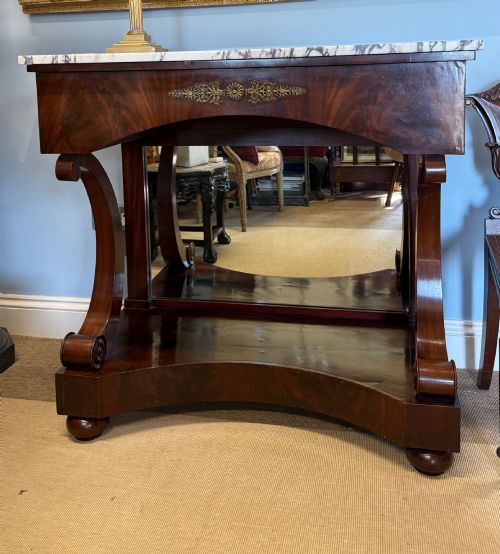


Carved Wood Table Mirror
A carved wood table mirror brings warmth and functional elegance to a room, offering both a practical reflective surface and sculptural detail.
Carved Wood Table Mirror
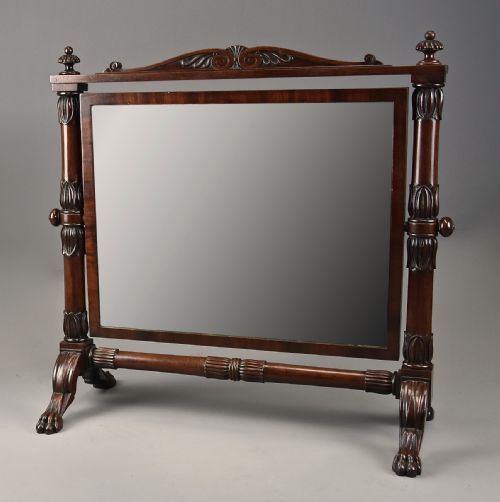
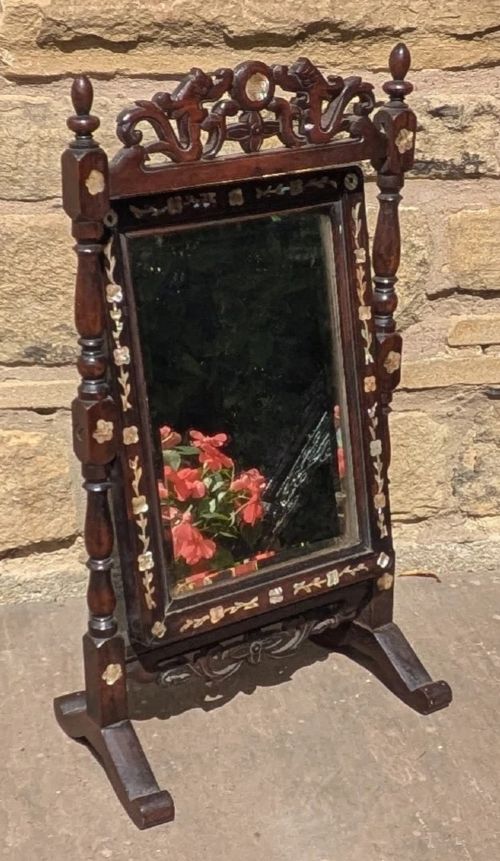
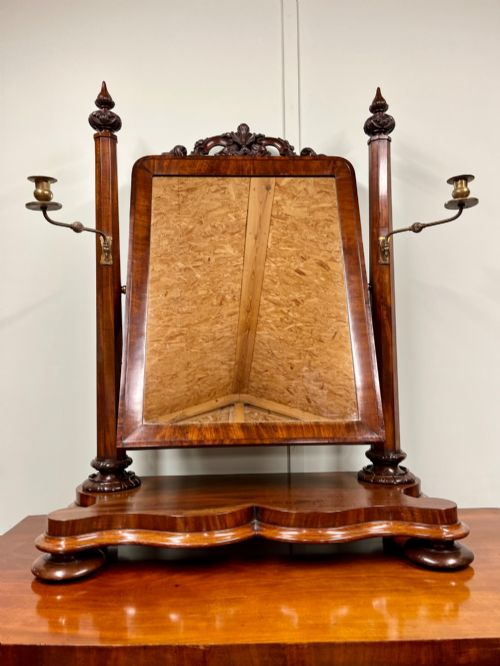
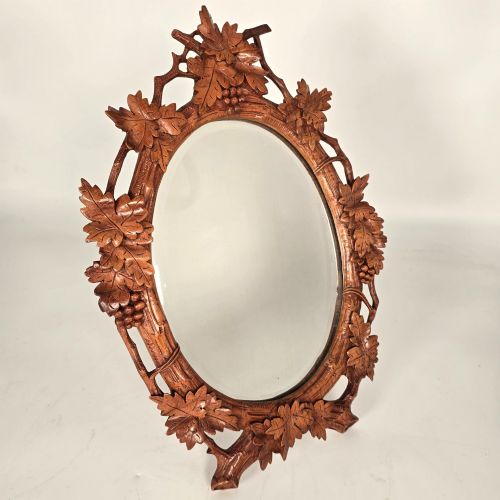
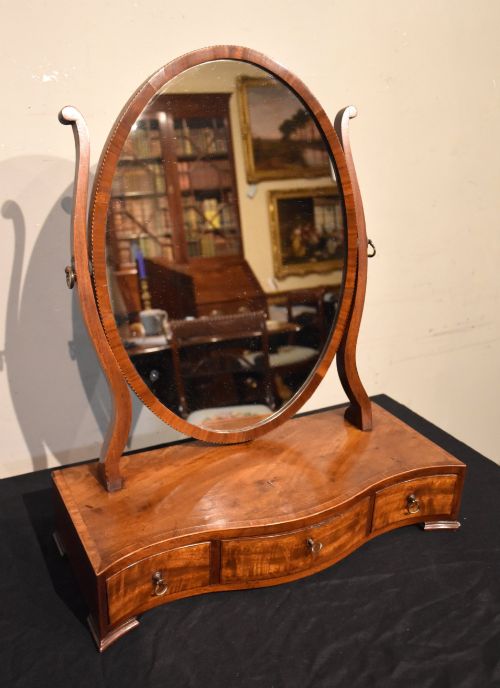
A carved wood table mirror is a portable looking glass designed to sit upon a chest of drawers, dressing table or surface, often featuring a pivoting plate housed within a carved wooden frame.
The examples found here span several distinct periods, including Georgian, Regency, Victorian, and later twentieth-century iterations, alongside styles such as French Rococo and Gothic revival.
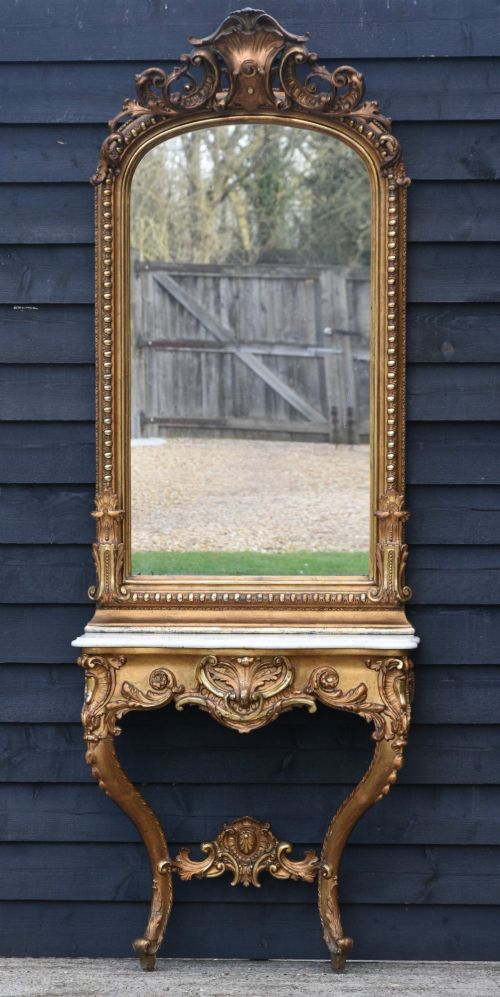
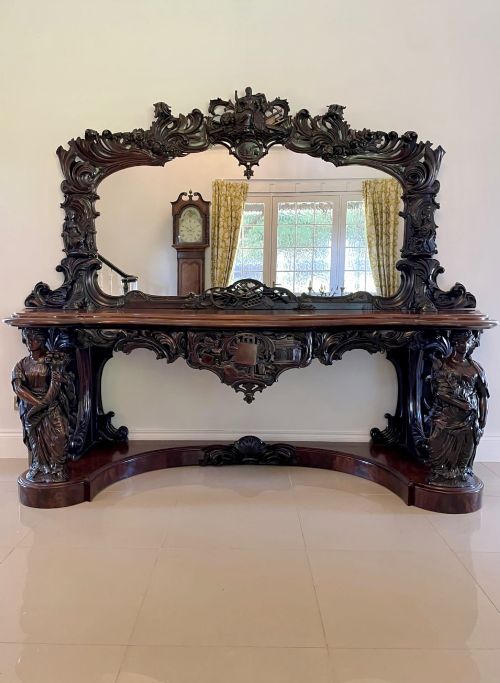
Most pieces encountered on this page are constructed from mahogany, walnut, or oak, while others utilise lime wood, giltwood, and gesso to achieve elaborate decorative relief.
How they were made
Cabinetmakers shaped dense hardwoods like mahogany, walnut, and oak using traditional hand-carving chisels, mortise-and-tenon joints, and turnings to build stable table supports and swing frames.
Giltwood and gesso pieces required layers of plaster applied to a carved wood base before gilding with metal leaf, a technique common in French and Italian workshops.
Mirror glass was manually set into rebates behind wooden bezels or secured with backboards, often accompanied by adjustable brass pivots that allowed the glass to tilt at various angles.
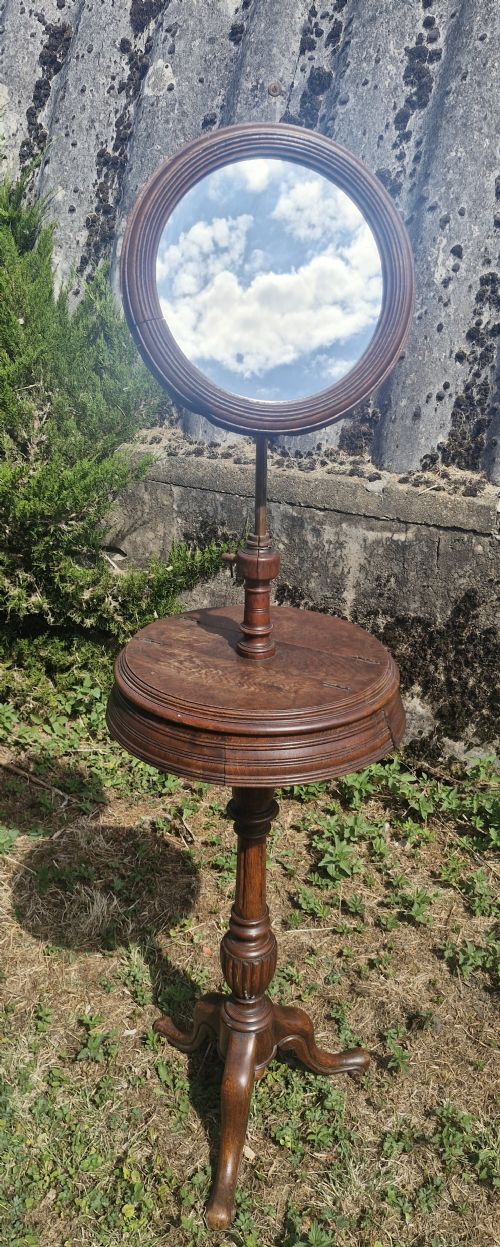
Some Victorian shaving stands include clever tripod bases and adjustable arms designed to catch the morning light just right.
What varies in quality
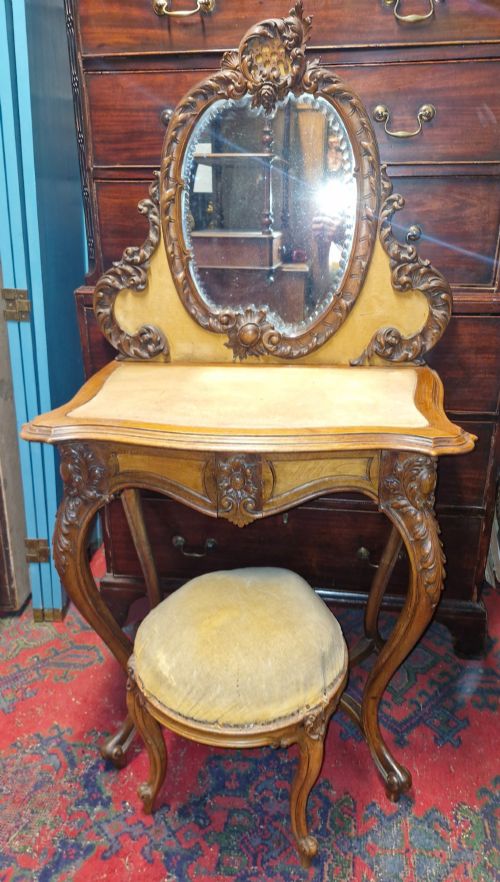
The crispness and depth of the hand-carved ornamentation separate exceptional pieces from simpler utilitarian items, with superior examples displaying undercut foliage, scrolls, or figural motifs.
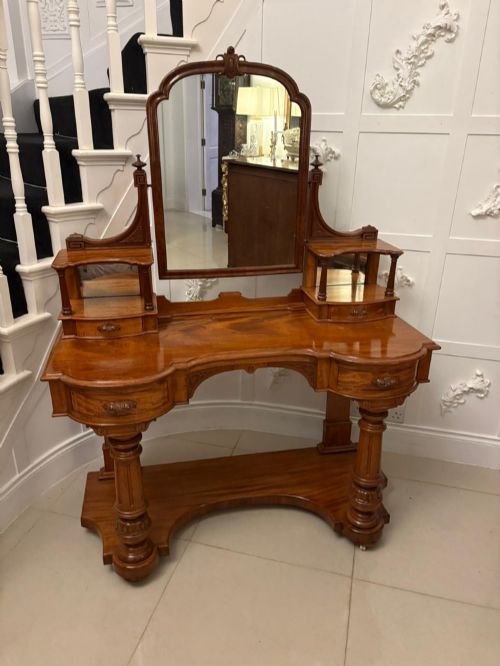
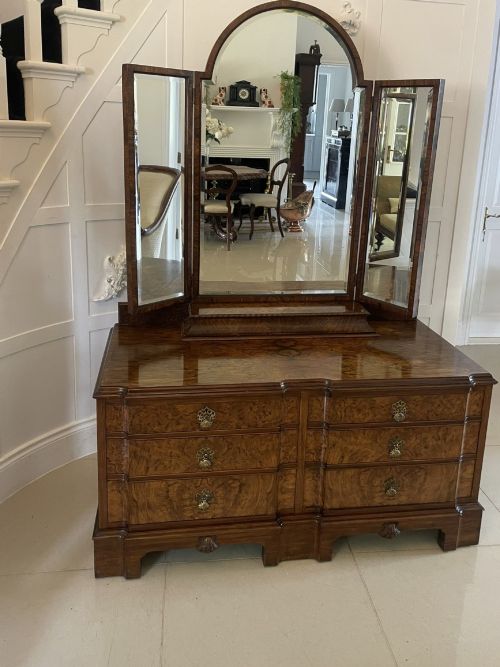
Timber selection plays a major role, as figured veneers such as burr walnut or Cuban mahogany demonstrate a deliberate choice of materials intended to catch the eye.
The integrity of the construction, from the stability of the support standards to the original brass hardware and silvered mirror glass, dictates the overall standard of the object.
P & MA Nicholson·Waring & Gillows
The Carved Wood Table Mirror Glossary
- Swing mirror
- A looking glass mounted on upright pivots or arms that allow the frame to tilt back and forth. This form became common on dressing tables and toilet chests from the Georgian period onward.
- Giltwood
- Timber that has been coated with gold leaf or metal leaf over a prepared gesso ground. It provides a bright reflective surface popular in Rococo and Baroque revival styles.
- Toilet mirror
- A smaller table-standing mirror, often incorporating small drawers in the base plinth. The term historically refers to the dressing activities of the morning rather than bathroom sanitation.
- Lime wood
- A pale, fine-grained hardwood favored by carvers for its lack of pronounced grain, allowing for intricate undercutting and high-relief sculpture.
- Console table
- A wall-mounted or freestanding table often paired with a matching mirror above it. Many examples appear in French and Italian decorative schemes.
Carved Wood Table Mirror: Frequently Asked Questions
Where should I place a table mirror?
These mirrors sit comfortably atop dressing chests, sideboards, or dedicated dressing tables where their height can be adjusted for daily use.
Because they require no permanent wall fixings, they offer the flexibility to move between rooms as interior arrangements change over time.
How do I date a carved wood table mirror?
Dating relies on identifying the underlying wood species, the style of the carving, and the construction methods used in the frame and base supports. Georgian and Regency pieces typically show simpler, linear mahogany frames, while Victorian and later examples often embrace heavier, ornate ornamentation.
Examining the mirror glass itself and the backboards can also offer clues regarding the period of manufacture, though plates were frequently replaced.
Are the mirror plates original?
Mirror glass frequently underwent replacement over the centuries due to foxing, silver degradation, or accidental breakage. Original plates often display minor distortions, bubbles, or light surface wear characteristic of older manufacturing methods.
Replacement glass does not necessarily diminish the decorative appeal of the carved frame, provided the overall integrity of the piece remains intact.
What is the difference between a toilet mirror and a dressing mirror?
Toilet mirrors traditionally featured a small box base containing miniature drawers for storing cosmetics or trinkets, sitting atop a chest or table. Dressing mirrors often refer to larger standalone or pivoting glass plates designed for full-length viewing or placement on larger dressing consoles.
Both types utilise pivoting frames to adjust the angle of reflection for the user.