




Carved Wood Plant Stool
These carved wood plant stool examples bring functional elevation and intricate detail to interiors, spanning Victorian periods, Chinese export workshops, and rustic country origins.
Carved Wood Plant Stool
A carved wood plant stool serves as an elevated support for botanical displays, decorative items, and occasional interior placement. These items appear across various historical periods, ranging from eighteenth-century primitive designs to nineteenth-century productions and early twentieth-century examples.
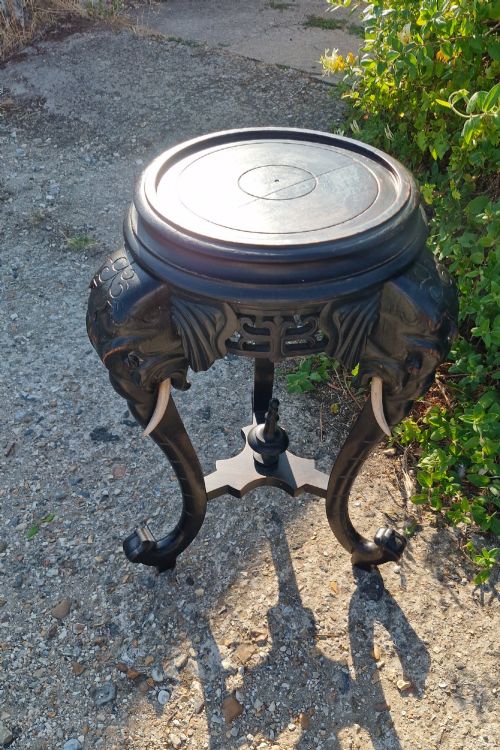
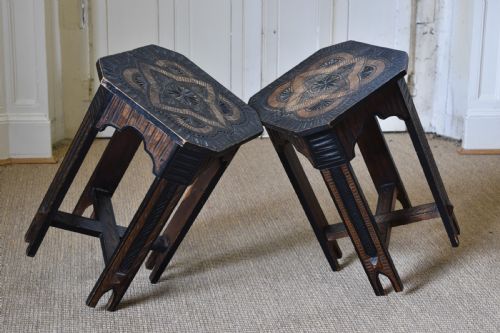
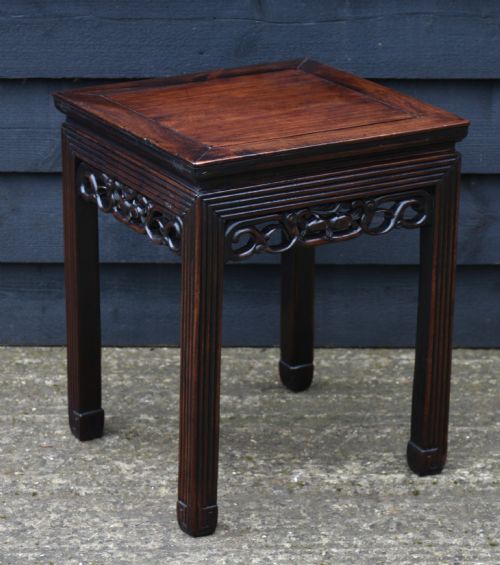
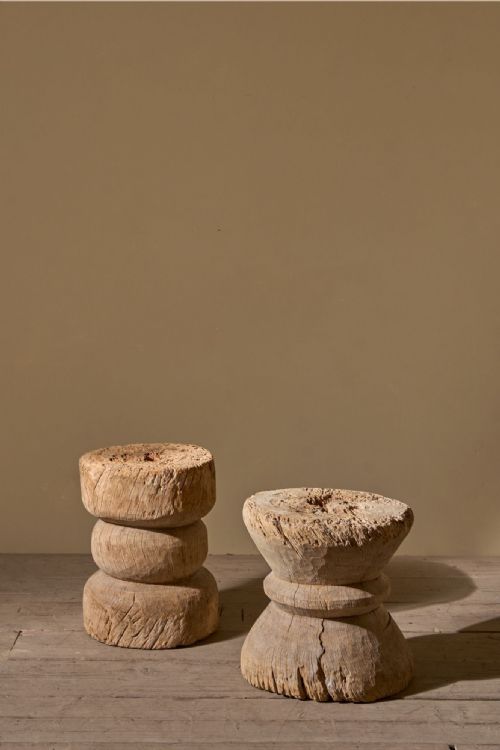
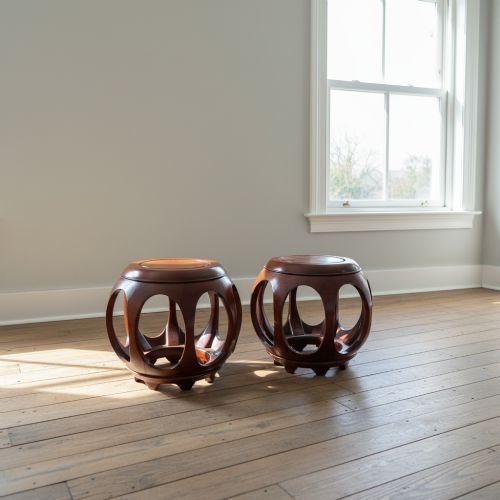
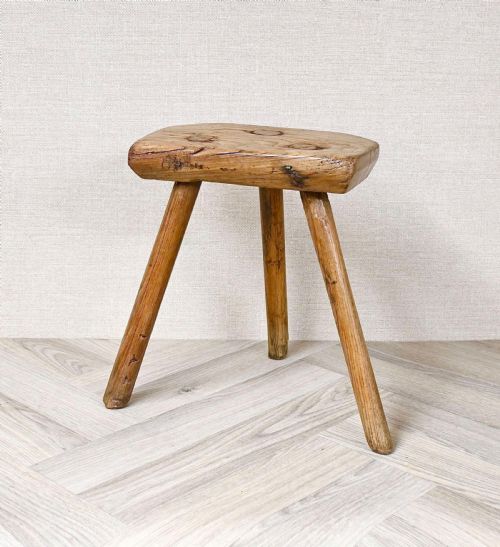
The selections on this page encompass diverse regional traditions and forms, including Chinese hardwood barrel stools, Anglo-Indian elephant tables, Arts and Crafts oak stools, and rustic country turned wood pieces. Buyers frequently encounter forms that double as side tables, jardiniere stands, and occasional tables.
Origin details stretch from Chinese Qing dynasty workshop creations and Burmese carving to British rustic country traditions and Scottish pokerwork designs. The physical height and surface top vary considerably, accommodating everything from small tabletop ornaments to substantial floor-standing planters.
Materials and construction methods
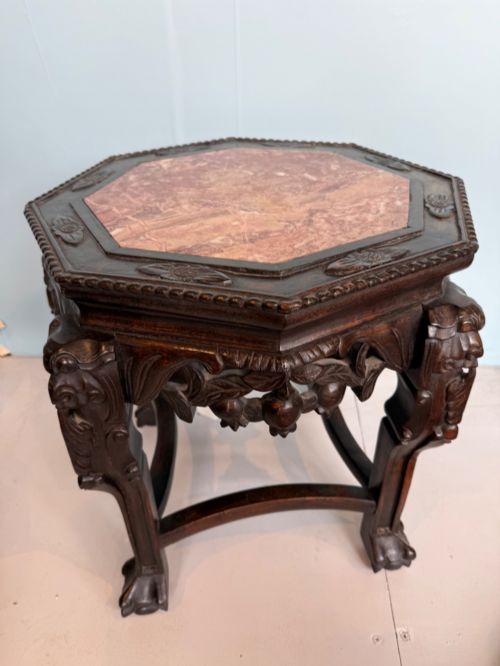
Constructors utilised dense timbers such as oak, walnut, yew, rosewood, hongmu, and rootwood, alongside alternative natural components including marble inset tops, bone inlay, and painted wooden tusks. These materials provided the structural integrity required to support heavy pots and decorative objects.
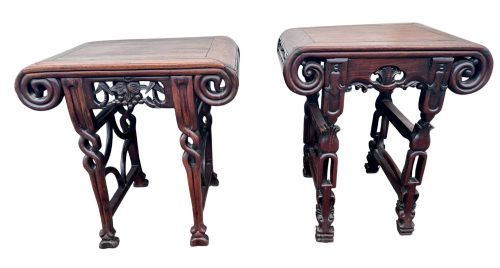
Joinery methods range from traditional joint stool construction to chip carving, pokerwork, and intricate oriental relief carving. Artisans combined turned wood supports, barrel forms, and stone inlays to create stable platforms for domestic horticulture.
Scottish makers embellished nineteenth-century timber stools with 'Touch me wha daur' inscriptions, daring anyone to test their pokerwork skill.
Assessing quality in carved wood plant stool items
Depth and crispness of the carving distinguish finer pieces from simpler utilitarian items, particularly in foliage motifs, figural animal supports, and geometric chip-carved surfaces. The precision of joinery and the selection of figured hardwoods like burr wood or dense hongmu elevate an object's status.
Integration of secondary materials such as inset marble tops, quartz panels, or intricate bone and pearl inlay demonstrates higher workshop ambition. The coherence between structural form and decorative surface ornamentation dictates the overall refinement of the piece.
Liberty and Co
The Carved Wood Plant Stool Glossary
- Hongmu
- A dense, dark traditional Chinese hardwood used for fine furniture and stands. It polishes to a deep natural lustre.
- Jardiniere
- An ornamental pot or stand designed to hold plants and flowers indoors. These often feature waterproof inserts or raised stone tops.
- Pokerwork
- A decorative technique using heated metal tools to burn designs into wood surfaces. This method creates contrasting dark linear patterns.
- Barrel Stool
- A seating or display form shaped like a traditional storage cask. They frequently incorporate openwork panels or solid timber staves.
- Apprentice Piece
- A small-scale model demonstrating a woodworker's skill for guild admission. These objects display the exact joinery techniques found on full-sized furniture.
Carved Wood Plant Stool: Frequently Asked Questions
What is a carved wood plant stool used for?
These objects support potted plants, floral displays, and small decorative ornaments within domestic interior spaces. Their elevated platforms protect flooring and furniture surfaces while creating vertical interest in a room.
Beyond botanical uses, smaller examples function as bedside tables, lamp stands, or occasional display surfaces for sculptures and ceramics.
How do I identify Chinese export stands?
Chinese export stands typically utilise dense hardwoods like hongmu or rosewood, frequently incorporating inset marble or quartz panels to their top surfaces. The carving style reflects traditional motifs such as prunus, dragons, or pierced geometric patterns.
Many examples date from the nineteenth century and demonstrate exceptional joinery without the use of modern metal fasteners.
What is an elephant table?
An elephant table is a figural occasional stand originating primarily from Anglo-Indian or Burmese workshops during the nineteenth century. The structural base is carved to represent the animal, often featuring tusks made from wood, bone, or painted materials.
These pieces combine functional surface tops with elaborate zoomorphic woodcarvings, reflecting Victorian taste for exotic colonial imports.
How should I care for antique wood stands?
Maintain antique wooden surfaces by keeping them away from direct heat sources and rapid humidity changes. Regular dusting with a soft, dry cloth preserves the original polish without chemical buildup.
Protect marble and stone tops from moisture rings by using appropriate saucers under damp plant pots.