


Carved Wood Magazine Rack
A carved wood magazine rack offers a sturdy, handsome home for periodicals, bringing period character and neat organisation to a room.
Carved Wood Magazine Rack
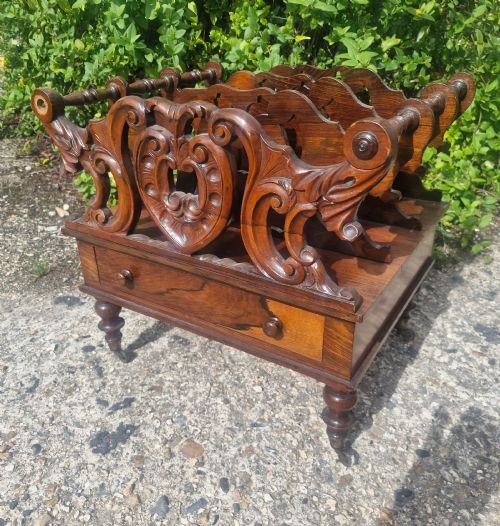
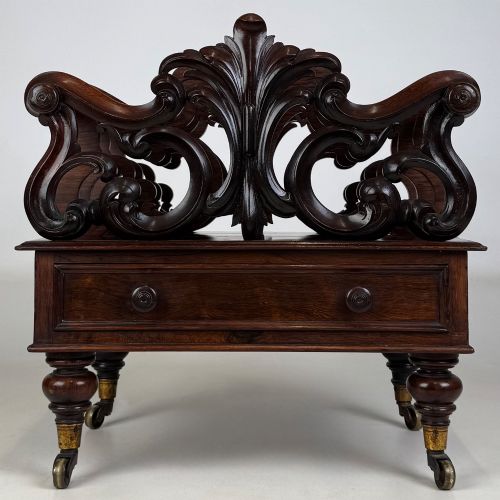
When you search for a carved wood magazine rack, you meet a variety of antique forms, with the Canterbury being the most frequent example. These pieces date from the 18th century through to the mid-20th century, spanning styles such as Victorian, Regency, William IV, and George IV.
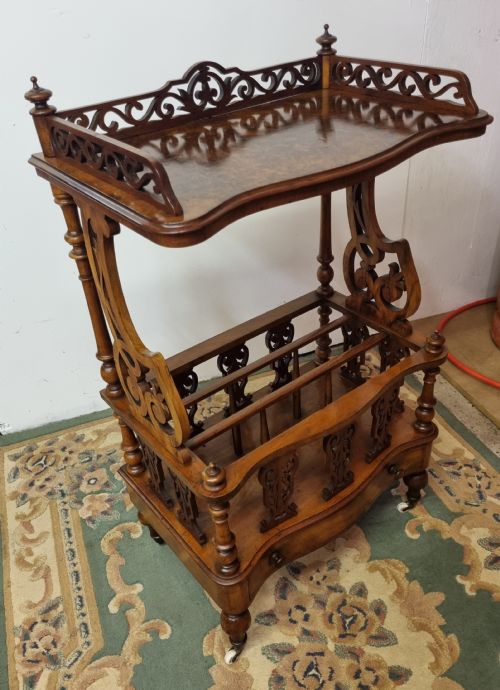
The objects serve multiple historical functions, doubling as newspaper holders, music stands, folio stands, and side tables. Most variations on this page present compartmentalised wooden frames designed to hold papers upright.
Makers and designers of the period utilised specific regional timbers and decorative motifs to distinguish their pieces. You will encounter English, French, and Burmese origins amongst the selection.
How they were made
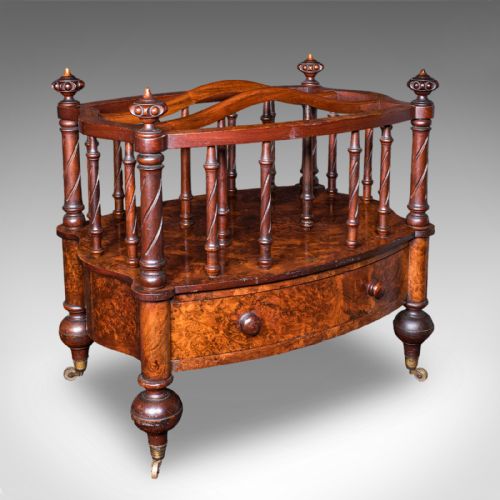
Cabinet makers constructed these stands primarily from dense hardwoods like rosewood, mahogany, walnut, and burr walnut, occasionally incorporating oak and teak. These timbers provided the structural strength needed for slender divisions and pierced scrollwork.
Craftsmen enriched the surfaces through carving, notably executing foliate designs, wreath-carvings, and carved Prince of Wales feathers. Some examples also feature brass details and mother-of-pearl inlay to accent the timber grain.
Several Victorian pieces doubled as music stands, proving that ancestors also struggled to keep their sheet music off the floor.
What varies in quality
The standard of a carved wood magazine rack rests upon the crispness of its carving and the choice of timber veneer. Pieces featuring figured burr walnut or rich rosewood with deep, hand-carved fretwork sit at the upper end of the range.
Structural complexity also dictates quality, with serpentine shapes, integrated work tops, and fine pierced scroll divisions requiring superior carpentry compared to plain standing racks.
J C Loudon
The Carved Wood Magazine Rack Glossary
- Folio stand
- An adjustable or fixed wooden stand designed for holding large books, prints, or portfolios. These pieces often feature hinged frames and sturdy trestle bases.
- Burr walnut
- A prized timber harvested from the burls of walnut trees, displaying swirling, highly decorative grain patterns. Cabinet makers utilised it for decorative veneer surfaces.
- Pierced scroll
- Openwork carving formed into decorative, curving scroll shapes. This technique lightened the visual weight of heavy wooden divisions.
Carved Wood Magazine Rack: Frequently Asked Questions
What is the difference between a Canterbury and a magazine rack?
A Canterbury is a traditional multi-compartment stand originating in the late 18th century, primarily designed for sheet music and newspapers.
Later magazine racks often adopt simpler standing frames or wall-mounted formats, though the terms overlap frequently in antique listings.
How do I date a wooden magazine rack?
Dating relies on identifying the prevailing style, timber choices, and construction methods associated with specific eras such as Regency or Victorian.
For instance, rosewood pieces with intricate pierced fretwork usually point to the early to mid-19th century.
Where were these stands placed in a period home?
These pieces sat beside seating areas in drawing rooms, studies, and parlours to keep daily reading material close at hand.
Variants with work tops also functioned as small side tables for writing or sewing paraphernalia.
What timbers should I look for?
The listings show a strong preference for dense, dark hardwoods like rosewood, mahogany, and walnut.
Burr walnut and satinwood appear on finer decorative examples, providing striking grain variation.