

Carved Wood Lamp Tables
Carved wood lamp tables are sturdy occasional surfaces offering distinct historical character for holding bedside illumination.
Carved Wood Lamp Tables
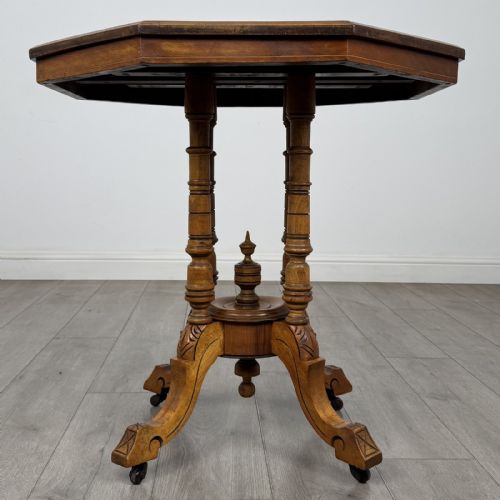
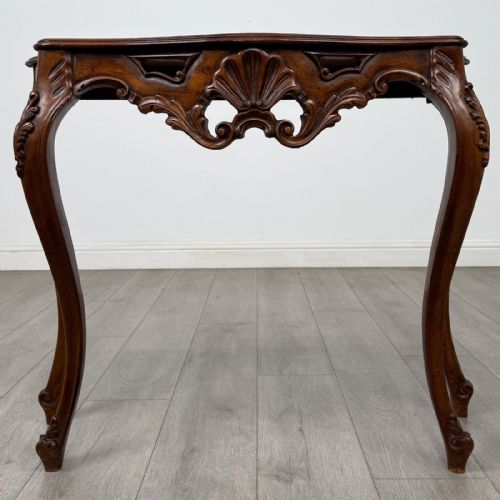
When searching for carved wood lamp tables, buyers encounter compact occasional furniture designed to hold illumination in a room. These pieces appear most frequently as side tables, occasional tables, and nests of tables spanning the Victorian and Edwardian periods.
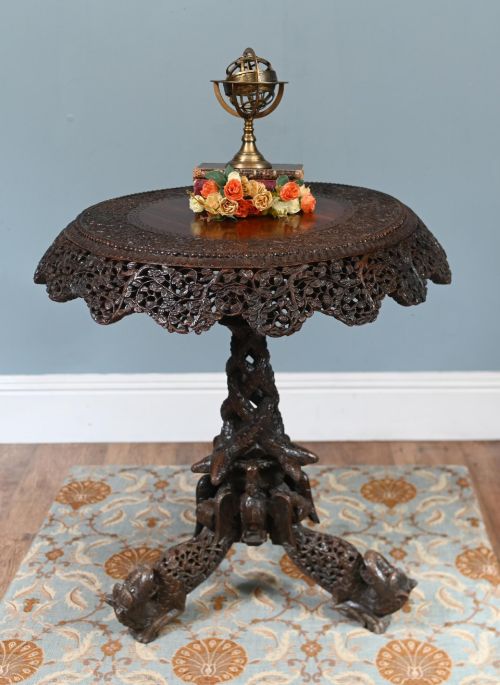
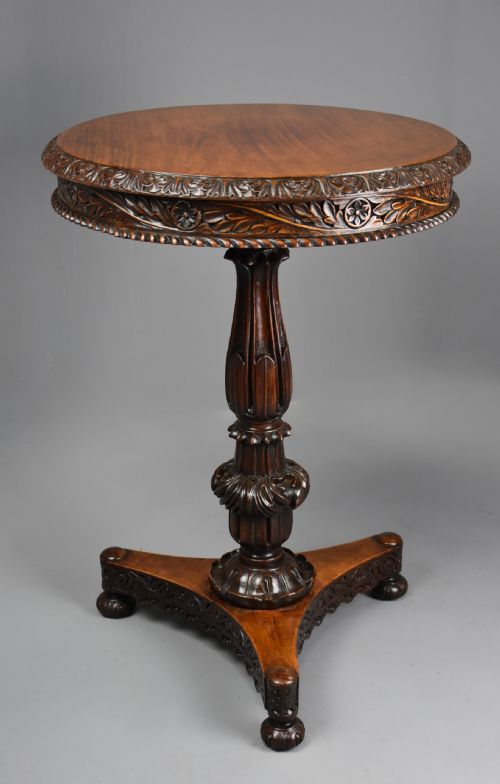
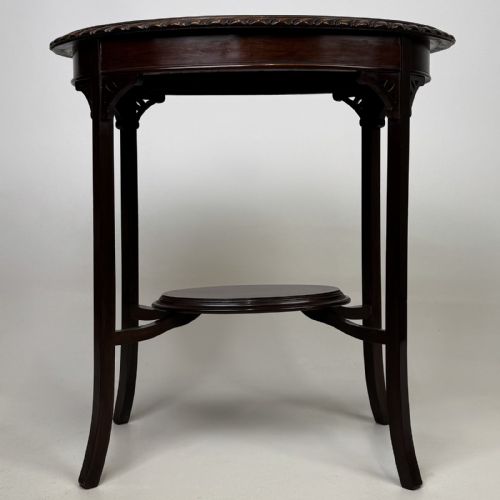
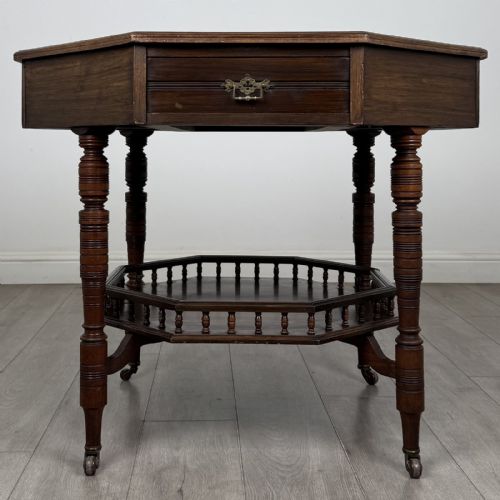
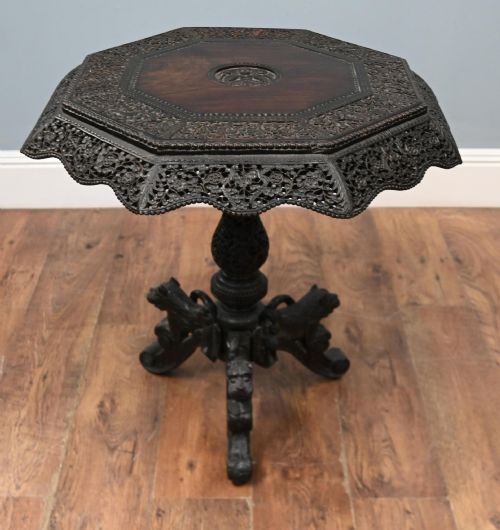
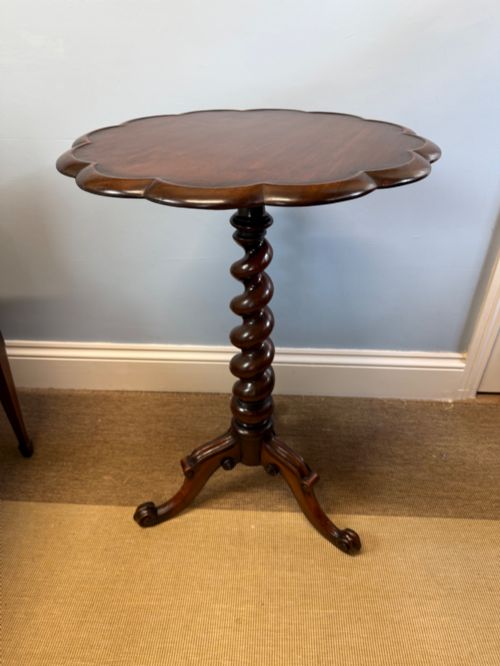
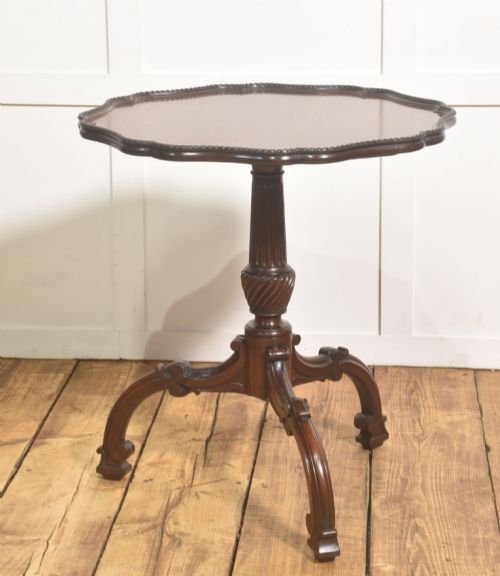
The selection ranges from circular mahogany tripod models to octagonal Burmese teak pieces and robust oak side tables. Regional styles such as Anglo-Indian and Jacobean Revival frequently emerge alongside standard British domestic designs from the nineteenth and early twentieth centuries.
Materials and construction methods
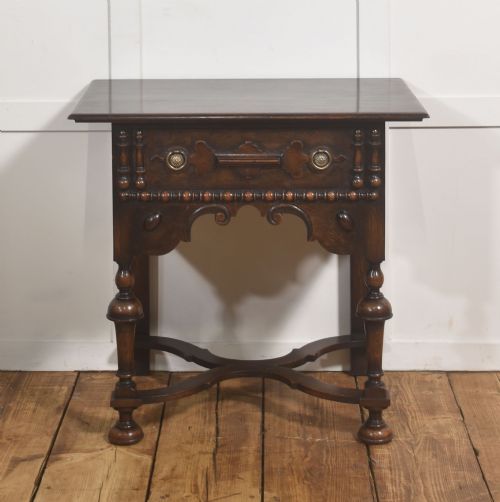
Cabinet makers utilised dense timbers including mahogany, walnut, oak, padouk, teak, and rosewood for structural stability. Surfaces often display hand carving, inlay work, or raised gadrooned edges.
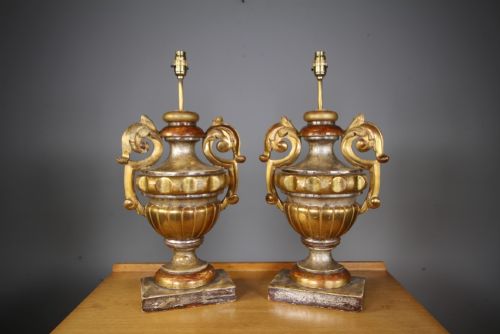
Support systems vary from barley twist and bobbin turned legs to cabriole supports and tripod bases. Secondary materials such as brass, marble, and gilt pine appear on specific forms.
Carved Wood Lamp Tables Retail Price Guide 2026
Typical asking prices for carved wood lamp tables among the pieces listed under this phrase on Sellingantiques today, from the lower quarter to the upper quarter. They describe what is for sale here now, not the wider market.
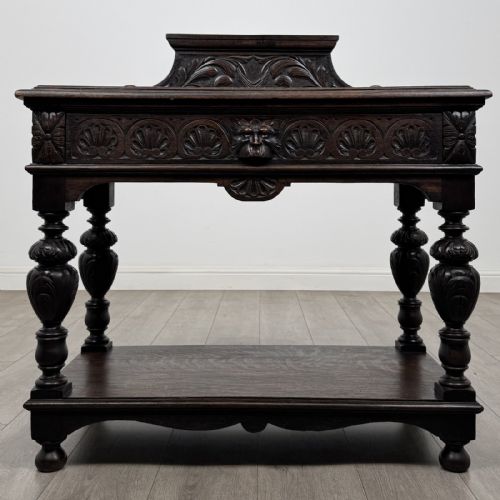
A grinning Green Man mask occasionally peers from beneath an oak table top to ward off bad spirits.
Evaluating the standard of execution
The distinction between tiers of quality lies in the crispness of the timber carving and the selection of figured veneers such as burr wood. Superior examples demonstrate tight joinery and thoughtful proportion across octagonal or circular tops.
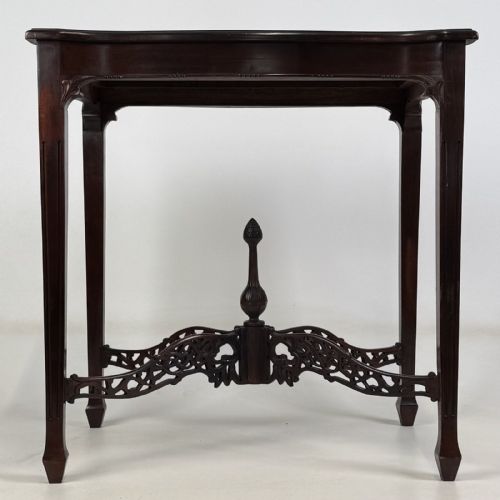
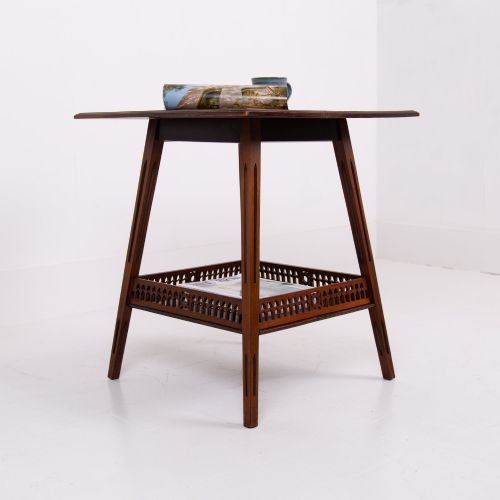
Secondary elements like inlaid details, galleried shelves, and carved stretchers indicate higher workshop input. Heavy or clumsy proportioning points toward utilitarian manufacture rather than fine cabinet work.
James Shoolbred·Trevor Page & Co
The Carved Wood Lamp Tables Glossary
- Tripod table
- A small freestanding table supported by a pillar above three legs. This form provides stable placement on uneven historic floorboards.
- Gadrooned edge
- A carved decorative border featuring convex curves or fluting. It signals attention to surface detail on table tops.
- Tilt top
- A hinged table top that folds vertically when not in use. This mechanism allowed furniture to sit against walls to save space in period interiors.
- Stretcher
- A horizontal support connecting table legs for added rigidity. Carved stretchers often carry the decorative focus of Edwardian designs.
- Nest of tables
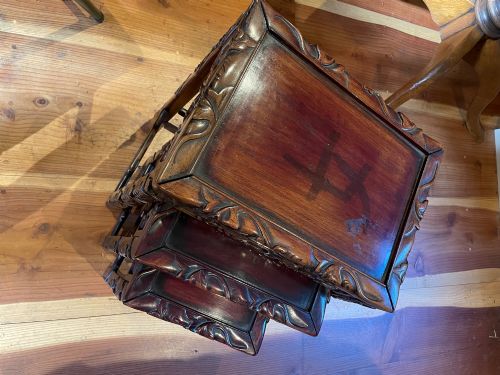
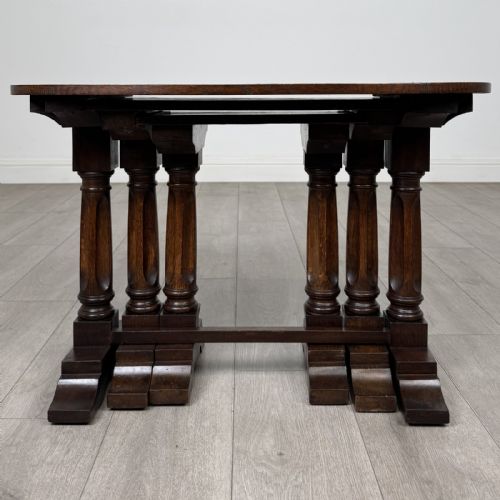
- A set of graduated tables sliding beneath one another. They offer flexible surface space that stores compactly.
Carved Wood Lamp Tables: Frequently Asked Questions
Where should I place a carved wood lamp table?
These compact surfaces sit well beside armchairs, sofas, or beds where illumination is required within arm's reach. Their diminutive scale also suits small hallways or empty corners needing a focal point.
Because many examples feature finished backs and detailed pedestals, they work effectively when viewed from multiple angles in an open room rather than pushed hard against a wall.
How do I date a wooden lamp table?
Dating relies on observing timber choices, leg turning styles, and overall proportions that align with periods like the Victorian era or Edwardian years. Details such as barley twist legs or inlaid walnut point directly to late nineteenth-century workshop preferences.
Secondary clues include construction marks beneath the top and the presence of regional carving motifs, such as Anglo-Indian or Burmese floral patterns on teak and padouk.
Can these tables support heavy modern lamps?
Solid hardwood construction in species like oak, mahogany, and walnut provides robust support for standard table lamps and reading lights. Tripod bases and sturdy pedestal columns distribute weight evenly across the floor.
It remains wise to check the footprint and leg spread of smaller occasional tables to ensure stability if the lamp sits at an extreme height or possesses a heavy ceramic base.
What is the difference between an occasional table and a lamp table?
Occasional tables describe general movable surfaces used briefly for drinks, books, or decorative objects as needed within a living space. Lamp tables serve the specific functional role of holding a light source at a convenient height.
In historical listings, the two terms often overlap because small Victorian and Edwardian side tables performed both duties interchangeably depending on the room arrangement.