




Asian Style Nesting Tables
These asian style nesting tables offer clever multi-tier surface space in rich woods, bringing traditional craftsmanship directly into a modern room.
Asian Style Nesting Tables
Asian style nesting tables arrive as sets of three or four graduated pieces designed to slide neatly beneath one another when floor space is at a premium. When searching this phrase, a buyer encounters sets originating from the nineteenth and early twentieth centuries, spanning Victorian interpretations to Chinese export pieces.
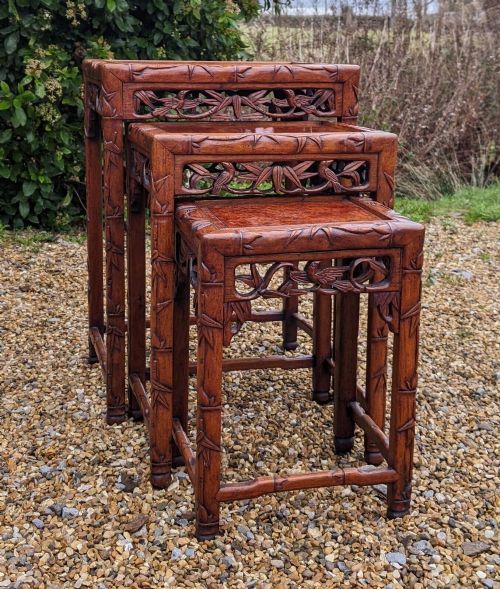
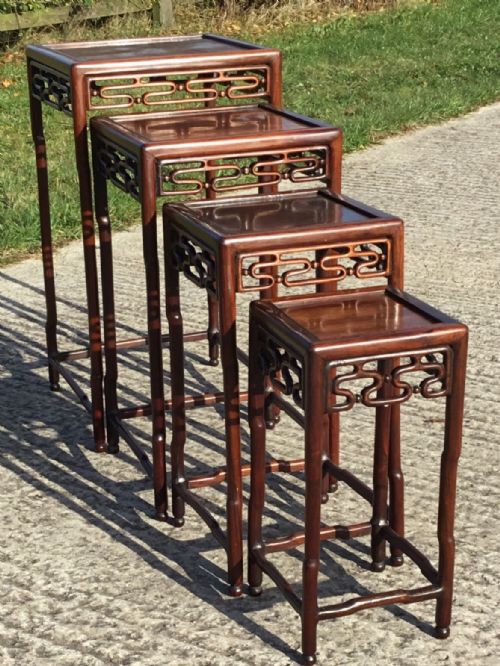
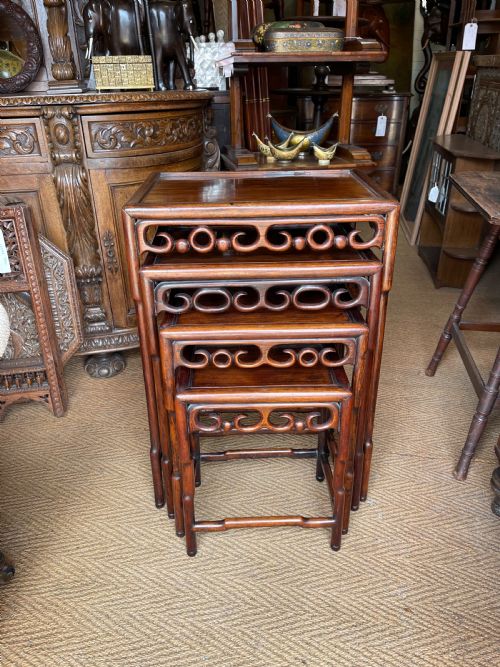
The most common formats found on this page consist of four tables constructed from dense timbers such as rosewood, hardwood, and hongmu. These sets serve primarily as occasional coffee or side tables that separate easily for entertaining before returning to a single compact footprint.
Origins vary between Chinese Qing Dynasty style workshops and British Anglo-Chinese or Chinoiserie interpretations made for export markets. The designs rely on traditional framing methods that allow the smaller tables to glide smoothly into the rebates of the largest frame.
Materials and Construction
Makers utilised dense Asian hardwoods including rosewood, huanghuali, and hongmu, chosen for their weight, durability, and capacity for crisp carving. These timbers often received a waxed finish or polish that highlights the natural grain and deep colour of the wood.
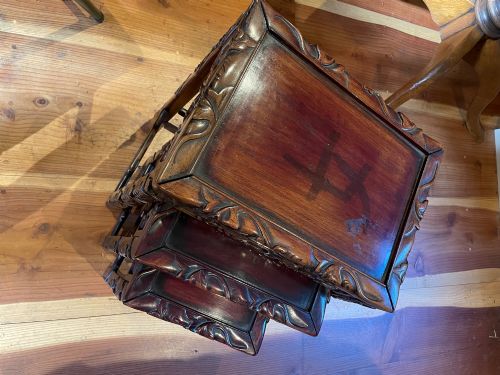
Joinery follows traditional mortise and tenon techniques, ensuring rigid frames without relying on metal fasteners. Selected examples incorporate burrwood panels or hand-carved relief detailing along the aprons and edges of the tabletops.
Asian Style Nesting Tables Retail Price Guide 2026
Typical asking prices for asian style nesting tables among the pieces listed under this phrase on Sellingantiques today, from the lower quarter to the upper quarter. They describe what is for sale here now, not the wider market.
Four tables nest inside one another like Russian dolls, proving that nineteenth-century joiners understood the art of domestic Russian nesting long before it reached the toy box.
Assessing Quality
The distinction between standard export production and finer workshop output rests in the density of the timber and the depth of the carving. Superior sets display crisp, hand-chiselled detailing on the aprons rather than shallow mechanical stamping.
Fit and proportion also determine the grade of a nest, where top-tier examples slide together with precise clearances without binding or rocking. The choice of material elevates a piece, with figured huanghuali or dense hongmu commanding greater appreciation than stained general hardwoods.
The Asian Style Nesting Tables Glossary
- Nesting Tables
- A set of graduated tables designed to fit one beneath another to save space. They allow multiple surfaces to occupy the floor area of a single small table.
- Hongmu
- A translation meaning red wood, applied in China to various dense and heavy tropical hardwoods. It holds a dark reddish hue and takes a high natural polish.
- Chinoiserie
- European decorative style reflecting Chinese artistic influences, popular in furniture and ceramics. It reinterprets Asian motifs through Western taste.
- Burrwood
- Timber cut from a tree growth where the grain has burl or swirl patterns. It provides highly decorative veneer panels for tabletops.
Asian Style Nesting Tables: Frequently Asked Questions
How were nesting tables used historically?
These sets served as versatile furniture that could be stored compactly against a wall and distributed around a room for tea or reading.
Servants moved the individual surfaces as needed for guests, keeping the floor clear when the room was not in use.
How do I care for antique hardwood tables?
Protect the polished surfaces by using coasters and avoiding direct sunlight, which can fade the natural timber tones over time.
Apply a light application of traditional wax occasionally to maintain the sheen and nourish the dry hardwood.
What is the difference between Chinese export and Chinoiserie?
Chinese export pieces were manufactured within Asian workshops specifically for overseas markets, utilising local timbers and traditional construction.
Chinoiserie refers to items made in Europe by craftsmen imitating Chinese aesthetic traditions using domestic woods and decorative paint.
How can I tell the period of these tables?
Dating relies on timber selection, joinery wear, and stylistic markers such as nineteenth-century Qing carvings versus early twentieth-century export production.
Examining the underside and the tightness of the joinery reveals the manufacturing era and workshop standards.