
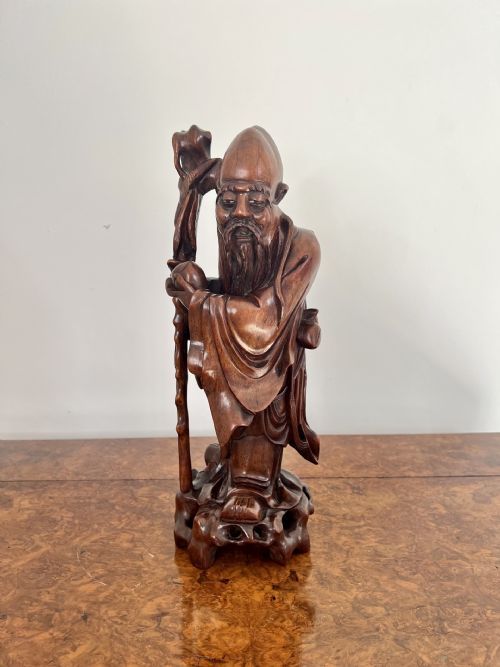


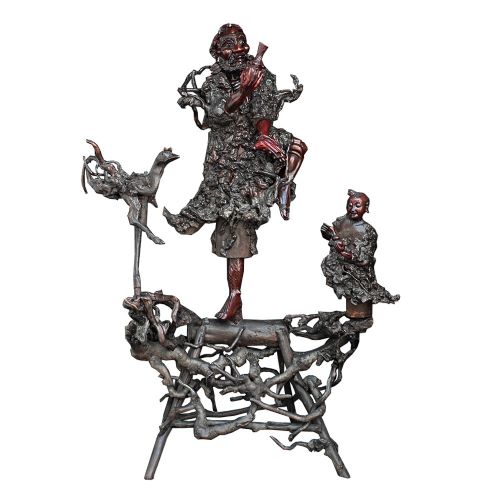
Carved Wood Immortals
Carved wood immortals bring the dynamic presence of sages, deities and holy figures into domestic spaces through centuries of traditional craftsmanship.
Carved Wood Immortals
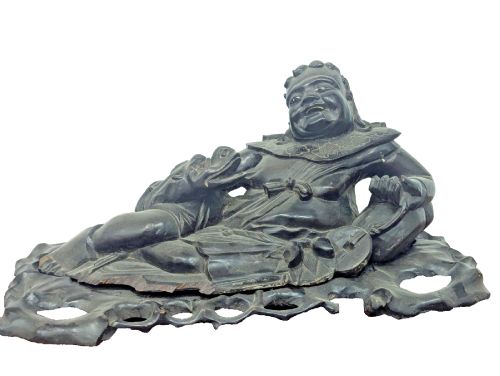
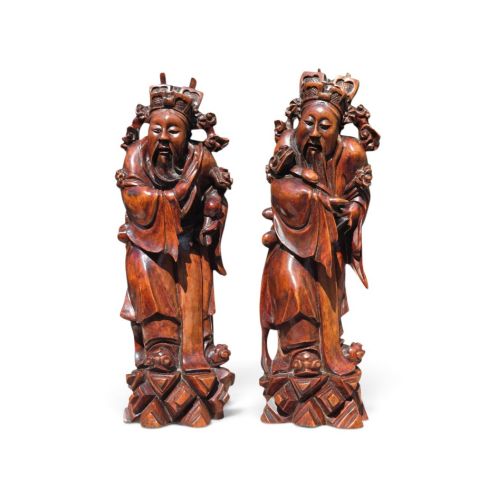
When looking for carved wood immortals, collectors encounter figures spanning from the eighteenth century into the early twentieth century, originating primarily from Chinese workshops alongside Japanese examples. These sculptures take the form of standalone figures, matched pairs, multi-figure groups, and functional conversions such as table lamps.
Objects range from miniature giltwood figure groups to monumental figures standing over forty centimetres tall. Alongside traditional sculptures, related decorative items incorporate brass elements and specialised display forms.
Materials and construction
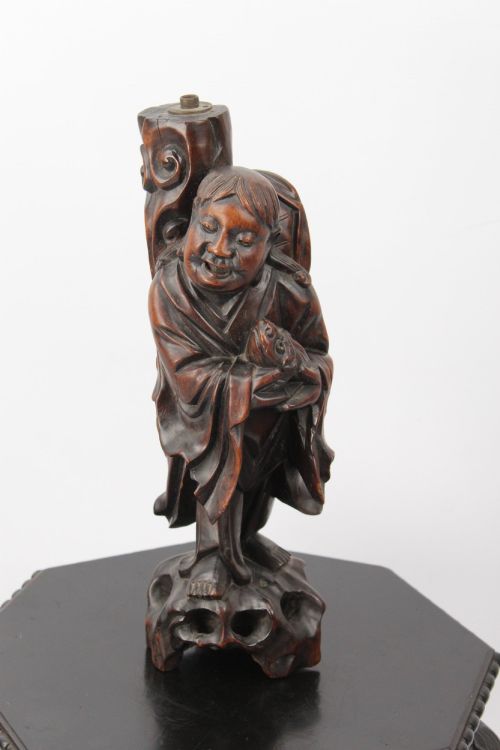
Carvers shaped these figures from dense hardwoods, burr root wood, and bamboo, exploiting the natural grain and organic irregularities of the timber to give movement to robes and postures. Root wood pieces preserve the gnarled twists of the root mass, turning biological forms directly into drapery and landscape elements.
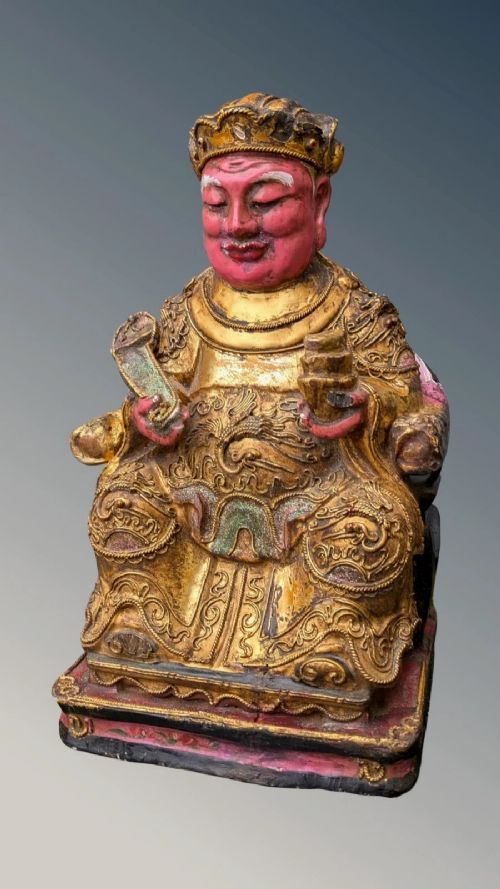
Surface treatments include applied gesso, gold leaf, and polychrome pigments, alongside traditional lacquer finishes that seal the wood and enrich the tone. Smaller details often receive careful incision work to define hair, facial expressions, and textual borders on garments.
Some figures carry companions or mythical creatures on their backs, turning stubborn knots of root wood into unexpected travelling partners.
Judging the carving
The distinction between ordinary and superior pieces rests on the confidence of the carving and the exploitation of the natural material. Master carvers worked with the grain and knot formations of root wood rather than fighting the medium, creating balanced compositions from eccentric raw timber.
Surface preservation defines the visual impact of older pieces. Original patination, intact polychrome pigment, and undisturbed gold leaf retain the intended character of the sculpture far better than later refinishing or heavy cleaning.
The Carved Wood Immortals Glossary
- Root wood
- Timber sourced from the root ball of a tree, prized for its twisting, knotty configurations that carvers shape into figures and naturalistic bases. This material demands specialised carving techniques to accommodate irregular grain structures.
- Hardwood
- Dense timber species traditionally selected for detailed figural sculpture because they hold crisp edges and take a fine polish. These woods provide the structural integrity required for large standing figures.
- Giltwood
- Wood that has been coated with a thin layer of gold leaf or gold dust over a preparation layer. It appears on miniature figure groups to create a reflective, ornate finish.
Carved Wood Immortals: Frequently Asked Questions
How do I care for a root wood carving?
Keep wooden sculptures away from direct heat sources and rapid humidity shifts to prevent splitting in the timber.
Dust gently with a dry, soft brush rather than using wet cloths or chemical polishes that can damage the patina.
What is the difference between root wood and standard hardwood?
Standard hardwood offers a uniform grain suitable for precise facial expressions and controlled drapery folds.
Root wood utilises the wild, eccentric growth rings of underground timber to dictate the organic posture of the figure.
Are converted lamp fittings original?
Many root wood carvings from the late nineteenth and early twentieth centuries were adapted into table lamps during their working lives or later.
Such conversions alter the original sculptural intent but represent a common historical usage for large figures.
How do I distinguish eighteenth-century pieces from later ones?
Earlier pieces typically display deeper tool marks, drier timber surfaces, and more restrained compositional elements.
Nineteenth and early twentieth-century examples often incorporate more theatrical poses and elaborate root formations.