

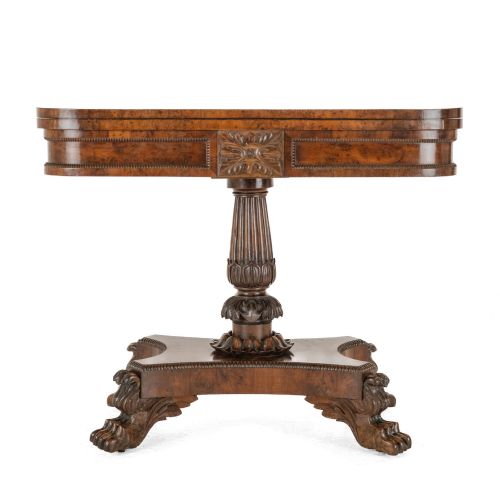
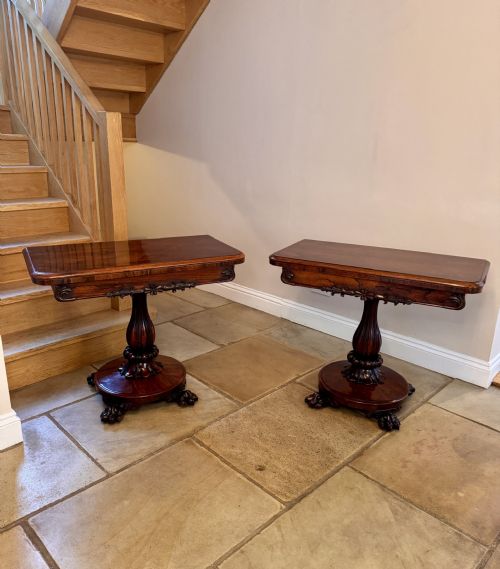
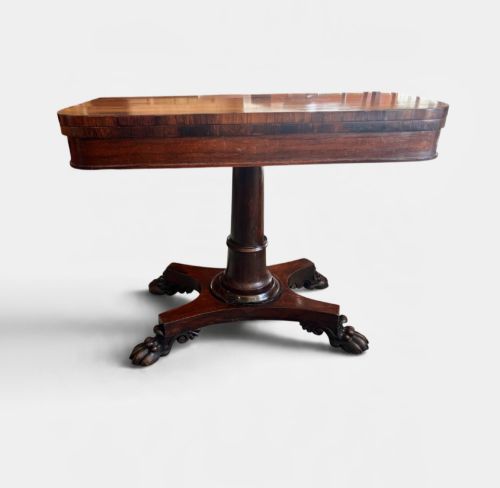
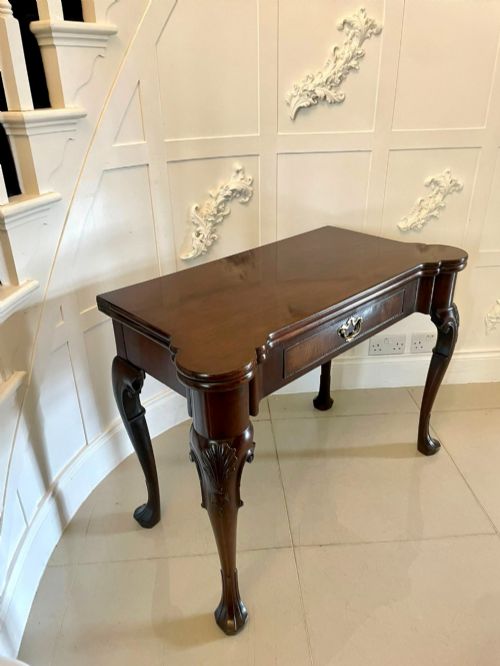
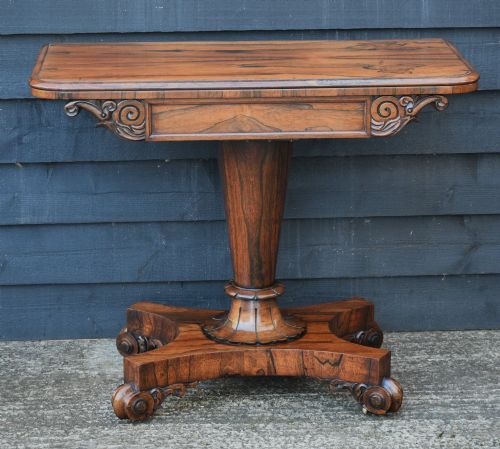
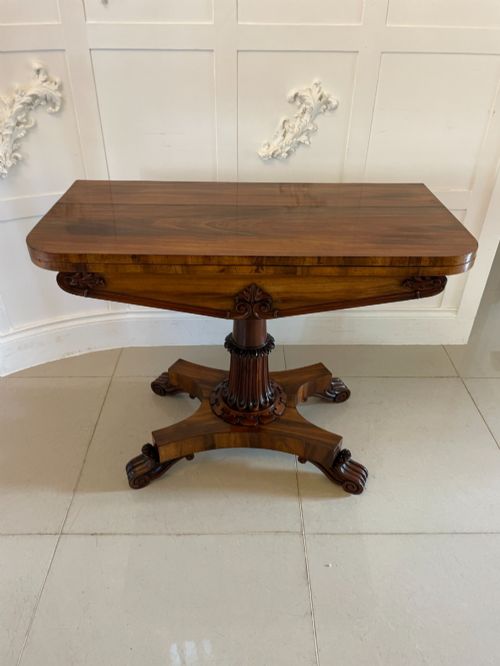
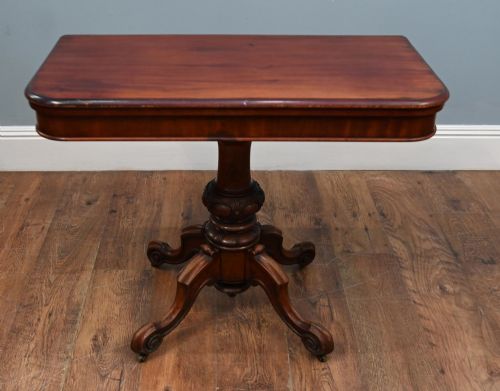
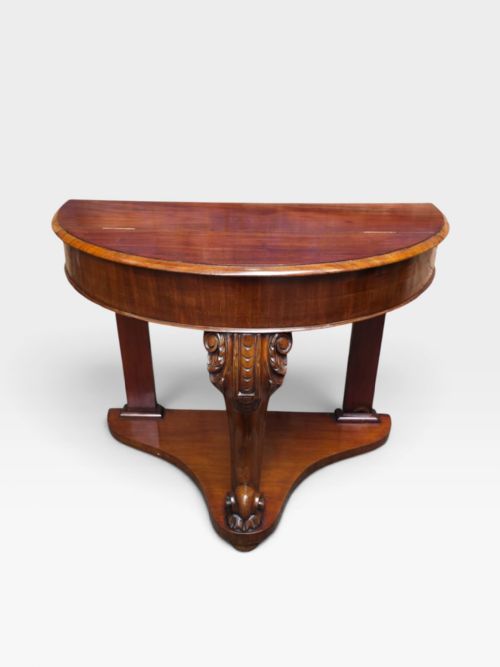
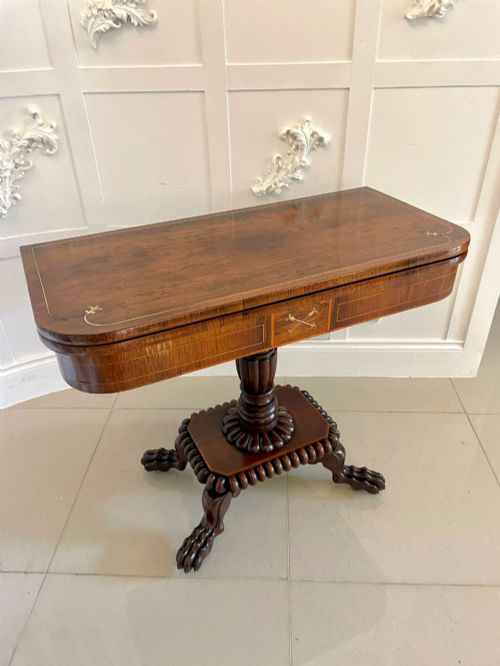
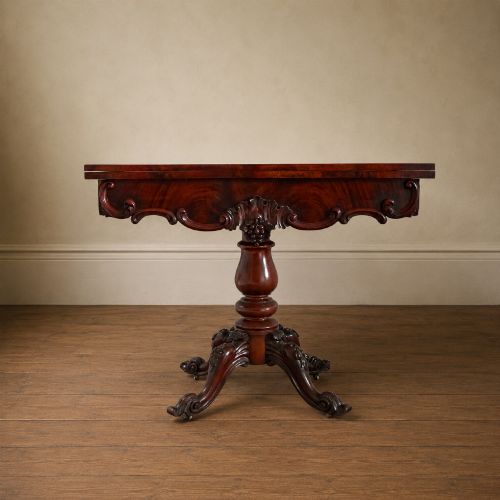
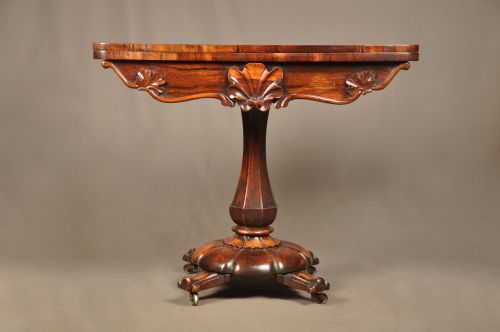
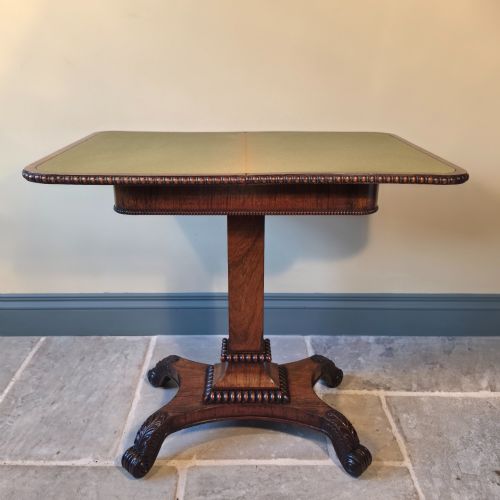
Carved Wood Fold Over Table
These carved wood fold over table examples combine practical surfaces with ingenious pivoting tops, offering versatile furniture built to last for generations.
Carved Wood Fold Over Table
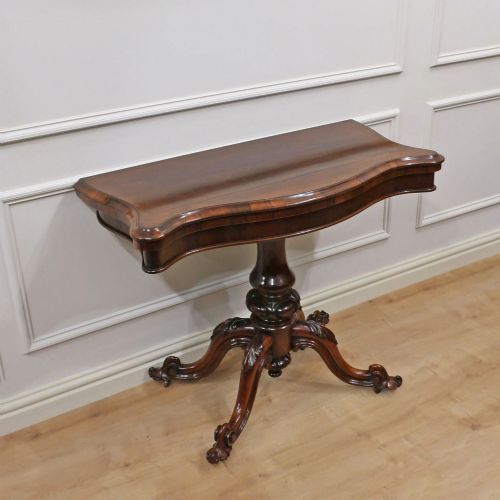
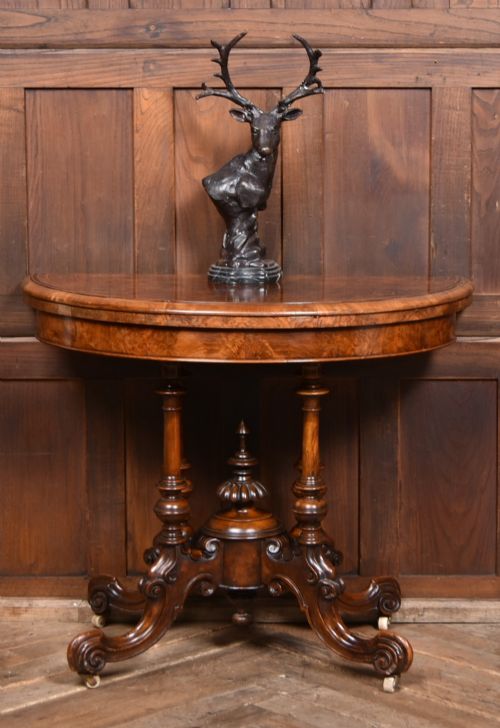
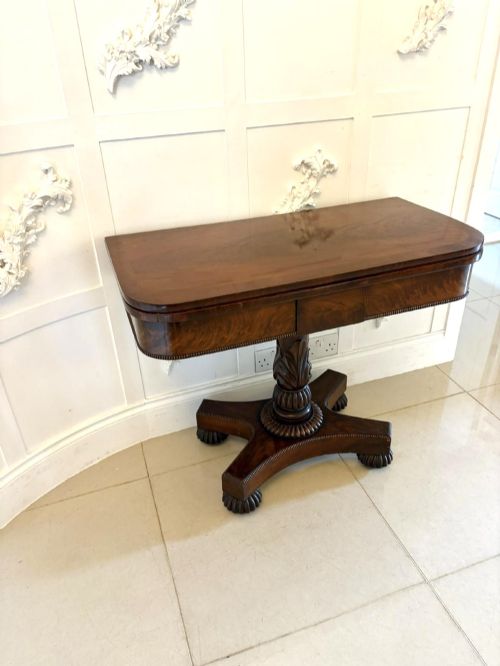
A carved wood fold over table serves multiple functions in a room, shifting easily from a compact console or side piece into a full games or tea table. The listings show forms spanning the eighteenth, nineteenth and early twentieth centuries, encompassing Georgian, Regency, William IV and Victorian periods.
Makers utilised these dual-purpose tables in drawing rooms and parlours where space management mattered. The physical evidence demonstrates that walnut, mahogany and rosewood dominate the surviving pieces.
Assessing craftsmanship
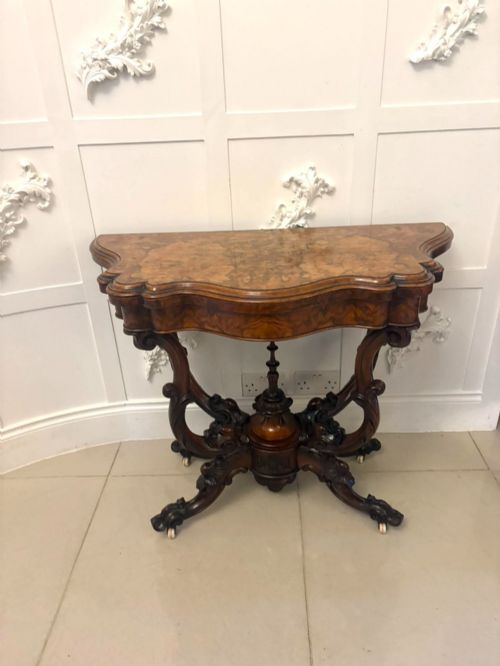
Quality shows in the selection of timber figures, such as highly figured mahogany and burr walnut, which elevate the visual impact of the top surface. Crisp hand-carving on bases, legs and borders distinguishes finer workshops from mass-produced items.
The precision of the folding mechanism and the stability of the turnover top determine mechanical excellence. Superior pieces maintain tight joints and smooth action in the hinges and pivot points after decades of use.
Carved Wood Fold Over Table Retail Price Guide 2026
Typical asking prices for carved wood fold over table among the pieces listed under this phrase on Sellingantiques today, from the lower quarter to the upper quarter. They describe what is for sale here now, not the wider market.
Listings feature woods including mahogany, rosewood, walnut, burr walnut, satinwood and brass, spanning the Georgian, Regency, William IV, Victorian and Edwardian periods.
Gillows·Edwards & Roberts
The Carved Wood Fold Over Table Glossary
- Demi-lune
- A half-moon shape used for table tops and consoles. This design allows the furniture to sit flat against a wall when closed.
- Turnover top
- A hinged wooden surface that folds out to double the usable area. It often reveals a baize-lined interior for card games.
- Baize
- A coarse woollen fabric traditionally used to line the playing surface of games tables. It provides a soft texture for handling cards.
- Figured mahogany
- Timber cut to highlight natural grain patterns like flame or curl. Cabinet makers chose these boards for prominent display surfaces.
- Console table
- A table designed to fix against a wall, sometimes supported by front legs or brackets. Many fold-over designs function as consoles when closed.
Carved Wood Fold Over Table: Frequently Asked Questions
What is a fold over table used for?
These tables function primarily as decorative console or side furniture when closed against a wall. Opening the hinged top reveals a larger surface traditionally utilised for tea drinking or card games.
The dual-action mechanism allows owners to adapt their living spaces quickly. This versatility made them essential items in nineteenth-century drawing rooms.
How do I identify a Victorian table?
Victorian examples often feature rich rosewood or burr walnut timbers with heavy carved bases. They frequently date from the mid to late nineteenth century and include turn-over tops for games.
Look for characteristics like serpentine fronts and elaborately carved pedestals. These details reflect the ornate tastes popular during the reign of Queen Victoria.
What wood types should I expect?
Mahogany, rosewood and walnut appear most frequently across these listings. Cabinet makers also utilised burr walnut and satinwood for decorative veneering.
Softer woods like pine often form the secondary framework underneath. Hardwood veneers provide the durable, figured exterior surfaces seen on top.
How do I care for the baize interior?
Keep the baize lining away from direct sunlight to prevent fading of the green or coloured fabric. Gentle brushing removes dust without damaging the wool fibres.
Avoid placing liquids or damp items on the exposed cloth during use. Proper maintenance preserves the original playing surface inside the folded leaf.