



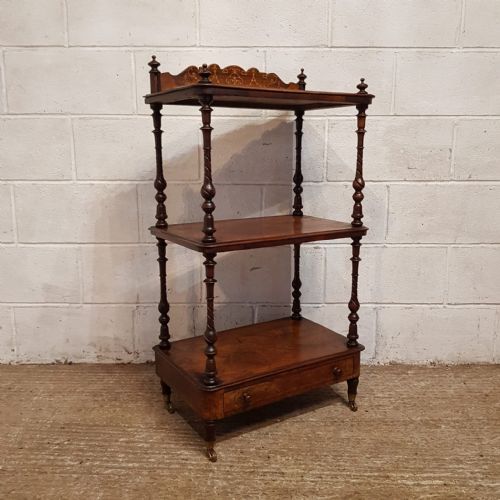
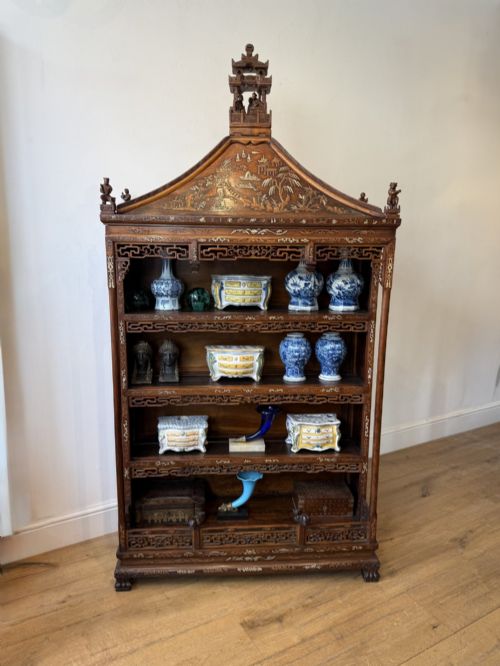
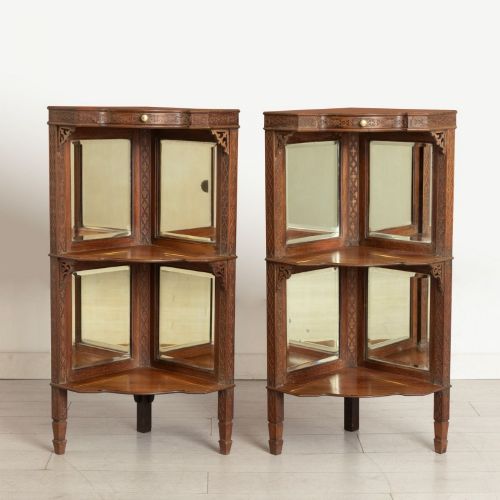
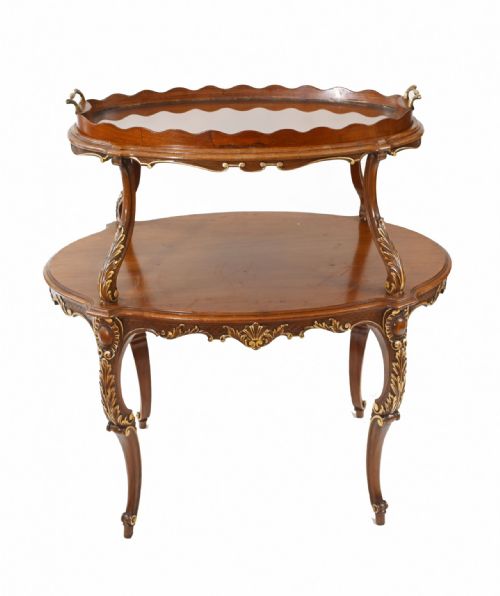

Carved Wood Etagere
A carved wood etagere is a tiered display piece designed to hold ornaments and books, bringing vertical elegance to a room.
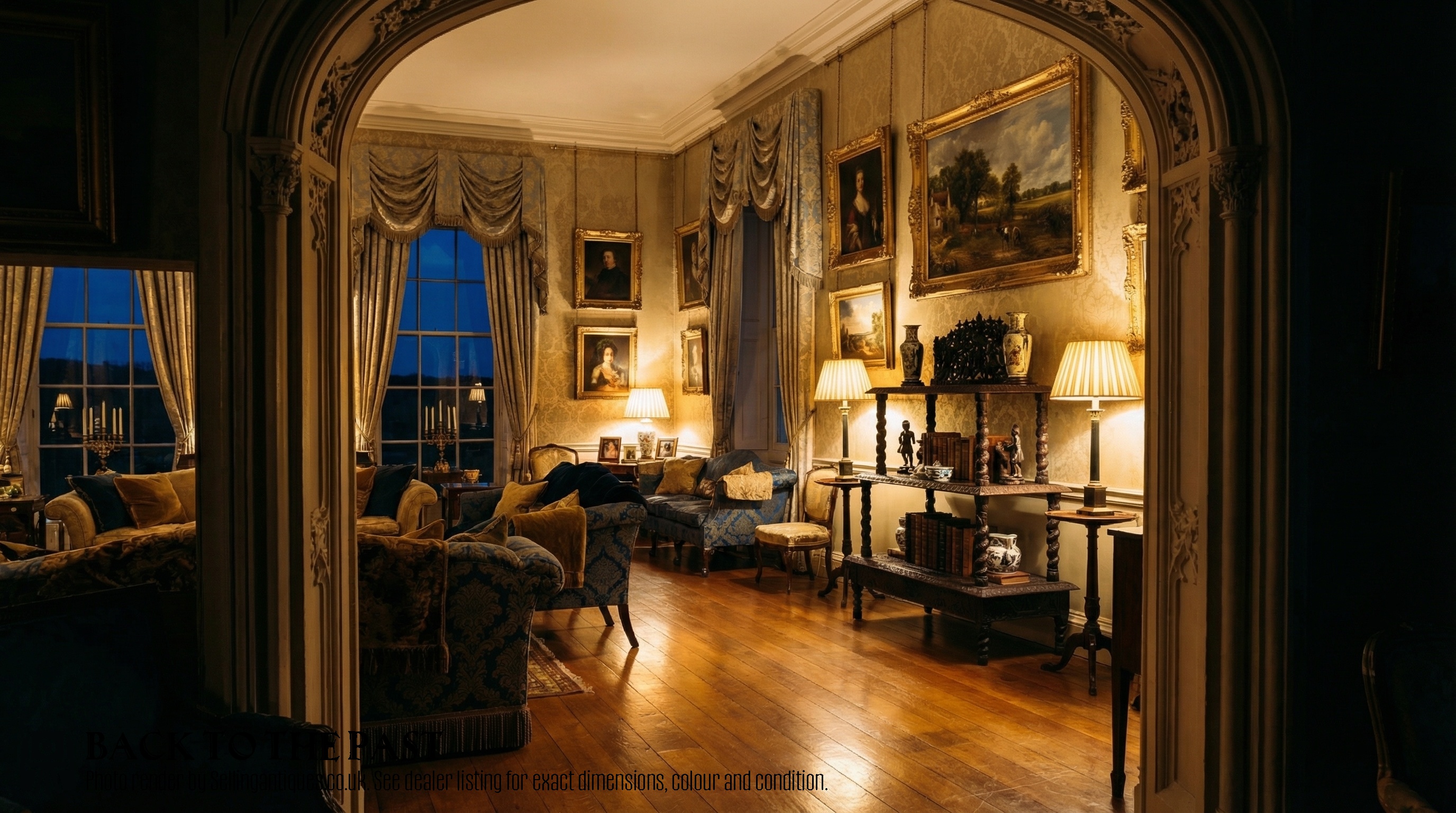
Carved Wood Etagere
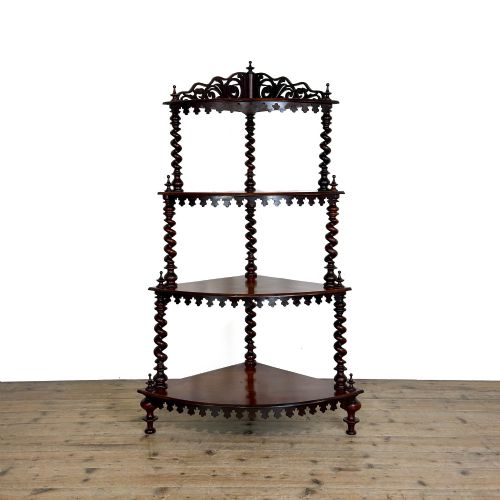
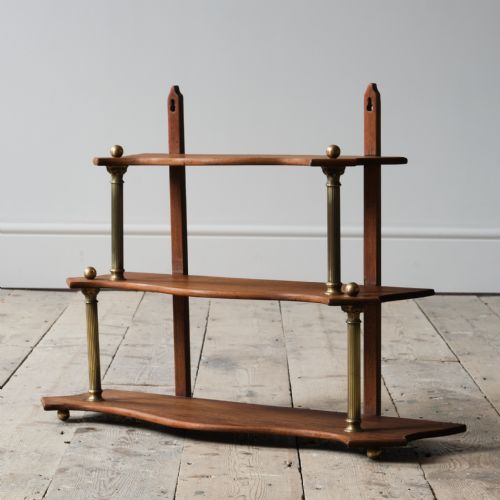
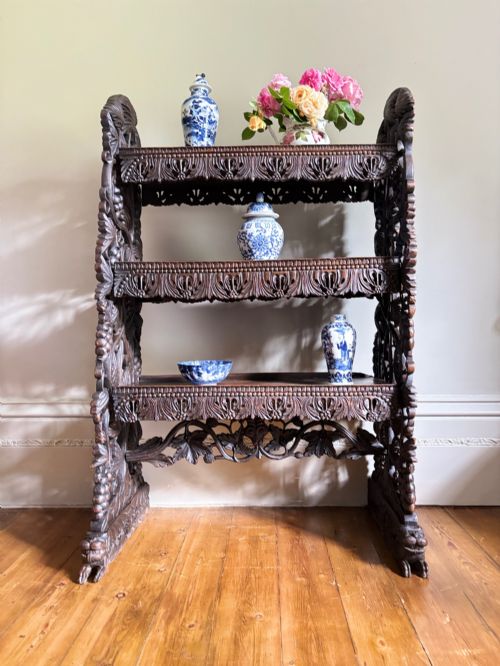
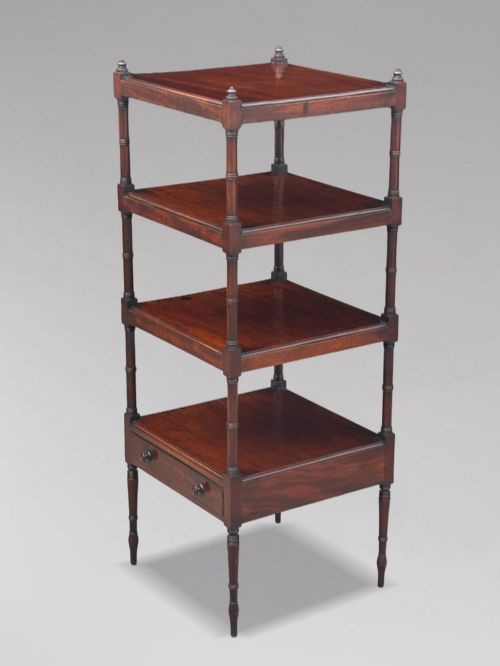
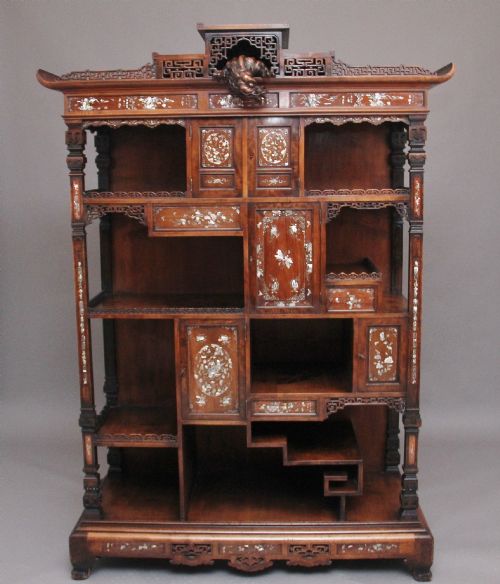
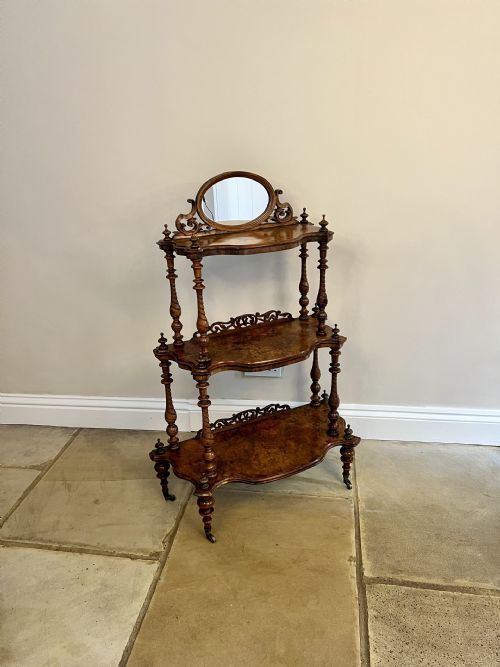
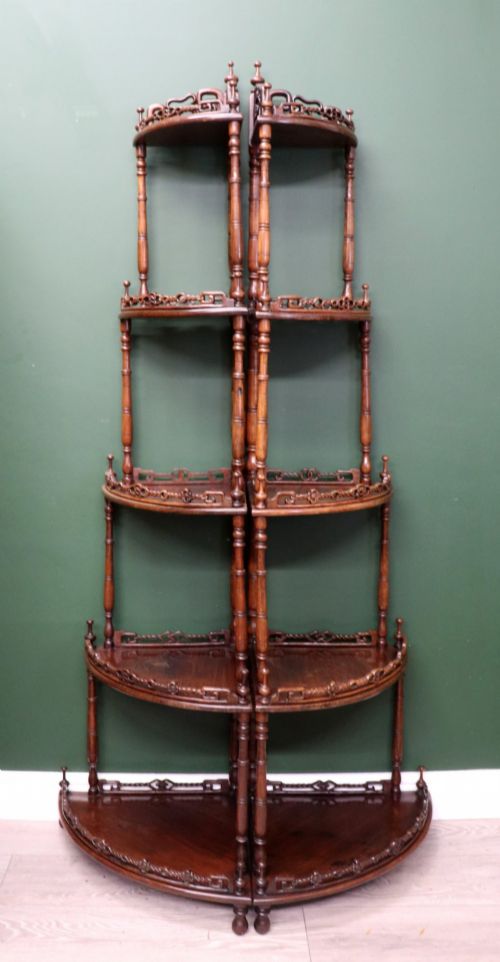
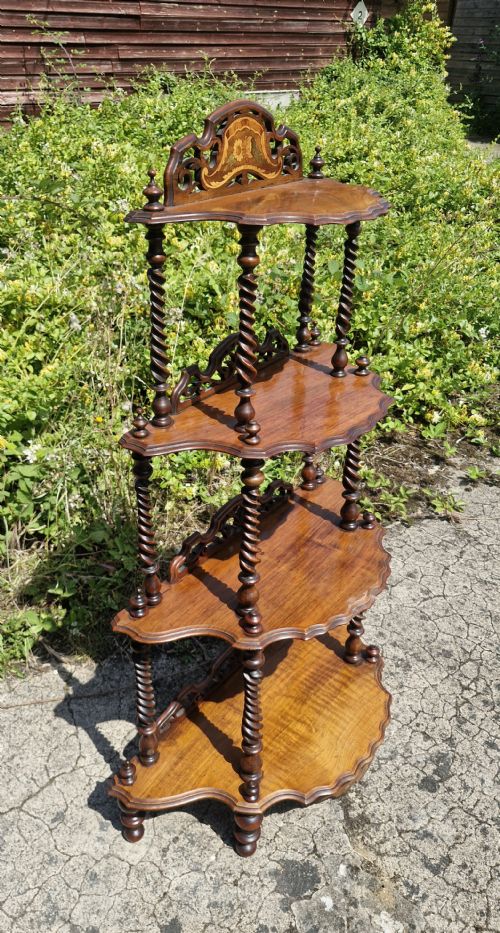
When you search for a carved wood etagere, you encounter tiered display furniture intended to hold small decorative objects, books, and ceramics. The forms range from freestanding multi-tiered whatnots and display cabinets to corner units and wall-hanging shelves.
The pieces appearing on this page belong primarily to the nineteenth century, including Victorian, Regency, and George III periods. Alongside traditional British furniture, the selection encompasses Anglo-Indian padauk items, French styles, and Japanese-influenced shodana cabinets.
Materials and construction methods
Cabinetmakers utilised rich timber species including mahogany, rosewood, walnut, and burr walnut, frequently pairing them with brass hardware and mirrored glass backs. Hardwoods such as oak, cherry, and padauk provide the structural integrity required for multi-tiered weight distribution.
Joinery techniques involve precision carving, turning, and freestanding architectural framing designed to support multiple display platforms. Wall-hanging variations incorporate secure bracket fixings, whilst freestanding tiered units rely on sturdy corner turned columns and pillars.
Distinguishing quality factors
The standard of carving and timber selection determines the hierarchy among these pieces, separating standard utility furniture from exhibition pieces. Highly figured burr walnut veneers, dense rosewood grains, and deep, crisp manual carving elevate the visual depth of a tier.
Construction fidelity reveals itself in the rigidity of the upright supports and the integration of the shelves. Superior examples maintain balanced proportions across multiple tiers without structural sagging, often incorporating glazed doors, mirrored panels, or maker signatures.
Gabriel Viardot·Edwards & Roberts·Gabriel-Frederic Viardot
The Carved Wood Etagere Glossary
- Etagere
- A piece of furniture consisting of a set of open shelves for displaying small objects or ornaments. It typically stands on the floor with multiple tiers.
- Whatnot
- A multi-tiered piece of furniture used for storing or displaying ornaments, books, and bric-a-brac. This term appears frequently interchangeably with etagere in nineteenth-century British records.
- Shodana
- A traditional Japanese multi-tiered display cabinet featuring asymmetrical shelving. These pieces often arrived in European collections influenced by the nineteenth-century taste for Japonisme.
- Burr walnut
- A wood veneer derived from the growth deformity of a walnut tree, producing intricate swirling patterns. It is prized by cabinetmakers for decorative surface panels on high-quality Victorian furniture.
- Padauk
- A dense tropical hardwood displaying rich reddish-brown tones, utilised extensively in Anglo-Indian furniture production. It accepts fine, detailed carving without splintering.
Carved Wood Etagere: Frequently Asked Questions
What is an etagere used for?
An etagere functions primarily as an open shelving unit designed to display ceramics, decorative ornaments, and small books. The tiered layout allows homeowners to showcase collections vertically without taking up excessive floor space.
Historically, these pieces occupied principal reception rooms and drawing rooms to exhibit household refinement and collected curiosities. Today, they serve a similar decorative purpose in living spaces and hallways.
How do I tell an etagere from a whatnot?
In nineteenth-century British furniture terminology, the terms etagere and whatnot often overlap to describe multi-tiered shelving units. Generally, etagere points toward French influences and lighter display formats, whereas whatnot often refers to sturdy British corner or freestanding tiers.
Both forms share the common characteristic of stacked open shelves supported by turned columns or upright posts. Examining the timber and decorative carving style usually reveals the regional origin rather than the functional name.
Can these shelves support heavy books?
Most etageres and wall-hanging shelves are constructed to display decorative objects, porcelain, and light volumes rather than heavy reference libraries. Freestanding whatnots and open bookcases from the Regency and Victorian periods feature varying structural capacities depending on timber density.
Delicate tiers with turned spindle supports suit lighter ornaments, while robust mahogany or oak framework accommodates heavier book collections. Assessing the thickness of the shelves and the joinery at the uprights provides a guide to capacity.
Where should I place a corner whatnot?
A corner whatnot fits into unused room junctions to draw the eye upward and maximise vertical display space. These units make efficient use of compact rooms by utilising awkward angles for decorative storage.
Pairing a corner display cabinet with matching seating or placing it alongside complementary side tables creates a balanced interior layout. Wall-hanging versions require secure fixing into solid wall studs to support the weight of the timber.