


Carved Wood Entry Chairs
Carved wood entry chairs are substantial seating pieces designed for hallways and reception spaces, bringing sculptural presence and historical character to a home.
Carved Wood Entry Chairs
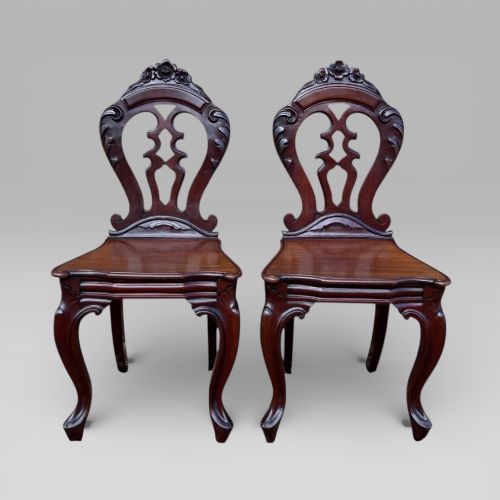
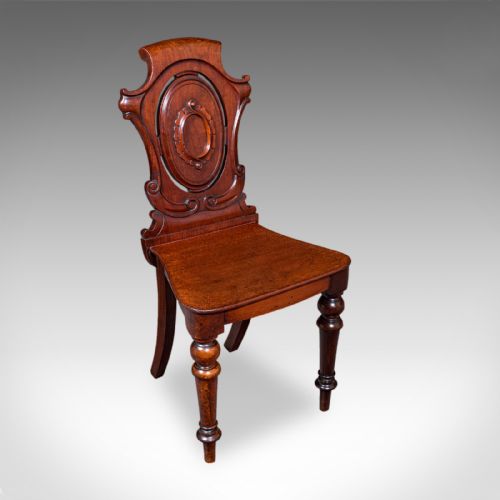
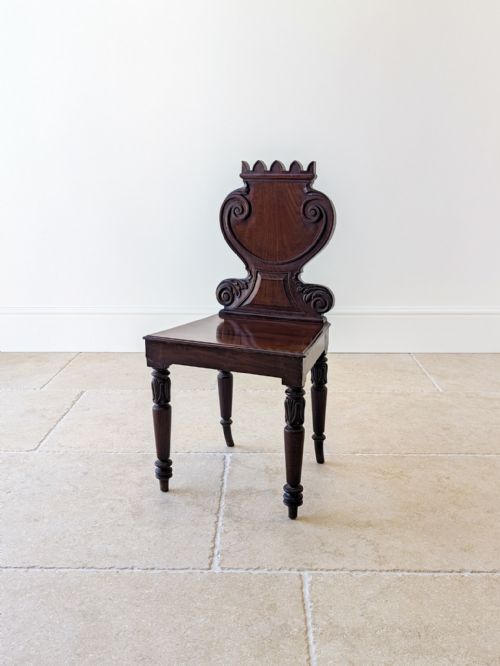
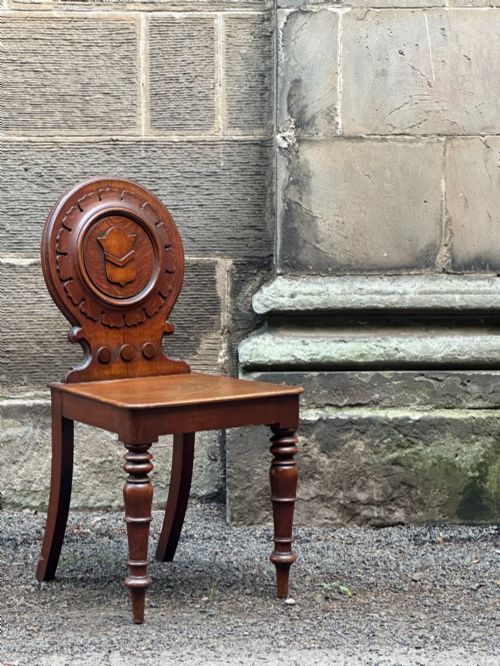
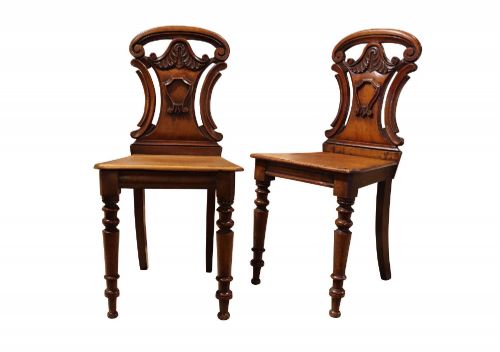
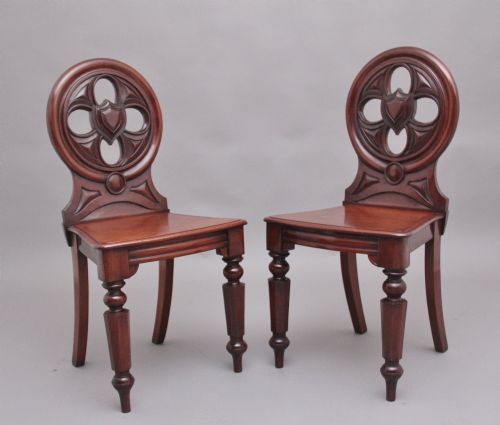
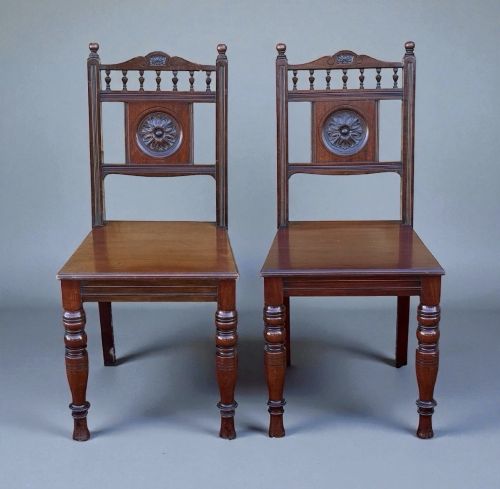
When you search for carved wood entry chairs, you encounter firm forms primarily recorded as hall chairs and hall benches. These pieces originate across Georgian, Regency, and Victorian periods, with nineteenth-century examples appearing most frequently.
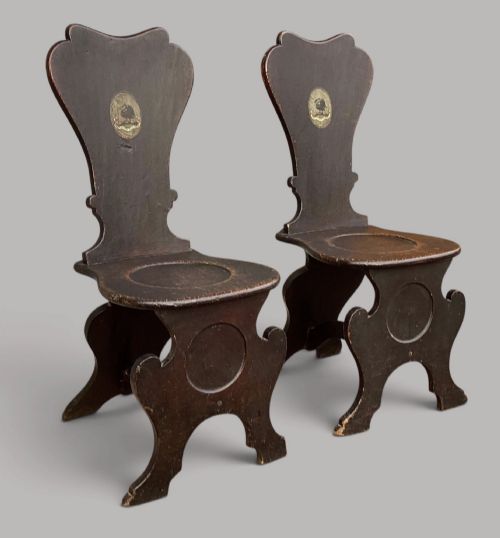
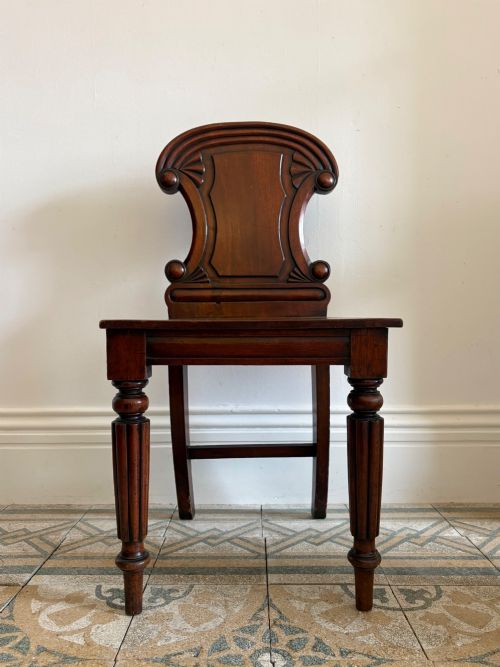
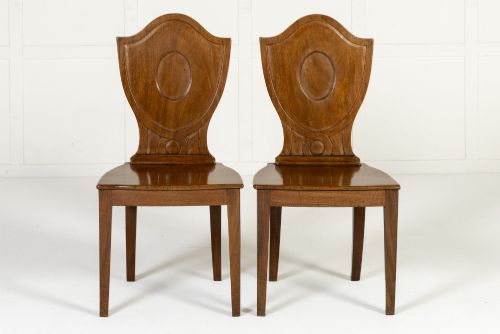
The selection ranges from Scottish and English walnut reception seats to Italian oak sgabello chairs and robust mahogany shield back designs. Makers utilised dense timbers to create upright forms intended for occasional use in grand corridors and entrance spaces.
How they were made
Cabinet makers constructed these seats using solid hardwoods such as mahogany, oak, walnut, fruitwood, and timber. Selected pieces incorporate brass inlay or painted finishes alongside deep hand-carved ornamentation.
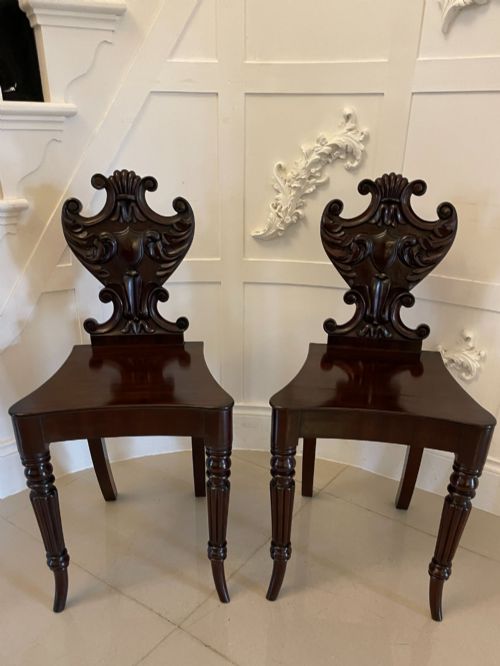
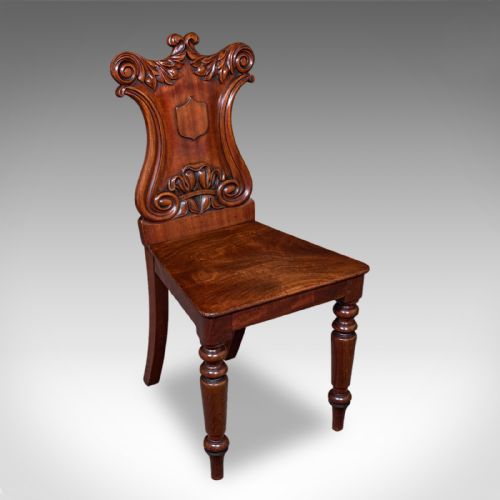
Joinery techniques relied on sturdy framing to support rigid upright backs and solid carved seats. Artisans applied carving directly to timber surfaces, shaping shield backs, shell motifs, and revivalist details.
Certain nineteenth-century hall chairs proudly display carved Prince of Wales feathers on their shield backs, ready for royal visitors.
What varies in quality
The standard of carving defines the distinction between standard production and exceptional work. Crisp depth in shell backs, heraldic devices, and sculptural foliage separates superior examples from plainer items.
Timber selection and structural integrity govern overall quality. Dense, well-figured mahogany, walnut, and oak retain sharper edge definition and greater stability through centuries of use.
Gillows
The Carved Wood Entry Chairs Glossary
- Hall Chair
- An upright wooden seat designed for an entrance hall or reception room. These pieces typically feature solid timber seats and decorative carved backs rather than upholstered comfort.
- Shield Back
- A chair back shaped in the outline of a heraldic shield. This form gained popularity during the Georgian and Regency periods.
- Shell Back
- A chair back carved in the fluted form of a scallop shell. It appears frequently on nineteenth-century mahogany reception seating.
Carved Wood Entry Chairs: Frequently Asked Questions
Where were hall chairs placed?
These chairs stood primarily in entrance halls, corridors, and reception rooms of large houses. They served as formal seating for visitors waiting to be announced.
Because they were intended for brief occupation rather than long relaxation, the designs emphasised upright posture and decorative presence over soft cushioning.
How do I date a hall chair?
Dating relies on identifying the prevailing style, timber choices, and carving motifs recorded in the piece. Georgian and Regency pieces often display lighter proportions and neoclassical details.
Victorian and revival examples tend toward heavier oak construction, deeper relief carving, and Renaissance or Gothic influences.
Are these chairs comfortable for daily use?
Hall chairs feature rigid wooden seats and straight upright backs built for occasional sitting. They function well as statement pieces in entryways rather than lounge seating.
Placing them in a hallway preserves their historical purpose while adding architectural interest to the space.
What woods were used for entry chairs?
Mahogany, oak, and walnut form the primary materials for these pieces. Cabinet makers selected these dense timbers to withstand heavy wear in busy entryways.
Selected examples also utilise fruitwood and painted wood surfaces to achieve specific regional or revivalist styles.